24 October 2012

Who Was 'The Frenchman Who Cried'


Sometimes there are little things in history that pique my interest, and I look into them as time permits. Occasionally I like to put some of that information here in case anyone else might be interested in it.

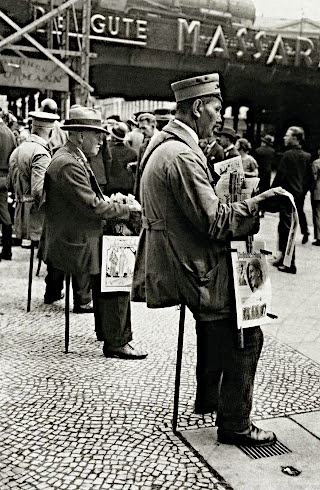
Here is an iconic photograph that I have seen in any number of documentaries, generally identified as a Frenchman who weeps for his city as the Nazis march into Paris.


I have always been curious about this photo. I wondered where it came from and who this person was.  It has a certain tragic dignity about it.

And not to be too trivial, but I was struck by his suit, shirt and tie which are almost exactly the types of things I would wear to work in my 'corporate days.'  I wonder if he had cuffed trousers and suspenders.  Well I doubt I shall ever find out. He looks like a businessman certainly.

Here is what I have been able to discover.

It first appeared in print in Life Magazine in their 3 March 1941 issue on page 29.   This is the photo which I show above and not the more tightly cropped versions that are often used in documentaries.

The caption on the photo.  identifies it as "a Frenchman sheds tears of patriotic grief as the flags of his country's last regiments are exiled to Africa."

So obviously this is not a phot taken in 1940 in Paris, as the French regimental flags had been moved into the south of France in order to preserve them from the surrender.  The flags themselves were not taken to Africa until 1941.

Here is a more commonly available photograph of the same scene.  It is a moment frozen in time.

Marseille sous l'occupation by Lucien Gaillard says that this is a photo of Monsieur Jerôme Barzetti, taken in Marseilles on February 20, 1941.  This is quite some time after the Nazi entrance into Paris in June, 1940.

I have not been able to find out anything else about him and do not have a hard copy of this book.  He does look old enough to have fought in The Great War.  Is he even French, or an Italian émigré who had fled the tyranny of Mussolini?  Perhaps he was part of the Barzetti industrial family from Italy, and related to Federico who later founded Barzetti Pastries?  I cannot say.

I wonder how he fared, and if he was able to see the restoration of France and the end of the war.

The still photo itself is actually taken from newsreel footage that was much later used in a US war film directed by Frank Capra as Chapter III - Divide and Conquer of his series, "Why We Fight." This film was produced in 1943 and begins after the conquest of Poland, and includes the fall of Benelux and France.

Here is the relevant clip from this US War Department film.  Monsieur Barzetti makes his appearance at 54:50 in the film.  It is a war film after all so you might excuse the somewhat florid rhetoric at the end.

Some have speculated that Capra may have staged portions of his series and I would certainly allow for that.  But since the photo of our 'Frenchman who cried' appeared in 1941 in Life magazine,  it is almost certain that had been taken from the newsreel footage of the day, which was sold to various outlets and used to create informative 'short subjects' to be shown at movie theatres.

Capra must have used that same footage in the creation of his own war film two years later.


So now we know something about 'The Frenchman Who Cried."

Why should we even care about him, his risings and fallings, his perplexity and concerns, his fears and sorrows?

Because when the ocean's dry up, and the earth grows cold and dies, as the stars flicker and grow dim in the sky, and creation turns back into dust, Monsieur Barzetti's soul will continue on, vibrantly alive, and his tears will have long been wiped away, by kindly hands.

Gold Daily and Silver Weekly Charts - Hunger Games


FOMC announcement today was a big nothing as expected.

GDP is out on Friday.

Trump's "October Surprise" came out today, and was a delusional farce.


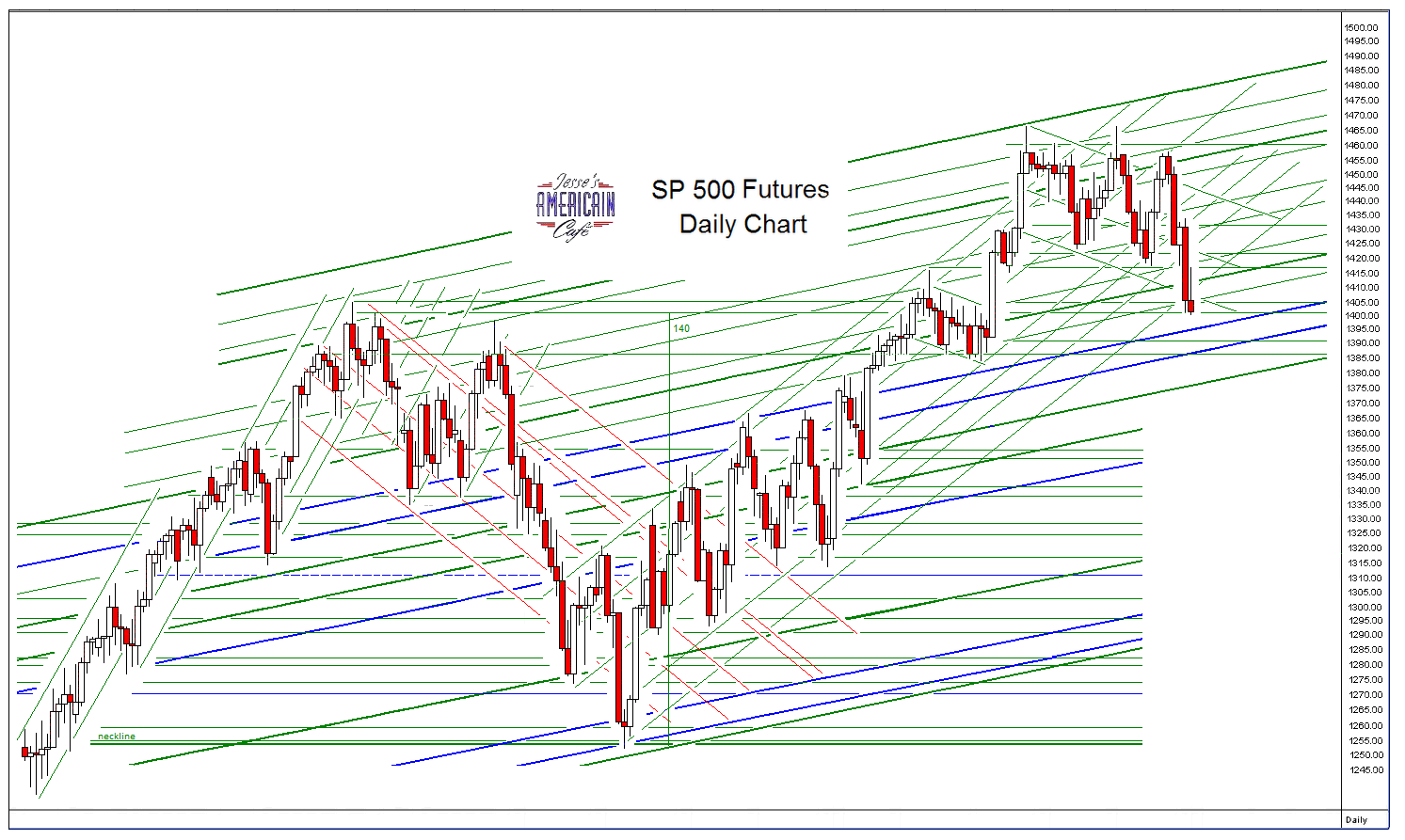
SP 500 and NDX Futures Daily Charts - FOMC A Big Nothing


The FOMC announcement was nothing new as expected.

If the Fed acts again I think it will be as a result of some crisis or event, and will be done with a better rationale. Bernanke is primarily supporting the big banks with the Fed's activities, and not much of his balance sheet expansion is flowing through to the real economy for a number of reasons, and I think by intent.

This is how the Fed is avoiding the problem of a general monetary inflation. The inflation the US is seeing is largely secular and structural.


Greg Smith of Goldman Fame Walks Into the Wall Street Lion's Den


Stephanie Ruhle keeps stepping on the interview, often changing direction and hijacking the discussion, peppering Smith with multiple questions, but it is interesting nonetheless. And she does manage to ask some good questions, often which she attempts to answer herself.  But that is the state of corporate advocacy journalism today.

As you watch this bear in mind that Goldman and other Wall Street firms have been acquiring mathematicians and physicists to concoct customised derivatives and algorithms that few others outside of a select group of quants can fully understand.

And remember the damage that Wall Street CDO's, that were specifically rigged against customers, had done to some of the major banks in Europe, who are not particularly unsophisticated although were perhaps too unsuspected of blatant fraud from name firms. And also let us not forget the cases of bribery of public officials and fund managers with money, sex, and drugs that have been disclosed, such we have seen in the case of Jefferson County, Alabama.

And then there is the ongoing front-running frauds that are the US equity and commodity markets with lax regulation, insider trading, and exchange enabled HFT computerized skimming and spoofing.

What I find almost astounding is that after one of the worst financial frauds in US history, Wall Street and its supporters are able to blithely act as though nothing had happened.   And that is because there has been no real reform and no one has been prosecuted.  That is what is known as 'moral hazard.' 

I found Naked Capitalism's take on this to be very interesting.  What Greg Smith Did Not Say and Some Guesses Why

I do think there is a point to be made in not doing business with Goldman at all.  But as Greg points out, if one wishes access to certain types of products and the broader financial markets, there is much less choice now than there was even four years ago.   And Wall Street has its hands in everyone's pockets, whether you do business with them or not, in this financialised economy. 

I don't think Greg Smith is a whistleblower per se, or even puts himself out there as such in the manner of revealing the details of some very specific illegal act.

At the end of the day, Greg Smith is raising the same category of concerns about the financial system as Occupy Wall Street has done, the same alarm and even revulsion with a culture that has turned predatory rather than constructive, about organizations and a society that are losing their moral bearings to the point of undermining their own rational self-interest with short-term greed.

And Mr. Smith is being derided and dismissed in much the same manner as many of the same people dismissed OWS.

The problem with Wall Street is the essential conflicts that were created by merging the functions of customer-serving banks, which are essentially utilities, with the most aggressive and even abusive of investment banks acting as hedge funds for their own books.  The repeal of Glass-Steagall was the watershed event, and it was the result of a massive lobbying effort that corrupted Washington with Wall Street money.

And when a speculative firm like the pre-IPO Goldman moved from a true partnership model, to publicly traded firms using other people's money and shifting liability to the corporation, Pandora's box was opened.  And this is a despicable lapse in stewardship by the intellectual, financial, and political leadership of the country for which they should be ashamed.