Another big downward plunge in the morning, and a steady drift up from there for much of the afternoon on light volumes.
The US markets will be closed on Monday for the Martin Luther King holiday.


"You have accepted things you would not have accepted five years ago, a year ago, things that your father, even in Germany, could not have imagined. Suddenly it all comes to be, all at once. You see what you are, what you have done, or more accurately what you haven’t done. For that was all that was required of most of us: that we do nothing. You remember everything now, and your heart breaks. Too late. You are compromised beyond repair."
Milton Mayer, They Thought They Were Free
The Price of Civilization
Reawakening American Virtue and Prosperity
by Jeffrey D. Sachs
At the root of America's economic crisis lies a moral crisis: the decline of civic virtue among America's political and economic elite. A society of markets, laws, and elections is not enough if the rich and powerful fail to behave with respect, honesty, and compassion toward the rest of society and toward the world. America has developed the world's most competitive market society but has squandered its civic virtue along the way. Without restoring an ethos of social responsibility, there can be no meaningful and sustained economic recovery.
I find myself deeply surprised and unnerved to have to write this book. During most of my forty years in economics I have assumed that America, with its great wealth, depth of learning, advanced technologies, and democratic institutions, would reliably find its way to social betterment. I decided early on in my career to devote my energies to the economic challenges abroad, where I felt the economic problems were more acute and in need of attention. Now I am worried about my own country. The economic crisis of recent years reflects a deep, threatening, and ongoing deterioration of our national politics and culture of power.
The crisis, I will argue, developed gradually over the course of several decades. We are not facing a short-term business cycle downturn, but the working out of long-term social, political, and economic trends. The crisis, in many ways, is the culmination of an era-the baby boomer era- rather than of particular policies or presidents. It is also a bipartisan affair: both Democrats and Republicans have played their part in deepening the crisis.
On many days it seems that the only difference between the Republicans and Democrats is that Big Oil owns the Republicans while Wall Street owns the Democrats. (I beg to differ. The FIRE sector and Big Pharma have considerably diversified their portfolios) By understanding the deep roots of the crisis, we can move beyond illusory solutions such as the "stimulus" spending of 2009-2010, the budget cuts of 2011, and the unaffordable tax cuts that are implemented yea rafter year. These are gimmicks that distract us from the deeper reforms needed in our society.
The first two years of the Obama presidency show that our economic and political failings are deeper than that of a particular president. Like many Americans, I looked to Barack Obama as the hope for a breakthrough.Change was on the way, or so we hoped; yet there has been far more continuity than change. Obama has continued down the well-trodden path of open-ended war in Afghanistan, massive military budgets, kowtowing to lobbyists, stingy foreign aid, unaffordable tax cuts, unprecedented budget deficits, and a disquieting unwillingness to address the deeper causes of America's problems. The Administration is packed with individuals passing through the revolving door that connects Wall Street and the White House. In order to find deep solutions to America's economic crisis, we'll need to understand why the American political system has proven to be so resistant to change.
The American economy increasingly serves only a narrow part of society, and America's national politics has failed to put the country back on track through honest, open, and transparent problem solving. Too many of America's elites-among the super-rich, the CEOs, and many of my colleagues in academia-have abandoned a commitment to social responsibility. They chase wealth and power, the rest of society be damned.
We need to reconceive the idea of a good society in the early twenty-first century and to find a creative path toward it. Most important, we need to be ready to pay the price of civilization through multiple acts of good citizenship...


There are nine requisites for contented living: health enough to make work a pleasure; wealth enough to support your needs; strength to battle with difficulties and overcome them; grace enough to confess your sins and forsake them; patience enough to toil until some good is accomplished; charity enough to see some good in your neighbor; love enough to move you to be useful and helpful to others; faith enough to make real the things of God; hope enough to remove all anxious fears concerning the future.
Johann Wolfgang von Goethe
Lead, kindly Light, amid th' encircling gloom, lead Thou me on;
The night is dark, and I am far from home; lead Thou me on:
Keep Thou my feet; I do not ask to see
The distant scene-- one step enough for me.
John Henry Newman
We think sometimes that poverty is only being hungry, naked and homeless. The poverty of being unwanted, unloved and uncared for is the greatest poverty. We must start in our own homes to remedy this kind of poverty. Love begins by taking care of the closest ones - the ones at home.
Mother Teresa of Calcutta


On our dinner cards tonight is a medallion portrait of a man who gave a memorable toast, "The Federal Union, it must be preserved."
This meeting tonight, in the City of Washington, is one of many hundreds being held throughout our forty-eight States and territorial possessions and even on board ships at sea, in honor of the memory of a great General, a great President, Andrew Jackson. To all of you I extend my most sincere and heartfelt greetings.
I am happy to stand here tonight and declare to you that the real issue before the United States is the right of the average man and woman to lead a finer, a better and a happier life. And that was the same issue, more than a hundred years ago, that confronted Andrew Jackson.
I speak tonight to this Democratic meeting, to these Democratic meetings throughout the Nation, in the same language as if I were addressing a Republican gathering, a Progressive gathering, an Independent gathering, a Farmer-Labor gathering, a gathering of business men or a gathering of workers or farmers. There is nothing that I say here tonight that does not apply to every citizen in the country no matter what his or her political affiliations may be.
It is true that we Americans have found party organizations to be useful, and indeed necessary, in the crystallization of opinion and in the demarcation of issues. It is true that I have received many honors at the hands of one of our great parties. It is nevertheless true that in the grave questions that confront the United States at this hour, I, as President of the United States, must and will consider our common problems first, foremost and preeminently from the American point of view.
To most of us, Andrew Jackson appropriately has become the symbol of certain great ideals. I like best to think of him as a man whom the average American deeply and fundamentally understood. To the masses of his countrymen, his purposes and his character were an open book. They loved him well because they understood him well—his passion for justice, his championship of the cause of the exploited and the downtrodden, his ardent: and flaming patriotism.
Jackson sought social justice; Jackson fought for human rights in his many battles to protect the people against autocratic or oligarchic aggression.
If at times his passionate devotion to this cause of the average citizen lent an amazing zeal to his thoughts, to his speech and to his actions, the people loved him for it the more. They realized the intensity of the attacks made by his enemies, by those who, thrust from power and position, pursued him with relentless hatred. The beneficiaries of the abuses to which he put an end pursued him with all the violence that political passions can generate. But the people of his day were not deceived. They loved him for the enemies he had made.
Backed not only by his party but by thousands who had belonged to other parties or belonged to no party at all, Andrew Jackson was compelled to fight every inch of the way for the ideals and the policies of the Democratic Republic which was his ideal. An overwhelming proportion of the material power of the Nation was arrayed against him. The great media for the dissemination of information and the molding of public opinion fought him. Haughty and sterile intellectualism opposed him. Musty reaction disapproved him. Hollow and outworn traditionalism shook a trembling finger at him. It seemed sometimes that all were against him—all but the people of the United States.
Because history so often repeats itself, let me analyze further. Andrew Jackson stands out in the century and a half of our independent history not merely because he was two-fisted, not merely because he fought for the people's rights, but because, through his career, he did as much as any man in our history to increase, on the part of the voters, knowledge of public problems and an interest in their solution. Following the fundamentals of Jefferson, he adhered to the broad philosophy that decisions made by the average of the voters would be more greatly enduring for, and helpful to, the Nation than decisions made by small segments of the electorate representing small or special classes endowed with great advantages of social or economic power.
He, like Jefferson, faced with the grave difficulty of disseminating facts to the electorate, to the voters as a whole, was compelled to combat epithets, generalities, misrepresentation and the suppression of facts by the process of asking his supporters, and indeed all citizens, to constitute themselves informal committees for the purpose of obtaining the facts and of spreading them abroad among their friends, their associates and their fellow workers.
I am aware that some wise-cracking columnist will probably say that good old Jackson no doubt realized that every red-blooded American citizen considered himself a committee of one anyway. Nevertheless, Jackson got his ideas and his ideals across not through any luxurious propaganda, but because the man on the street and the man on the farm believed in his ideas, believed in his ideals and his honesty, went out and dug up the facts and spread them abroad throughout the land.
History repeats—and I am becoming dimly conscious of the fact that this year we are to have a national election. Sometimes at the close of a day I say to myself that the last national election must have been held a dozen years ago—so much water has run under the bridge, so many great events in our history have occurred since then. And yet but thirty-four months, less than three years, have gone by since March, 1933.
History repeats—in those crowded months, as in the days of Jackson, two great achievements stand forth—the rebirth of the interest and understanding of a great citizenry in the problems of the Nation, and an established Government which by positive action has proved its devotion to the recovery and well-being of that citizenry.
Whatever may be the platform, whoever may be the nominee of the Democratic Party—and I am told by the Chairman that a Convention is to be held to decide these momentous questions—the basic issue, my friends, will be inevitably the retention of popular Government—an issue fraught once more with the difficult problem of disseminating facts and yet more facts, in the face of an opposition bent on hiding and distorting facts.
And that, my friends, is why organization, not party organization alone—important as that is—but organization among all those, regardless of party, who believe in retaining progress and ideals, is so essential.
That is why, in addition to organization, I make this specific recommendation—that each and every one of you who are interested in obtaining the facts and in spreading those facts abroad, each and every one of you interested in getting at the truth that lies somewhere behind the smoke screen of charges and countercharges of a national campaign, constitute yourself a committee of one. To do this you need no parchment certificate, to do this you need no title. To do this you need only your own conviction, your own intelligence and your own belief in the highest duty of the American citizen.
To act as such a committee of one you will need only your own appointment, an appointment which carries with it some effort, some obligation on your part to carry out the task you have assigned to yourself. You will have to run down statements made to you by others which you may believe to be false. You will need to analyze the motives of those who make assertions to you. You will need to make an inventory in your own community, in order that you may check and recheck for yourself and thereby be in a position to answer those who have been misled or those who would mislead.
After my Annual Message to the Congress last Friday evening, I received many appreciative letters and telegrams from all over the country, and I think it will interest you to know that within a few hours I received more of these than at any time since the critical days of the spring of 1933. I have carefully read those letters and telegrams and I found two facts that I think are worthy of repeating to you tonight. The first is that out of the many, many hundreds, a very large number were sent to me by families who evidently heard my Message while grouped together in the family home. "My wife and I want you to know how much we appreciate," and so forth—or "The Jones family, gathered tonight with our friends, sends you this message of confidence." In other words, as greatly as and perhaps even more greatly than on any other occasion since I have been in the White House, I have the definite feeling that what I have said about the great problems that face us as a Nation has received a responsive, an appreciative and an understanding answer in the homes of America. This means a lot tome.
The other interesting fact about these letters and telegrams is the very great number of them that come from business men, from storekeepers, from bankers and from manufacturers. The gist of their messages to me is that they are grateful, that they appreciate my statement that it is but a minority of business and finance that would "gang up" against the people's liberties. I reiterate that assertion tonight. By far the greater part of the business men, industrialists, and other employers of the Nation seek no special advantage; they seek only an equal opportunity to share in the common benefits, the common responsibilities and the common obligations of their Government.
I am naturally grateful for this support and for the understanding on their part that the Government of the United States seeks to give them a square deal and a better deal—seeks to protect them, yes, to save them from being plowed under by the small minority of business men and financiers, against whom you and I will continue to wage war.
We can be thankful that men and women in all walks of life realize more and more that Government is still a living force in their lives. They understand that the value of their Government depends on the interest which they display in it and the knowledge they have of its policies.
A Government can be no better than the public opinion which sustains it.
I know that you will not be surprised by lack of comment on my part tonight on the recent decision of the Supreme Court. I cannot and will not render offhand judgment without studying, with the utmost care, two of the most momentous opinions, the majority opinion and the minority opinion, that have ever been rendered, in any case before the Supreme Court of the United States. The ultimate results of the language of these opinions will profoundly affect the lives of Americans for many years to come. It is enough to say that the attainment of justice and the continuance of prosperity for American agriculture remain an immediate and constant objective of my Administration.
Just as Jackson roused the people to their fundamental duties as citizens, so must the leadership of this era do its utmost to encourage and sustain widespread interest in public affairs. There was something of eternal youth in the spirit of Andrew Jackson. The destiny of youth became the destiny of America.
Tasks immediately before us are as arduous as the conquest of the frontiers a century ago. The Nation is still young, still growing, still conscious of its high destiny. Enthusiasm and the intelligence of the youth of the land are necessary to the fulfillment of that destiny.
As I understand the temper of the people, particularly the temper of youth, no party of reaction, no candidates of reaction can fulfill the hope and the faith of that everlasting spirit. It is the sacred duty of us who are vested with the responsibility of leadership to justify the expectations of the young men and women of the United States.
We are at peace with the world; but the fight goes on. Our frontiers of today are economic, not geographic. Our enemies of today are the forces of privilege and greed within our own borders.
May a double portion of Old Hickory's heroic spirit be upon us tonight. May we be inspired by the power and the glory and the justice of his rugged and fearless life.
The people of America know the heart and know the purpose of their Government.
They, and we, will not retreat.
Franklin D. Roosevelt, Jackson Day Dinner Address, Washington, D.C.
January 8, 1936


"The reason 2012 feels so empty now is that voters on both sides of the aisle are not just tired of this state of affairs, they are disgusted by it. They want a chance to choose their own leaders and they want full control over policy, not just a partial say. There are a few challenges to this state of affairs within the electoral process – as much as I disagree with Paul about many things, I do think his campaign is a real outlet for these complaints – but everyone knows that in the end, once the primaries are finished, we’re going to be left with one 1%-approved stooge taking on another.
Most likely, it’ll be Mitt Romney versus Barack Obama, meaning the voters’ choices in the midst of a massive global economic crisis brought on in large part by corruption in the financial services industry will be a private equity parasite who has been a lifelong champion of the Gordon Gekko Greed-is-Good ethos (Romney), versus a paper progressive who in 2008 took, by himself, more money from Wall Street than any two previous presidential candidates, and in the four years since has showered Wall Street with bailouts while failing to push even one successful corruption prosecution (Obama).
There are obvious, even significant differences between Obama and someone like Mitt Romney, particularly on social issues, but no matter how Obama markets himself this time around, a choice between these two will not in any way represent a choice between “change” and the status quo. This is a choice between two different versions of the status quo, and everyone knows it."
Matt Taibbi, The Meaningless Sideshow Begins


Forbes
The Neverending MF Global Story: Regulators Block The Truth
By Francis McKenna
January 9, 2012
Instead of looking out for MF Global investors – and customers who are still waiting for their money – it looks like regulators and the bankruptcy trustees are busy suppressing information. Instead of full transparency, regulators and the trustees are holding onto crucial details that might tell us all who was asleep at the wheel when the broker/dealer and futures commission merchant (FCM) headed over the cliff.
Bob English, an independent trader and contributing editor to the blog, Economic Policy Journal, published a post this morning that raises serious questions about the Securities and Exchange Commission’s program of regulation for broker/dealers and, in particular, the agency’s role in keeping the truth from the public about what went wrong at MF Global.
We’re also being kept from the truth about other broker/dealers who may be putting risky trades on their books or whose controls over segregation of customer assets may be weak or non-existent.
“It seems that sloppy scanning and filing standards combined with preferential treatment for certain large brokers has substantially reduced the value of this part of the SEC’s public filing system. Since this is often the sole repository for disclosures about private companies, including broker dealers that do not have public holding companies, investors are being deprived of timely and critical information.On November 4, 2011, days after the bankruptcy filing, I described in an American Banker column the information the regulators and investigators should be looking for:
Even for those broker dealers that do have public holding companies, such as MF Global Inc., the financial notes of the broker audits disclose different, and oftentimes, more substantial information. Since it is now apparent that Louis Freeh, the former FBI Director cum MF Global Holdings trustee, is running cover for MF’s largest creditors, not the least of which is JP Morgan Chase, it is all the more critical that the integrity of the SEC’s public filing system be scrutinized."
“Since MF Global is a broker-dealer and a Futures Commission Merchant, PwC’s job went well beyond a standard audit. The auditor for a firm like this must annually review the procedures for safeguarding customer and firm assets in accordance with the Commodity Exchange Act. The annual audit must include a review of a firm’s practices and procedures for computing the amounts that, by law, have to be set aside in clients’ accounts each day. MF Global also had to send regulators an annual supplemental report from PwC. This report would describe any material inadequacies existing since the date of the previous audit and any corrective action taken or proposed.Is this just sloppy scanning? It’s no coincidence to me that auditor PricewaterhouseCoopers may also be playing a role in keeping uncomfortable or incriminating information from the public about its audit clients which include MF Global as well as Bank of America, JP Morgan, and Barclays...
I’m sure the CFTC wants to know if PwC ever documented any material inadequacies in MF Global’s controls over safeguarding customer assets. But wouldn’t they already know that? Regulators like the CME Group, the CFTC, the SEC, and FINRA received audited financial information annually, unaudited information semiannually and monthly reports that provided a capsule view of MF Global’s financial position. MF Global is required to perform calculations daily (by the CFTC) and weekly (by the SEC) to ensure that the proper amount of customer funds is set aside in the separate accounts.
PwC’s report to the SEC of internal control discrepancies for 2010, and there is one according to the filing index, is private. None of the auditor’s reports specific to the broker/dealer and FCM are available to the public on Edgar for 2011.
Read the rest here.


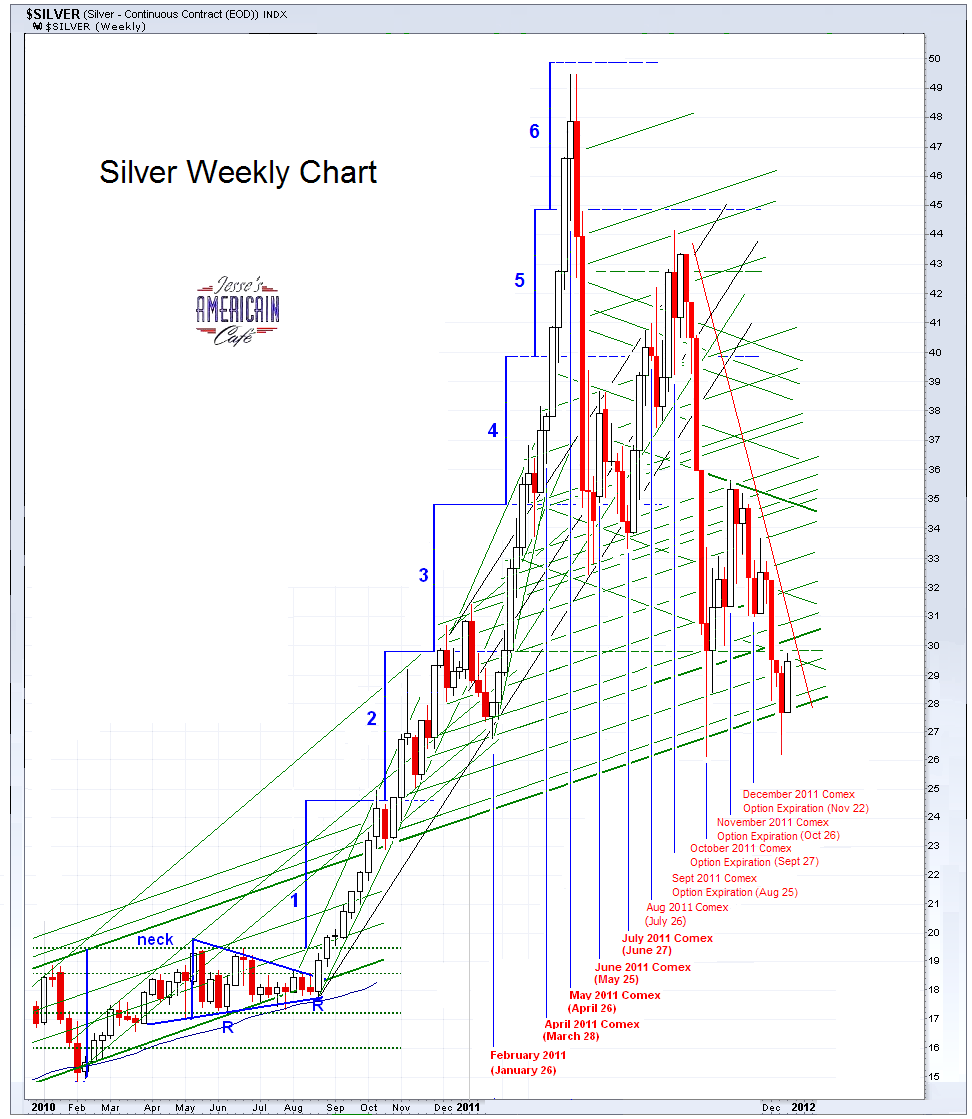


ca·nard/kəˈnär(d)/
Noun:
a. An unfounded or false, deliberately misleading story : a fabricated report
b. a groundless rumor or belief.
The wealthy, not only by private fraud but also by common laws, do every day pluck and snatch away from the people some part of their daily living. Therefore, when I consider and weigh in my mind these commonwealths which nowadays do flourish, I perceive nothing but a certain conspiracy of rich men in procuring their own commodities under the name and authority of the commonwealth.This failing is not particular to capitalism per se, but to any human system. So why not just dispense with rules and let the market have its way? If the system is so much work to maintain and keep free of corruption, why have any system at all?
They invent and devise all means and crafts, first how to keep safely without fear of losing that which they have unjustly gathered together, and next how to hire and abuse the work and labor of the people for as little money and effort as possible."
Thomas More, Utopia
THOMAS MORE What would you do? Cut a great road through the law to get after the Devil?Anyone who thinks human systems function naturally well without rules and enforcement has never driven on a modern motorway in rush hour. To support this theory they must believe in the natural goodness and rationality of all people when motivated by self interest, which is the biggest sucker bet in history.
WILLIAM ROPER I'd cut down every law in England to do that!
THOMAS MORE Oh? And when the last law was down, and the Devil turned round on you, where would you hide, Roper, the laws all being flat?
This country's planted thick with laws from coast to coast, man's laws, not God's, and if you cut them down, and you're just the man to do it, do you really think you could stand upright in the winds that would blow then?
Robert Bolt, A Man For All Seasons
"The secret of great fortunes without apparent cause is a crime forgotten, forgotten because it was properly done."
Honoré de Balzac

“Our problems stem from our acceptance of this filthy, rotten system...People say, 'what is the sense of our small effort?' They cannot see that we must lay one brick at a time, take one step at a time. A pebble cast into a pond causes ripples that spread in all directions. Each one of our thoughts, words and deeds is like that. No one has a right to sit down and feel hopeless. There is too much work to do.”
Dorothy Day


Reuters
MF Global sold assets to Goldman before collapse: sources
By Lauren Tara LaCapra and Matthew Goldstein
January 3, 2012
(Reuters) - MF Global unloaded hundreds of millions of dollars' worth of securities to Goldman Sachs in the days leading up to its collapse, according to two former MF Global employees with direct knowledge of the transactions. But it did not immediately receive payment from its clearing firm and lender, JPMorgan Chase & Co , one of the sources said.
The sale of securities to Goldman occurred on October 27, just days before MF Global Holdings Ltd filed for bankruptcy on October 31, the ex-employees said. One of the employees said the transaction was cleared with JPMorgan Chase.
At the same time MF Global, which was run by former Goldman Sachs head Jon Corzine, was selling securities to Goldman to raise badly needed cash, the futures firm was also drawing down a $1.2 billion revolving line of credit it had with JPMorgan, according to one of the former MF Global employees.
JPMorgan spokeswoman Mary Sedarat said the bank did not withold money because of the line of credit. She declined further comment on details of the transactions.
JPMorgan has fought aggressively in bankruptcy court to protect its interests, and received a lien on some of MF Global's assets in exchange for granting the firm $8 million to fund its bankruptcy costs. The lien puts JPMorgan's interests ahead of MF Global customers who have not yet received an estimated $900 million worth of money from their accounts, which remain frozen as regulators search for missing funds.
The hastily crafted transactions and the seeming inability of MF Global to recoup some of the money in the sale to Goldman may start to explain why so much money remains unaccounted for at the futures firm.
It is unclear what type of assets Goldman bought from MF Global, but the securities were worth hundreds of millions of dollars, the former employees said. The sources spoke on the condition of anonymity...
Read the rest here.