03 February 2014

Dead Bankers, Missing Reporter, and Unfolding Wall Street Scandals


I can think of a number of reasons why a connection between these unnatural deaths, and especially the mysterious disappearance of the reporter, are not related. The most significant is that they involve diverse companies and markets.

And yet all are touched by serious investigations for corruption of the markets.  And the lumbering, wobbling derivatives market represents one possibly interesting intersection of the events.

But even if they are not related, and are mere coincidences, it is telling perhaps that the financial industry is so generally foul that even random deaths and disappearances are all in proximity of market-fixing, price rigging, and white collar investigations for corruption.

And this is our financial system, which touches every part of our lives, every product, every day, man, woman, and child.

A Rash of Deaths and a Missing Reporter – With Ties to Wall Street Investigations

By Pam Martens
February 3, 2014

In a span of four days last week, two current executives and one recently retired top ranking executive of major financial firms were found dead. Both media and police have been quick to label the deaths as likely suicides. Missing from the reports is the salient fact that all three of the financial firms the executives worked for are under investigation for potentially serious financial fraud.

The deaths began on Sunday, January 26. London police reported that William Broeksmit, a top executive at Deutsche Bank who had retired in 2013, had been found hanged in his home in the South Kensington section of London. The day after Broeksmit was pronounced dead, Eric Ben-Artzi, a former risk analyst turned whistleblower at Deutsche Bank, was scheduled to speak at Auburn University in Alabama on his allegations that Deutsche had hid $12 billion in losses during the financial crisis with the knowledge of senior executives. Two other whistleblowers have brought similar charges against Deutsche Bank.

Deutsche Bank is also under investigation by global regulators for potentially rigging the foreign exchange markets – an action similar to the charges it settled in 2013 over its traders’ involvement in the rigging of the interest rate benchmark, Libor.

Just two days after Broeksmit’s death, on Tuesday, January 28, a 39-year old American, Gabriel Magee, a Vice President at JPMorgan in London, plunged to his death from the roof of the 33-story European headquarters of JPMorgan in Canary Wharf. According to Magee’s LinkedIn profile, he was involved in “Technical architecture oversight for planning, development, and operation of systems for fixed income securities and interest rate derivatives...”

Read the entire story here.

Related: On Death and Derivatives
Family of Missing WSJ Reporter 'Waiting for a Miracle'
Financial whistleblower Eric Ben-Artzi speaks at Auburn University

01 February 2014

Weekend Reading: God and Mammon, Fear and Love


To my way of thinking, the inordinate desire for wealth, in excess and for its own sake, is just a manifestation of the will to power, which underlies most evil.

Fear, in excess or obsession, is often the spur to power, a means to seek to control that which we fear and resent. Perhaps it is part of the character, or the result of uncaring or abusiveness from our past.

There is a substantial difference between fear and respect, the latter of which is a high and proper regard, but intermingled with love and mutuality. We respect our parents, for example, if our relationship with them is proper, but we do not fear them as we would an enemy.

The will to power was the first sin of pride of the fallen angels. As John Milton said, 'Better to reign in hell, than to serve in heaven.'

"Though I speak with the tongues of men and of angels, and have not love, I am become as sounding brass, or a tinkling cymbal." 1 Cor. xiii

"...Our Lord says, 'If you love Me, keep My commandments;' but they feel that though they are, to a certain point, keeping God's commandments, yet love is not proportionate, does not keep pace, with their obedience; that obedience springs from some source short of love. This they perceive; they feel themselves to be hollow; a fair outside, without a spirit within it.

It is possible to obey, not from love towards God and man, but from a sort of conscientiousness short of love; from some notion of acting up to a law; that is, more from the fear of God than from love of Him. Surely this is what, in one shape or other, we see daily on all sides of us; the case of men, living to the world, yet not without a certain sense of religion, which acts as a restraint on them.

They pursue ends of this world, but not to the full; they are checked, and go a certain way only, because they dare not go further.
This external restraint acts with various degrees of strength on various persons. They all live to this world, and act from the love of it; they all allow their love of the world a certain range; but, at some particular point, which is often quite arbitrary, this man stops, and that man stops.

Each stops at a different point in the course of the world, and thinks every one else profane who goes further, and superstitious who does not go so far,—laughs at the latter, is shocked at the former. And hence those few who are miserable enough to have rid themselves of all scruples, look with great contempt on such of their companions as have any, be those scruples more or less, as being inconsistent and absurd. They scoff at the principle of mere fear, as a capricious and fanciful principle; proceeding on no rule, and having no evidence of its authority, no claim on our respect; as a weakness in our nature, rather than an essential portion of that nature, viewed in its perfection and entireness.

And this being all the notion which their experience gives them of religion, as not knowing really religious men, they think of religion, only as a principle which interferes with our enjoyments unintelligibly and irrationally. Man is made to love. So far is plain. They see that clearly and truly; but religion, as far as they conceive of it, is a system destitute of objects of love; a system of fear. It repels and forbids, and thus seems to destroy the proper function of man, or, in other words, to be unnatural.

And it is true that this sort of fear of God, or rather slavish dread, as it may more truly be called, is unnatural; but then it is not religion, which really consists, not in the mere fear of God, but in His love; or if it be religion, it is but the religion of devils, who believe and tremble; or of idolaters, whom devils have seduced, and whose worship is superstition,—the attempt to appease beings whom they love not; and, in a word, the religion of the children of this world, who would, if possible, serve God and Mammon, and, whereas religion consists of love and fear, give to God their fear, and to Mammon their love."

John Henry Newman, Parochial and Plain Sermons, Vol. 5, No.23

31 January 2014

Gold Daily and Silver Weekly Charts - Next Stop, February


There was very little movement into the bullion storage category at the Comex.

Next week we being the active delivery month of February.

If I were a naked bullion short I would seriously consider getting flat and taking the money from one of the greatest market manipulations in history while I could.

But let's see what happens. 

There is still plenty of room for more monkeyshines before the trading desks bring the Western financial system back to the brink of collapse again, and belly back up to the bailout bar for more.

So far they have been doing pretty well for themselves, thanks to a lax regulatory climate and a white collar criminal friendly system of 'justice.'  What could go wrong?  Why quit while you are ahead?  Winning!

Have a pleasant weekend.


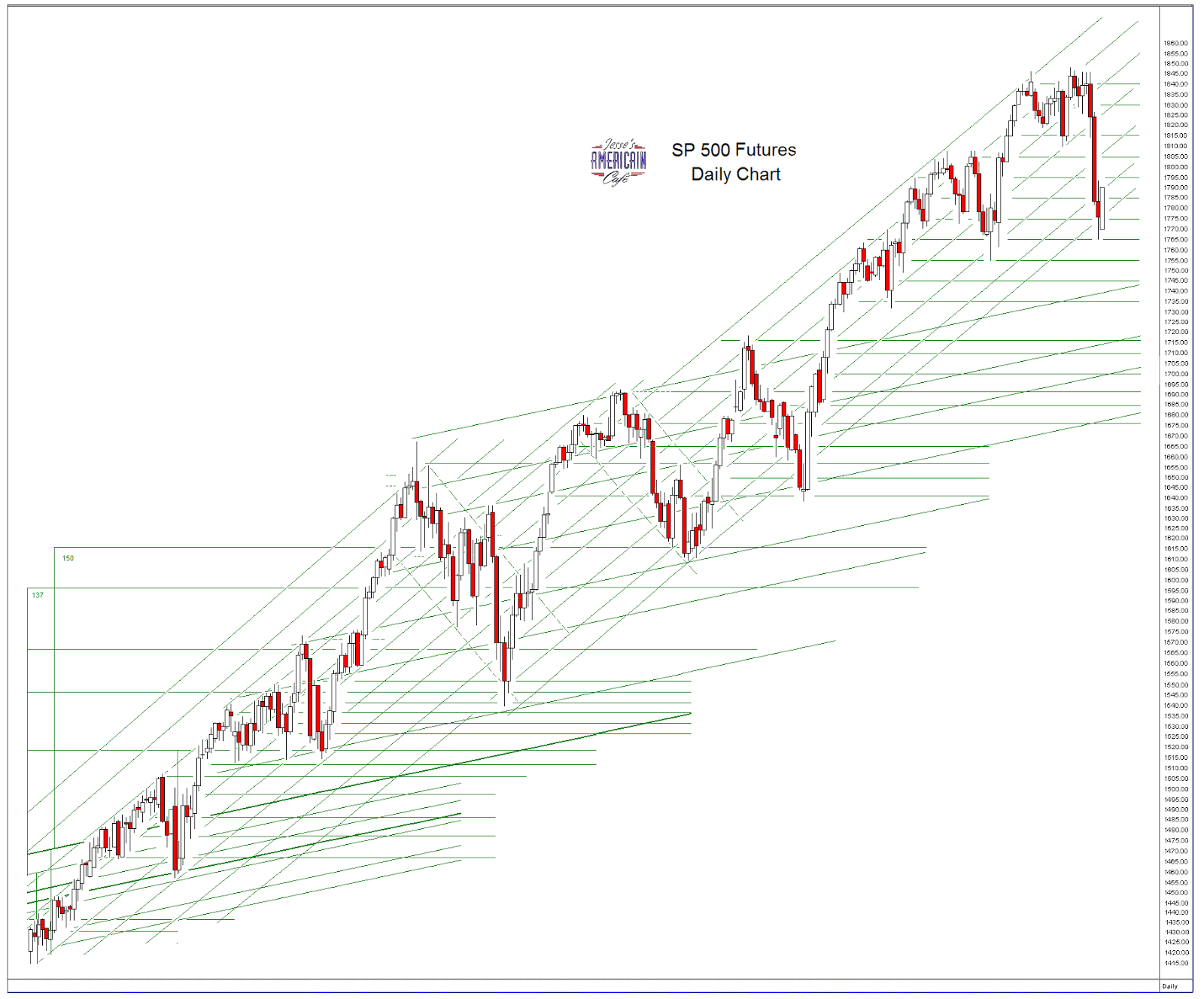
SP 500 and NDX Futures Daily Charts - As Goes January, So Goes the Year For Stocks


If the old saying is true, it could be some tough love for stocks this year, kitten.

Have a pleasant evening.


30 January 2014

Gold Daily and Silver Weekly Charts - A Late Hit Ahead of Active Feb In an Options Expiration Week


“Good is never accomplished except at the cost of those who do it; truth never breaks through, except through the sacrifice of those who spread it.”

John Henry Newman

Gold fell back from a challenge to its 100 DMA, and found support on the 50 DMA. In other words, today was a technical trade.

As I mentioned yesterday, this is an option expiration week for precious metals on the Comex, for the important February contract. So I think the game will be to try and scrape up some more deliverable gold, and knock down the open interest by giving the new contract holders a 'gut check.'

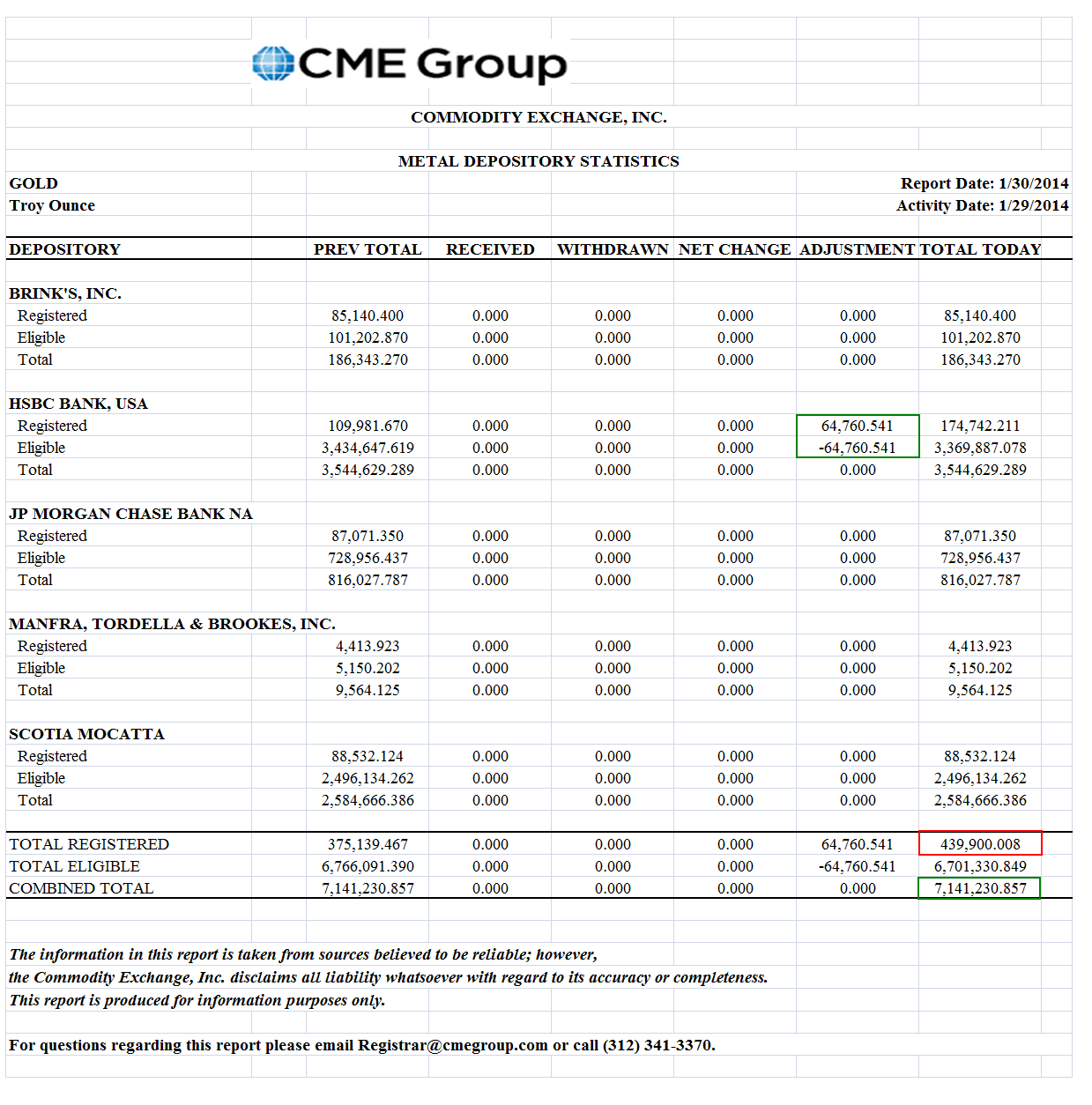
HSBC had 65,760 ounces of gold adjusted from storage to deliverable, so that brings the overall registered ounces of gold in the Comex warehouses to a still thin 439,000 ounces. 

Silver has been lagging the gold rally and that is not constructive action.  Today it was knocked back down to longer term support around 19.20.

Tomorrow is the end of the month.

Have a pleasant evening.


SP 500 and NDX Futures Daily Charts - Bounce by Day, Miss By Night - Wage Against the Machine


Unemployment claims came in high today, and pending home sales slumped.


After the bell GOOG missed earnings, but tickled the Street with clicks, and AMZN missed just about everything, and took a little tumble.

VIX remains elevated, and the global economy remains shaky.

Excelsior!

Have a pleasant evening.


Five Myths About Raising the Minimum Wage


Matt Taibbi Asks Why Obama's Regulatory Strategy in Reforming the Banks Is Such a Joke


I was glad to see someone talk about this, because for whatever reason I did not see a strong reaction in the media to this arrogant defiance by the board of JPM. In fact, there were several 'stop picking on Jamie' sessions led by the pom pom spokesmodels on financial TV.

It is always hard, and often dangerous and unfair, to judge someone's motives.  But we can assess the effects.

The lack of actual reform led by the Obama Administration, and of course a corporate compliant Congress, is hard to understand except in terms of the corrupting power of campaign funding that is pretty much out of control, and undermining the character of the Republic.  

Yes, Mitt 'would have been worse.'  But that does not make Obama good, or effective. It makes him Brand Y to Mitt's Brand X.  But the hearts of both brands belong to the same Daddies.  And the same can be said of much of the governance of the developed nations, especially the English speaking peoples and their client states.

As outlined in This Town by Mark Leibovich, the primary occupation in Washington DC is now putting on the feedbag during and after your 'public service.'  This has always been a problem, but now it is widely accepted, and even fashionable.

Is Obama driven by ideology, bad advice, amoral ambivalence, or just plain old personal greed, a desire to 'get paid?' With Bush et al. there was no question about it. And pretty much the same goes for the Clintons, who accepted Wall Street's proposal of ongoing partnership.  

But Obama presented himself as something new to Washington, someone different, someone offering big changes from the past.

And then he proceeded to bring in the same old people, and the same old failed policies towards financial regulation, and even continued quite a few Bush Administration policies.   And despite promises of transparency, he doubled down against whistleblowers. 

As a 'socialist' he is a moderate Republican, ideologically driven to bad policy decisions like Herbert Hoover, with a tinge of Nixonian insularity. 

It is funny but in rereading some pieces about Herbert Hoover, a basically decent man of significant personal accomplishments, I came across denunciations of him as a 'socialist' by the extreme neo-liberal Austrio-whacky wing of the economic spectrum.   He did blame the Democrats in the House for distracting him, and impeding his policies of fostering confidence by persuading business and the Banks to do more for the public good.

Hoover was bound by a particular ideology with regard to government that was basically laissez-faire in its character.  He just did not have the heart to actually starve people and throw out the victims of the financial system into the cold when push came to shove.  But some of his advisors certainly did, and their ideological descendants still do, and will.

Too often Obama seems to be a well-positioned corporate brand, promoted like any other product.  And this is what makes him particularly disappointing.  Bush, Carter, and Clinton could not have been tragic, because they had no heights from which to fall.  A manager makes peace with his times and situation, seeking the best he can get; a leader changes them,  including the tone of the conversation and the assumptions and direction of the deal.   

As for Obama, like Herbert Hoover, his presidency verges on the tragic, but the ending has yet to be written. 

Rolling Stone
Jamie Dimon's Raise Proves U.S. Regulatory Strategy is a Joke
By Matt Taibbi
January 30, 2014

If you make a big show of punishing someone, and when you're done they still don't think they have a behavior problem, you probably picked the wrong punishment. Every parent on earth knows this implicitly – but does the Obama White House finally get it, too, now, after Jamie Dimon's raise?

When the board of JP Morgan Chase gave its blowdried, tirelessly self-regarding CEO a whopping 74 percent raise – after a year in which the Justice Department blasted the bank with $20 billion in sanctions – it was one of those rare instances where Main Street and Wall Street were mostly in agreement.

Everyone from the Financial Times to Forbes.com to the Huffington Post decried the move. The Wall Street pundits mostly thought it was a dumb play by the Chase board from a self-interest perspective, one guaranteed to inspire further investigations by the government. Meanwhile, the non-financial press generally denounced the raise as a moral obscenity, yet another example of the serial coddling of Wall Street's habitually overcompensated executive class.

Both groups were right. But to me the biggest news was how brutal an indictment Jamie's raise was of the Obama/Holder Justice Department, which continues to profoundly misunderstand the mindset of the finance villains they claim to be regulating.

Chase's responses to Holder's record penalties have been hilarious. Their first move was to make sure people outside the penthouse boardroom took on all the pain, laying off 7,500 employees and freezing salaries for the non-CEO class of line employees.

Next, Chase's board members sat down, put their misshapen heads together, considered the impact of this disastrous year of settlements, and decided to respond by more than doubling the take-home pay of the executive in charge, giving Dimon about $20 million in salary and equity.

In the end, the fines left the decision-making class of the company not just uninjured but triumphant. Dimon's raise was symbolic of a company-wide boost in compensation following the mass layoffs, as average per-employee expenses rose four percent overall, to $122,653, despite the $20 billion burden imposed upon the firm by the state...

People like Holder still don't understand that the leaders of these rogue firms have no problem blowing up their own companies and/or imperiling the world economy, so long as they continue to personally get paid.

Regulators have been blind to this for years, decades. It's why the Fed, the OCC, the OTS, the Justice Department and a host of other agencies missed incoming icebergs like the AIG and Lehman disasters, once upon a time.

In fact, since the days of Alan Greenspan and his halcyon dreams of a future of pure self-regulation, the notion that corporate leaders will always act in the interest of their own firms – that they'll behave according to the principled corporate egoism that was an article of faith both for Ayn Rand and acolytes like Greenspan – has been a core basis for broad policies of regulatory restraint...

Take some time to read the entire article by Matt Taibbi here.

29 January 2014

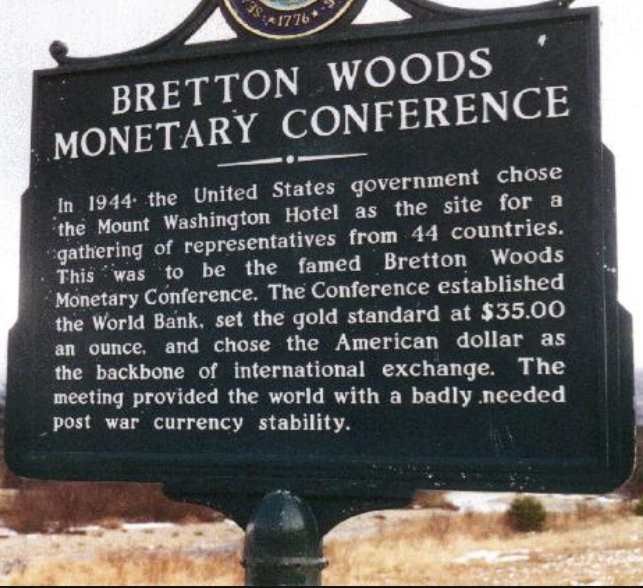
Renewed Calls From China For a Global Super-Currency To Replace "Bretton Woods II"


They are talking about a 'super-currency' for international trade, and not to replace any currencies for domestic use.

I have been reporting on this for quite a few years. It is a movement whose time has come as the US dollar reserve currency falters, and the Fed expands the monetary base for domestic concerns. 

You can click on either of the subject headings at the bottom of this blog entry, and all of the past postings with those subjects will be selected for your reading.

The major countries will no longer tolerate the monetary manipulation with the global currency in the same unilateral manner with which Nixon changed the Bretton Woods agreement back in 1971 by ending dollar convertibility to gold, rather than devaluing against it.

For lack of a better alternative or term, I settled on the SDR, made up of a new basket of currencies and commodities, almost certainly including gold, and quite possible silver, if China, Russia, et al. have their way.

Right now the nations are in the 'negotiation stage,' with the Anglo-American banking cartel putting up a strong resistance for any changes to their 'exorbitant privilege.'  I would not be surprised to see more forex and precious metal games played as the Lords of Finance flex their monetary muscles.

And then there is the question of the tangled web of rehypothecation of bullion without public disclosure.  It could prove to be very embarrassing to some.

But change is coming, one way or another.

China Daily
Replace dollar with super currency
By Michael Barris in New York,
Fu Jing in Brussels and
Chen Jia in Beijing
2014-01-29 09:04

The World Bank's former chief economist wants to replace the US dollar with a single global super-currency, saying it will create a more stable global financial system.

"The dominance of the greenback is the root cause of global financial and economic crises," Justin Yifu Lin told Bruegel, a Brussels-based policy-research think tank. "The solution to this is to replace the national currency with a global currency."

Lin, now a professor at Peking University and a leading adviser to the Chinese government, said expanding the basket of major reserve currencies — the dollar, the euro, the Japanese yen and pound sterling — will not address the consequences of a financial crisis.

Internationalizing the Chinese currency is not the answer, either, he said.

Lin urged the international community, especially the US and European Union, to play a leading role in currency and infrastructure initiatives. To boost the global economy, he proposed the launch of a "global infrastructure initiative" to remove development bottlenecks in poor and developing countries, a measure he said would also offer opportunities for advanced economies.

"China can only play a supporting role in realizing the plans," Lin said. "The urgent thing is for the US and Europe to endorse these plans. And I think the G20 is an ideal platform to discuss the ideas," he said, referring to the group of finance ministers and central bank governors from 20 major economies.

The concept of a global "super currency" tied to a basket of currencies has been periodically discussed by world leaders as well as endorsed by 2001 Nobel Memorial Prize-winner Joseph Stiglitz. A super currency could also be tied to a single currency, but the interconnectedness of world financial markets and concerns about the volatility that can occur as a result of the system being tied to one currency have made this idea less popular...

Arguments in favor of a global currency resurfaced during October's US budget impasse, which forced the government to shut down.

"It is perhaps a good time for the befuddled world to start considering building a de-Americanized world," a Xinhua News Agency commentary said on Oct 14. The piece argued that creating a new international reserve currency to replace reliance on the greenback, would prevent government gridlock in Washington from affecting the rest of the world.

In March 2009, China's central bank governor, Zhou Xiaochuan, called for the creation of a new "super-sovereign reserve currency" to replace the dollar. In a paper published on the People's Bank of China's website, Zhou said an international reserve currency "disconnected from individual nations" and "able to remain stable in the long run" would benefit the global financial system more than current reliance on the dollar.

On that note, David Bloom, global head of FX research at HSBC, said US monetary policy change "will bring fluctuations for emerging countries' currencies and lead to financial instability".

Chen Wenling, chief economist at the China Center for International Economic Exchanges, a government think-tank, said, "A supranational currency may be a new direction for development of the global financial system. It also requires different countries to cooperate in coordinating macroeconomic policies..."


Gold Daily and Silver Weekly Charts - Bounce on FOMC Day - 2014 Comex Options Calendar


Gold caught a bid today, largely driven I think by the exceptional weakness in the emerging market currencies and sustained buying of physical in Asia and the Mideast.

Silver lagged gold once again, which gives some credence to the 'flight to safety' idea.

The miners caught a serious bid which was a nice change of pace. It was interesting to see a news item that some ex-JPM bankers have raised $375 million to make some investments in the mining sector.   Cheat 'em, beat 'em, and eat 'em.  You keep what you kill is the creed of the Economic Hitmen.  

There is quite significant overhead resistance to gold both in terms of the downtrend and the 100 day moving average.

I am sorry that I failed to mention the February gold options expiration this week.   I have included the calendar for the rest of the year below.

The Comex warehouses saw no movement of gold bullion in or out.

Have a pleasant evening.


SP 500 and NDX Futures Daily Charts - Emerging Markets Give Wall St the Shimmy Shakes - The Recovery™


“We plan more leisure for men and women and better opportunities for its enjoyment. We plan not only to provide for all the new generation, but we shall, by scientific research and invention, lift the standard of living and security of diffusion of wealth, a decrease in poverty and a great reduction in crime. And this plan will be carried out if we just keep on giving the American people a chance.”

Herbert Hoover, 15 June 1931

“The depression has been deepened by events from abroad which are beyond the control either of our citizens or our government.”

Herbert Hoover, 18 October 1931

Stocks gave up most of yesterday's big bounce largely based on jitters in the emerging markets reflected quite well in their currencies.

Jeremy Siegel of the University of Pennsylvania reiterated this Dow 18,000 target today on Bloomberg TV.  What a surprise.

So why the sell off? Is this a taper tantrum as some have speculated? I think not. The FOMC did exactly what was expected of it today, and it is stressing that it will not be deterred from easy money policies in the foreseeable future.

Facebook beat revenues after the close with $2.58B versus $2.35B expected. I wonder if those numbers are ex-NSA.

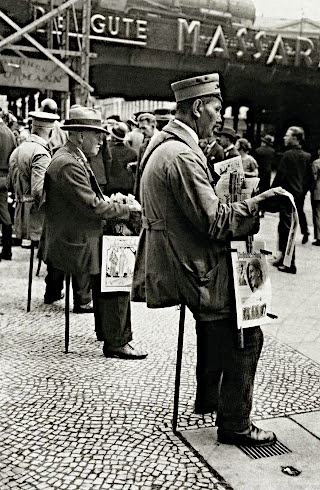
The reasons stocks are selling off is because, despite official numbers and reassurances, The Recovery™ is humming along like it's 1931.  

Without increases in median disposable income there will be no sustainable recovery, despite the concerns about the growing 'wage-price spiral' from some corporatist economists. 

Have a pleasant evening.


FOMC Statement 29 January 2014


This was Ben Bernanke's last meeting of the FOMC. Notice that this time the statement was approved unanimously.

Even as it promises easy monetary policy as far as the eye can see, it also provides an historical 'fig leaf' for Bernanke's legacy.  They will say that he expanded the Fed's Balance Sheet as required, even to the extent of engaging in non-traditional practices such as buying mortgage and long Term Treasury debt, AND he had started the process of 'tapering' ongoing the purchase programs before he left the chairmanship.

My own personal opinion is that history will not be kind to either Greenspan or Bernanke and their trickle down approach to monetary policy, weak regulatory environment, and The Recovery.  Future economists will look on them and the Obama Administration with kindly condescension, much as they look at the tragedy that was the Herbert Hoover presidency, even while they continue to propagate different, but similar, policy errors with great gravity and self-confidence.

Press Release
Federal Reserve Press Release
Release Date: January 29, 2014

For immediate release

Information received since the Federal Open Market Committee met in December indicates that growth in economic activity picked up in recent quarters. Labor market indicators were mixed but on balance showed further improvement. The unemployment rate declined but remains elevated. Household spending and business fixed investment advanced more quickly in recent months, while the recovery in the housing sector slowed somewhat. Fiscal policy is restraining economic growth, although the extent of restraint is diminishing. Inflation has been running below the Committee's longer-run objective, but longer-term inflation expectations have remained stable.

Consistent with its statutory mandate, the Committee seeks to foster maximum employment and price stability. The Committee expects that, with appropriate policy accommodation, economic activity will expand at a moderate pace and the unemployment rate will gradually decline toward levels the Committee judges consistent with its dual mandate. The Committee sees the risks to the outlook for the economy and the labor market as having become more nearly balanced. The Committee recognizes that inflation persistently below its 2 percent objective could pose risks to economic performance, and it is monitoring inflation developments carefully for evidence that inflation will move back toward its objective over the medium term.

Taking into account the extent of federal fiscal retrenchment since the inception of its current asset purchase program, the Committee continues to see the improvement in economic activity and labor market conditions over that period as consistent with growing underlying strength in the broader economy. In light of the cumulative progress toward maximum employment and the improvement in the outlook for labor market conditions, the Committee decided to make a further measured reduction in the pace of its asset purchases. Beginning in February, the Committee will add to its holdings of agency mortgage-backed securities at a pace of $30 billion per month rather than $35 billion per month, and will add to its holdings of longer-term Treasury securities at a pace of $35 billion per month rather than $40 billion per month.

The Committee is maintaining its existing policy of reinvesting principal payments from its holdings of agency debt and agency mortgage-backed securities in agency mortgage-backed securities and of rolling over maturing Treasury securities at auction. The Committee's sizable and still-increasing holdings of longer-term securities should maintain downward pressure on longer-term interest rates, support mortgage markets, and help to make broader financial conditions more accommodative, which in turn should promote a stronger economic recovery and help to ensure that inflation, over time, is at the rate most consistent with the Committee's dual mandate.

The Committee will closely monitor incoming information on economic and financial developments in coming months and will continue its purchases of Treasury and agency mortgage-backed securities, and employ its other policy tools as appropriate, until the outlook for the labor market has improved substantially in a context of price stability. If incoming information broadly supports the Committee's expectation of ongoing improvement in labor market conditions and inflation moving back toward its longer-run objective, the Committee will likely reduce the pace of asset purchases in further measured steps at future meetings. However, asset purchases are not on a preset course, and the Committee's decisions about their pace will remain contingent on the Committee's outlook for the labor market and inflation as well as its assessment of the likely efficacy and costs of such purchases.

To support continued progress toward maximum employment and price stability, the Committee today reaffirmed its view that a highly accommodative stance of monetary policy will remain appropriate for a considerable time after the asset purchase program ends and the economic recovery strengthens. The Committee also reaffirmed its expectation that the current exceptionally low target range for the federal funds rate of 0 to 1/4 percent will be appropriate at least as long as the unemployment rate remains above 6-1/2 percent, inflation between one and two years ahead is projected to be no more than a half percentage point above the Committee's 2 percent longer-run goal, and longer-term inflation expectations continue to be well anchored.

In determining how long to maintain a highly accommodative stance of monetary policy, the Committee will also consider other information, including additional measures of labor market conditions, indicators of inflation pressures and inflation expectations, and readings on financial developments. The Committee continues to anticipate, based on its assessment of these factors, that it likely will be appropriate to maintain the current target range for the federal funds rate well past the time that the unemployment rate declines below 6-1/2 percent, especially if projected inflation continues to run below the Committee's 2 percent longer-run goal. When the Committee decides to begin to remove policy accommodation, it will take a balanced approach consistent with its longer-run goals of maximum employment and inflation of 2 percent.

Voting for the FOMC monetary policy action were: Ben S. Bernanke, Chairman; William C. Dudley, Vice Chairman; Richard W. Fisher; Narayana Kocherlakota; Sandra Pianalto; Charles I. Plosser; Jerome H. Powell; Jeremy C. Stein; Daniel K. Tarullo; and Janet L. Yellen.

Statement Regarding Purchases of Treasury Securities and Agency Mortgage-Backed Securities (PDF)

The Predators Feast: Ex-JPM Bankers Raise $375 Million For Mining Company Buys


Companies.  Countries.

We will find an opportunity, or we will make them.

Ex-JPMorgan Bankers Raise $375 Million for Mining Fund
By Jesse Riseborough
Jan 29, 2014

Former JPMorgan Chase & Co. bankers Michael Scherb and Verne Grinstead raised $375 million from investors to target acquisitions of mining assets through their Appian Natural Resources Fund LP.

“The whole thesis was really created when I was at JPMorgan, when I could see that traditional sources of capital were going to dry up to the industry,” Scherb, who founded Appian two years ago after leaving the bank, said in a phone interview from London yesterday. “I thought that private equity made sense. I thought it made sense to match long-term capital to a long-term industry.”

Declining prices and a tapering in demand for commodities has dried up financing for new mining projects as investors retreat from the industry. Appian started raising funds a year ago and got commitments of $1 billion from investors, Scherb said...

Read the entire story here.


28 January 2014

Gold Daily and Silver Weekly Charts - FOMC Tomorrow


"Our government...teaches the whole people by its example. If the government becomes the lawbreaker, it breeds contempt for law; it invites every man to become a law unto himself; it invites anarchy."

Louis D. Brandeis

Another ten tonnes of eligible gold came out of the JPM Comex warehouse yesterday. I had some commentary on the inventories intraday here.

Gold and silver were under some slight selling pressure much of the day, as the word went out to bounce the equities market higher to restore confidence.

So what next. The FOMC is tomorrow, and I would think that the usual taper of $10 billion will be done. This is Bernanke's swan song meeting, and I do not expect anything otherwise important to be announced.

We might see some monkey business with the metals. The deceptions will continue until confidence returns.

Have a pleasant evening.


SP 500 and NDX Futures Daily Charts - Running out of Runway for The Recovery™


The FOMC announcement comes in tomorrow.

Earnings for big tech keep coming this week. Yahoo reported after hours, and the stock is selling off about 5% on the news.

The US economy is fundamentally broken at the distribution of wealth level. The Recovery™ has benefited the top one percent, because of the gaming of the rules and the profound influence that money has had on policy, both economic and fiscal.

We are seeing the classic situation of financial monopolies strangling themselves by killing off their customer base, an excess to which corrupted capitalism has been know to stray now and then. Their predatory desire to move offshore to fresher fields is being hampered by their reputations.

Have a pleasant evening.


Another Ten Tonnes of Gold Bullion Came Out of Comex Eligible Inventory at JPM Yesterday


"And we headed out of the hotel, went to the airport, got on the plane and, about halfway through the flight, I found myself alone in the President’s cabin with him. I said, 'Mr. President, you don’t have a cold. There’s something else going on.'

He said, 'You bet. There is something else going on.' And he said, 'When you find out, grab your balls [and run].'

Pierre Salinger, On the Cuban Missile Crisis

If I were short bullion I might consider squaring up and inching towards the exit, just to be on the safe side.

I cannot believe how little gold is left at Brinks.   They have gone from total ounces of about 650,000 at the end of 2012 to a little over 186,000 ounces now.

Brinks and JPM only have about five and one half tonnes up for delivery.   The two big boys are HSBC and Scotia, and they only have a little over six tonnes up for delivery between them.

That does not mean, however, that we will not see the usual shenanigans in the paper metals markets.

It's what they do, until they can't. And then they ask for a change in the rules, and a bailout.


Comex Gold Silver Product Calendars for 2014


By popular request.


27 January 2014

Gold Daily and Silver Weekly Charts - FOMC Week Shenanigans


Gold spiked higher in the morning on a pure flight to safety, but was pushed lower as stocks attempted to rally. Reality versus liquidity?

The FOMC will meet this week, so we might expect the usual FOMC shenanigans, but bear in mind that the big traders are squaring off against the upcoming February delivery.

I do not expect any curve balls from the Fed which is now locked into its mild tapering. Their monetization has clearly failed, being a 'top down' approach to The Recovery, which has exacerbated the strains in the real economy versus the financialized, paper economy.

The gold/silver ratio seems rather high at 63 to 1, and that reflects the fact that gold has led silver up this month in the precious metals rally.  Once silver gets started higher, it may kick in some serious jets and catch up rather quickly.  But one step at a time.  

As solid and well-informed the Bloomberg print reporting may be, their television counterparts all too often have the depth of cackling chuckleheads, with a few notable exceptions.  Well, they do have nice smiles, and so forth.

It really is annoying, but alas, Fox and CNBC are little better.  I have never understood why the US treats visual financial reporting as light entertainment, as compared to Europe and Asia which have a more journalistic approach. 

Have a pleasant evening.


SP 500 and NDX Futures Daily Charts - Big Tech Week: AAPL, AMZN, FB, GOOG


Stocks had a bit of a wild ride today, as emerging market jitters had them moving solidly lower, with a rising VIX, but the dip buying liquidity crowds tried to bid them up in the afternoon. They finished a bit off.

The FOMC will meet this week, and it is expected to do its normal taper once again.

The big tickle is big tech, as the titans Apple, Amazon, Facebook and Google will be reporting earnings this week.

AAPL reports around 4:30 PM this evening.


Note:  AAPL missed on iPhone sales and warned on the conference call.  Stock is down about 8+% after hours.

Have a pleasant evening.


NAV Premiums of Certain Precious Metal Trusts and Funds


The gold/silver ratio is historically high, as gold leads silver higher so far this year.

I am looking for a return back to the 50's IF the precious metal rally continues, except perhaps if it is driven by a pure flight to safety.

Silver is a wild ride, once it gets its engine started.