I am in the midst of preparing a forecast for the next five to ten years for the United States economy, and by extension the world because of the intertwining effects of the dollar reserve currency and US consumption in the global economy. And of course the US position as the world's sole superpower.
(Note: I subsequently decided not to issue a new five year forecast, and instead to take it one year at a time because the current macro five year forecast is still in play thanks to the Fed's delaying tactics and Obama's failure to lead a genuine reform effort. I knew he would be in for a hard time, but his capitulation has been shocking given the rhetoric with which he took office.)
Before I do that, I thought it might be useful to see a recap of my last five year forecast, to set the playing field as it were, as a sort of an introduction. The next forecast will be similar in format and style, but may be a little more complex, because the US, and the world, are at a critical crossroads in history.
The greatest struggle in writing this sort of thing is to keep it brief, to prevent it expanding into a lengthy treatise that examines too many particulars, too many possibilities. Forecasters often succumb to the temptation to throw out many specific predictions and possibilities, in the hopes of 'hits' that will be remembered, with misses forgotten, without giving sufficient weight to the probabilities. In addition, clarity and conciseness are always the challenge in writing non-fiction regarding complex subjects.
Please keep in mind that this forecast was published on my old website at the beginning of 2005, when optimism was running high, the maestro was still on his throne, black swans still an uncommon topic, and the US was in a fresh bull market in stocks with a growing housing bubble that very few would admit, and many would vehemently deny. This forecast is being written in darker hours, when some of the horsemen have already been unleashed.
I have edited out extraneous contemporary detail, and most of the charts which are dated, except for one. I edited out some grammatical errors and awkward phrasing. The timeframe has been 'compartmentalized' to five years, from a more open-ended original, because at the time I wrote in 2005 I did not imagine I would still be at this blogging effort five years later. I have also renumbered the footnotes and eliminated several for the sake of simplicity and relevance.
`Humpty Dumpty sat on a wall:
Humpty Dumpty had a great fall.
All the King`s horses and all the King`s men
Couldn`t put Humpty together again
Forecast 2005 - 2010: The Humpty Dumpty Economy
The current trend in the United States economy is not sustainable. This is a realization that will penetrate the national consciousness slowly and unevenly...Things rarely reach a turning point when we expect it. A true sea change is slow to permeate the mentality of most people, because our experience is that what happened yesterday will happen again tomorrow, and a sea change occurs gradually and incrementally. We forget what happened even a few years ago. Predictions of a continuance of recent trends are the common currency of most rational pundits.
So instead, let us pursue the contrarian side of the discussion, and suggest that although we cannot predict exactly what will happen this particular year because of the wide range of exogenous variables and the inherently unpredictable progression of change, there may be certain things to look for, certain wobbles and warnings in the economy, that may prove fortunate to the observant. This is more difficult than it sounds in practice, because usually and customarily fortune frequently favors the trend followers, and enriches those who blindly plunge forward in blissful ignorance, because by definition normal is what usually occurs.
However, and this is a historically common notion that has been nearly forgotten by our generation, we have the ability to act in such a way so as to make the improbable more likely to occur, to tempt fate by our actions.
For example, there is a certain probability of incurring an automobile accident in the normal course of our daily activities. High risk behaviors, such as speeding excessively or drinking, increase the likelihood of an accident. If one engages in high risk activity, and nothing unusual happens, we become emboldened and think that since we were able to drink moderately and drive last month, so we can drink and drive this month and thereafter. Perhaps next month we drink a little more for an indulgence, and again nothing happens. This cycle continues until something changes our behavior, or simply ends when we literally hit the wall.
It would be my contention that the US is like such a driver, and we have been economically tempting fate with increasingly risky behaviors. We are persuaded that there is almost nothing we can do, almost nothing that can happen, that is beyond our immediate control. It is the propensity for people to increase and repeat what they have been doing over time, to tempt fate through repeated and increasingly risky behavior, and to forget the possibility of a sequence of unfortunate events if you will, that gives rise to memorable events in history.
Predicting the failure of a complex system is not easy. One can examine it as a whole, and determine that it will fail, and often calculate what must change in order to allow the system to function more reliably, but it is beyond our power to calculate exactly how it will fail, and consequently when it will fail. This does not invalidate the observation that the system will ultimately fail. It merely underscores unpredictability of timing a failure with the degrees of separation inherent in a calculation with a large number of exogenous variables. It is not easy to predict exactly when a chronic DWI will demolish their automobile, but it remains relatively predictable to say that they will do so as long as they maintain their current mode of behavior.
 The current economy of the United State is such a complex system. Since 1971 it has been a purely fiat currency, when Richard Nixon abandoned the gold standard and the Bretton Woods agreement, establishing the current monetary environment with the US dollar as the basis of world banking reserves.
There are many milestones in the progression of our current economy, and several turning points where we might have modified our behavior to change the probable progression of events. One of the underlying factors in this drama is the long tenure of Alan Greenspan (1) who, on September 1, 1971, became Chairman of the Council of Economic Advisors remaining in that position when President Ford was replaced by Jimmy Carter in January, 1977. He was later appointed to the Chairmanship of the Federal Reserve by Ronald Reagan on August 11, 1987.
With the great market break of October, 1987 Chairman Greenspan established his modus operandi of avoiding any economic pain by the generous applications of liquidity ahead of a crisis, and so it has been for his five terms as Fed Chairman: not acting alone, but in concert with ambitious politicians to debase the money supply of the United States to serve the purposes of power, even to the extent of allowing one of the greatest stock market bubbles since 1929 to imperil the financial system. (2) We now know that this is due to extreme risk aversion whenever the ability to forego problems presents itself, and shift the responsibility for the crisis somewhere else, preferring to clean the mess up after the fact rather than to take responsibility for it. (3)
This is an important point, because it indicates that the probability that the Fed will do anything proactive to attend to our current situation and avoid another bubble and subsequent collapse are so remote as to be almost improbable while Chairman Greenspan is in office. We have also learned that the Fed has no credibility with regard to the recognition of bubbles, and their assertion that they cannot know when one exists or what to do about it when one does occur.
Therefore, we must look to some precipitating event to cause our increasing unstable financial system to hit the wall, some situation where events conspire to potentially change the existing equilibrium of the system, to such an extent that they cause the system to change course. These we will call tipping points.
Tipping Points
There are four major types of tipping points that we may confront in 2005 - 2010:
o Demand: a break in the level of consumption in the US caused by the
unwillingness or inability of households to incur further debt to support
consumption beyond real wage growth
o Supply: a major disruption in the supply of an essential commodity like
energy, food, or raw materials, or even the realization that a major
commodity is in shorter supply than expected, such as silver or oil.
o Monetary: an unwillingness of foreign central banks to continue to
monetize the US trade deficit and budget deficit through the recycling of
their trade surplus into US debt securities.
o Systemic failure: the failure of a major counter party that threatens the
US financial system, particularly in the hugely leveraged derivatives
market. This might also include a major political failure such as a terror
attack, assassination, war, scandal that impacts the perception of risk in
the financial markets and/or shakes the confidence of investors
precipitating a panic.
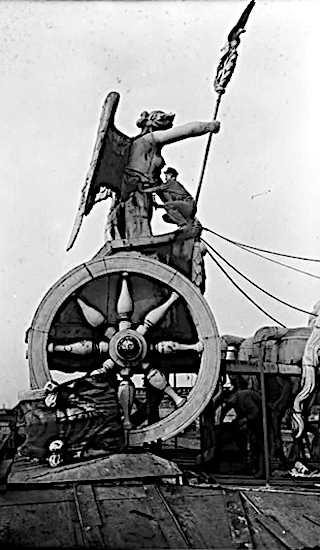
The First Horseman: a break in Demand
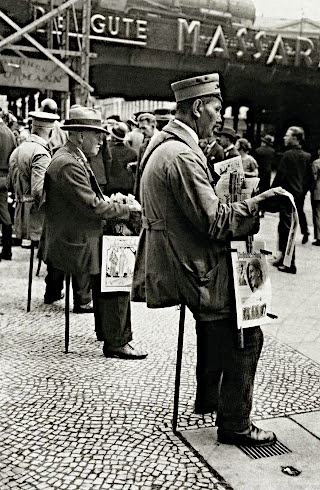
Housing market sales and foreclosures, consumer consumption andThe consumer is stretched so far that savings has been reduced to virtually zero,
confidence figures, payrolls and average wages, retail sales.
and the growth of new debt particularly in revolving credit and mortgages has
reached alarming levels. At some point the consumers may just run out of the
desire to keep assuming additional risk on their balance sheets. Since our GDP
is so heavily driven by consumer consumption at the moment, this in itself is
likely to trigger a serious decline in economic growth. It will not occur uniformly,
but from the lowest strata up of consumers by annual disposable income.
The Second Horseman: A break in Supply
The availability of key resources including energy, food, and metals.
Although there is significant excess capacity in the global supply chain by sector,
especially in consumer goods, IT products, and financial services, there are in
fact some very tight supply situations in some key resources including crude oil,
natural gas, some foodstuffs, and industrial metals. These occur periodically when some
natural disaster or terror event disturbs the supply chain. In some cases these supply gaps are
the result of years of economic distortion and malinvestment.
The Third Horseman: A fatal break in Monetary System
The current monetary system is overly simplistic, historically unique, and unsustainable.The US runs unsustainable trade and budget deficits as a result of excessive
consumption with no savings, and some central banks and the Fed are
monetizing that debt into dollar financial assets. When it stops working a
major market dislocation is inevitable. The limiting factor on this is the
value of the dollar and central banks’ willingness to support and accept it.
The Fourth Horseman: Systemic Failure
Major counterparty failures will prevent the system from restarting smoothly...
The forecast for the next five years (2010-2015) will follow at a subsequent time, but will follow a similar format and themes.
Looking this forecast over, there is very little I would change, except to further emphasize the huge number of exogenous variables and the immense difficulty in predicting specific events and timeframes. If you watch the forecasting video from Bruce Bueno de Mesquita you will understand why. Since I am using a personal and smaller scale variant of game theory the parallels are valid.
In this case there is an enormous exogenous event within the forecast period that is still not gaining enough attention, the potential for a "Y2K" type phenomenon developing with regard to December 2012. This may not come to pass, but there is a possibility that it will, and it could be a more significant modifying factor. We are not implying that the world will end, but rather, like Y2K, an event that does not occur will cause many changes in behaviour that effect economic outcomes.
The title of the 2005 forecast is The Humpty Dumpty Economy. The tentative title of the 2010 forecast is Revelations not in the sense of end times, but of realizations, a growing awareness, and surprising disclosures. It should be done by the end of March, depending on how I choose to limit its scope. The temptation to lay it aside recurs.
________________________
Footnotes (renumbered from the original due to editing)
(1) One can hardly hold Alan Greenspan solely responsible for our current economic dilemma. In his book Six Crises, Richard Nixon asserts that the Fed had given the election to John F. Kennedy by tightening monetary policy in 1959 when he ran for election as the Republican candidate. In 1968 he appointed his aide Arthur Burns as Chairman of the Federal Reserve in order to ensure there was no repetition.
Burns provided stimulus so that inflation, which had been 2 percent or less for the 1960’s jumped to 6.2 percent in 1969. Although Fed tightening brought inflation down to 5.6 percent in 1970, Nixon pressured Burns and the spigots were opened in time for his re-election campaign in 1971, ensuring a boom and a bust in 1972-1974. It was Burns who had recommended Greenspan to the Council of Economic Advisors in 1971, in part because Greenspan has always been amenable to bending principle to political expediency.
In that sense Greenspan is more a symptom of the breakdown of the separation of powers and the rise of the imperial presidency that began with Johnson and reached its maturity under Nixon. Greenspan has been in place to serve whatever president has been in power since his accession to the Fed Chairmanship. This would not be a problem if he did not hold the trust, the power and responsibility to check an ambitious political regime from debasing the currency for its own short term purposes. This breakdown of the checks and balances is viewed by some as the inevitable temptation and result of a fiat currency.
(2) "As in the United States in the late 1920s and Japan in the late 1980s, the case for a central bank ultimately to burst that bubble becomes overwhelming," Lindsey added. "I recognize that there is a stock market bubble problem at this point…" Greenspan replied. FOMC minutes, September 24, 1996.
(3) ”Federal Reserve Chairman Alan Greenspan said Friday that Fed policy-makers could not have deflated the stock market bubble that emerged in the late 1990s without raising interest rates to such high levels that it would have pushed the United States into a severe recession... Greenspan, who famously warned in December 1996 that investors could be in the grips of "irrational exuberance," said it was very difficult for policy-makers to know when a stock market bubble was developing.” AP Washington August 30, 2002