The light volumes made the Spoos amenable to the old push and shove.
Markets are still very edgy, with today as perhaps just a short covering pause and some profit taking on the bear side.


"You have accepted things you would not have accepted five years ago, a year ago, things that your father, even in Germany, could not have imagined. Suddenly it all comes to be, all at once. You see what you are, what you have done, or more accurately what you haven’t done. For that was all that was required of most of us: that we do nothing. You remember everything now, and your heart breaks. Too late. You are compromised beyond repair."
Milton Mayer, They Thought They Were Free

"Unfettered, unregulated capitalism...turns everything into a commodity, human beings become commodities, the natural world becomes a commodity, that it exploits until exhaustion or collapse. In essence it cannibalizes itself, and this is the process that we are undergoing."
Chris Hedges


"Quite unexpectedly, except perhaps among a handful of long-time gold advocates, gold is quietly and gradually moving back to its centerpiece role in international reserves. Stretched and threatened financially, nation states have begun accumulating gold for the same reason private individuals do -- as portfolio insurance to cover a wide assortment of economic uncertainties.
What's more, this restoration has not occurred formally as a result of an international agreement as has so often the case in the past, but informally as a natural evolution in the way nation states think about and react to the long-term value of currency reserves. As such, it suits the times and suggests an authenticity that is likely to transform the gold market at its core.
In my view, this swing in the supply-demand fundamentals will come to be recognized in future years the most important gold market event since the Central Bank Gold Agreement (CBGA) of 1999 -- the accord that many believe kicked-off the secular gold bull market."
Michael Kosares, The Most Important Gold Event Since 1999, USA*Gold


"The yield on the 10-yr Treasury is at a record all-time low and the yield on the 30-yr Treasury - the Big Daddy - is below it's lowest point during the Lehman crisis. That's not just warning signals flashing, that's the equivalent of financial nuclear air raid sirens going off.
What this means is that the liquidity is being sucked out of the global financial engine and is going into Treasuries and precious metals."
Dave in Denver


A liquidity trap is a situation described in Keynesian economics in which injections of cash into the private banking system by a central bank fail to stimulate economic growth. A liquidity trap is caused when people hoard cash because they expect an adverse event such as deflation, insufficient aggregate demand, or war. Signature characteristics of a liquidity trap are short-term interest rates that are near zero and fluctuations in the monetary base that fail to translate into fluctuations in general price levels.The problem is not interest rates, but a more anomalous situation such as war, in this case a class war and a currency war. Demand will not pick up until the median wage rises faster relative to overall economic growth, and global trade becomes equitable and orderly. And of course, when the money flow is not being continually hijacked and taxed by an outsized and predatory financial system that does not allocate so much as confiscate wealth through fees, frauds, and the mispricing of risk.
The Banks must be restrained, and the financial system reformed, with balance restored to the economy, before there can be any sustained growth and recovery.


"Is there a greater tragedy imaginable than that, in our endeavour consciously to shape our future in accordance with high ideals, we should in fact unwittingly produce the very opposite of what we have been striving for?"
Friedrich Hayek
Vanity Fair
The One Percent's Problem
By Joseph Stiglitz
Let’s start by laying down the baseline premise: inequality in America has been widening for decades. We’re all aware of the fact.
Yes, there are some on the right who deny this reality, but serious analysts across the political spectrum take it for granted. I won’t run through all the evidence here, except to say that the gap between the 1 percent and the 99 percent is vast when looked at in terms of annual income, and even vaster when looked at in terms of wealth—that is, in terms of accumulated capital and other assets.
Consider the Walton family: the six heirs to the Walmart empire possess a combined wealth of some $90 billion, which is equivalent to the wealth of the entire bottom 30 percent of U.S. society. (Many at the bottom have zero or negative net worth, especially after the housing debacle.) Warren Buffett put the matter correctly when he said, “There’s been class warfare going on for the last 20 years and my class has won.”
So, no: there’s little debate over the basic fact of widening inequality. The debate is over its meaning. From the right, you sometimes hear the argument made that inequality is basically a good thing: as the rich increasingly benefit, so does everyone else. This argument is false: while the rich have been growing richer, most Americans (and not just those at the bottom) have been unable to maintain their standard of living, let alone to keep pace. A typical full-time male worker receives the same income today he did a third of a century ago.
From the left, meanwhile, the widening inequality often elicits an appeal for simple justice: why should so few have so much when so many have so little? It’s not hard to see why, in a market-driven age where justice itself is a commodity to be bought and sold, some would dismiss that argument as the stuff of pious sentiment.
Put sentiment aside. There are good reasons why plutocrats should care about inequality anyway—even if they’re thinking only about themselves. The rich do not exist in a vacuum. They need a functioning society around them to sustain their position. Widely unequal societies do not function efficiently and their economies are neither stable nor sustainable. The evidence from history and from around the modern world is unequivocal: there comes a point when inequality spirals into economic dysfunction for the whole society, and when it does, even the rich pay a steep price.
Let me run through a few reasons why...
Read the rest here.
"Through a set of economic policies designed to bail out and subsidize failed and often tainted corporate enterprises, while actively promoting a false sense of confidence to support those policies, the public has become exposed, by those very people entrusted to protect them, to dangerously high levels of hidden counterparty risks.
The cautionary functions of the media, the political class, and the regulatory bodies have been routinely directed, distorted, and even silenced for the benefit of a highly compromised and increasingly self-serving elite. And this corruption has begun feeding on its own momentum, resulting in increasingly blatant examples of deception, distortion, and outright theft.
This is crony capitalism, and its deadly credibility trap."
Jesse


Baseline Scenario
Jamie Dimon And The Fall Of Nations
By Simon Johnson
May 31, 2012
“Why Nations Fail: The Origins of Power, Prosperity, and Poverty,” by Daron Acemoglu and James Robinson, is a brilliant and sometimes breathtaking survey of country-level governance over history and around the world. Professors Acemoglu and Robinson discern a simple pattern – when elites are held in check, typically by effective legal mechanisms, everyone else in society does much better and sustained economic growth becomes possible. But powerful people – kings, barons, industrialists, bankers – work long and hard to relax the constraints on their actions. And when they succeed, the effects are not just redistribution toward themselves but also an undermining of economic growth and often a tearing at the fabric of society. (I’ve worked with the authors on related issues, but I was not involved in writing the book.)
The historical evidence is overwhelming. Many societies have done well for a while – until powerful people get out of hand. This is an easy pattern to see at a distance and in other cultures. It is typically much harder to recognize when your own society now has an elite less subject to effective constraints and more able to exert power in an abusive fashion. And given the long history of strong institutions in the United States, it appears particularly difficult for some people to acknowledge that we have serious governance issues that need to be addressed...
Read the rest here.
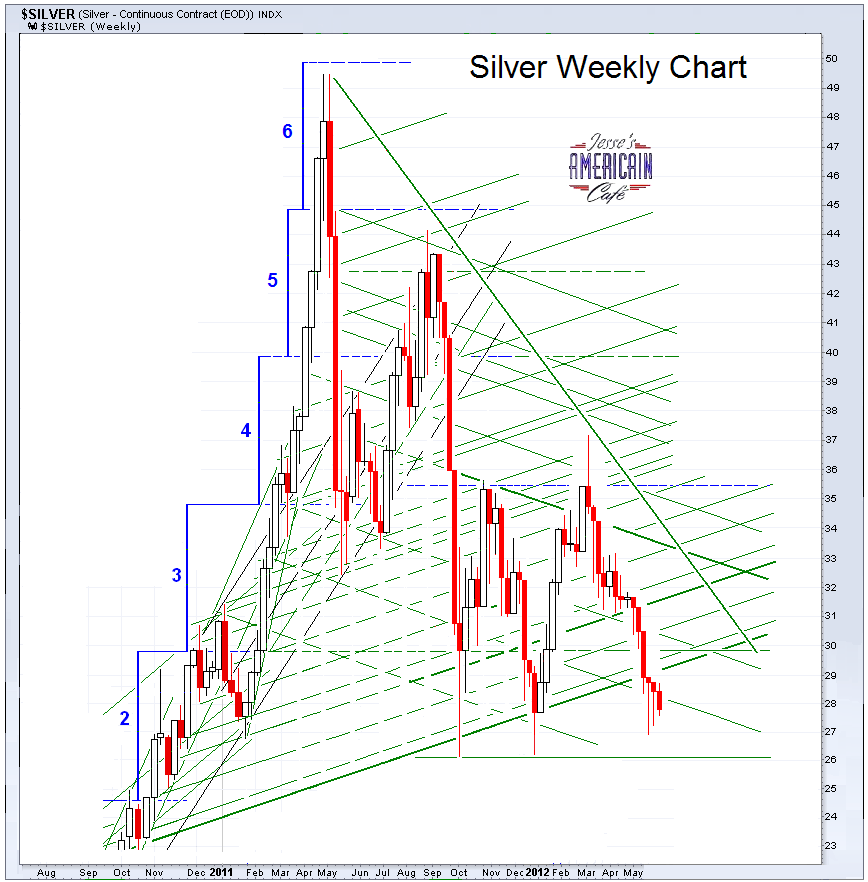
Yada-yada. Yada yada yada.

 |
| Random and Essentially Meaningless Movement of the Gold Price as Perturbed By High Frequency Bombardment |


"I was repeatedly pressured by the CBO Assistant Director, Deborah Lucas, in charge of the Financial Analysis Division to not write nor discuss issues in the banking sector and mortgage markets that might suggest weakness in these sectors and their consequences on the economy and households."
The CBO's 2010 termination letter to Ms. Pham cites her lack of qualifications, "poorly organized" research, and resistance to taking orders from her superiors as the reasons for her firing.

The Social Security trust funds are financial accounts in the U.S. Treasury. There are two separate Social Security trust funds, the Old-Age and Survivors Insurance (OASI) Trust Fund pays retirement and survivors benefits, and the Disability Insurance (DI) Trust Fund pays disability benefits.You can see a listing the Treasury bonds held by the Social Security Trust here.
Social Security taxes and other income are deposited in these accounts, and Social Security benefits are paid from them. The only purposes for which these trust funds can be used are to pay benefits and program administrative costs.
The Social Security trust funds hold money not needed in the current year to pay benefits and administrative costs and, by law, invest it in special Treasury bonds that are guaranteed by the U.S. Government. A market rate of interest is paid to the trust funds on the bonds they hold, and when those bonds reach maturity or are needed to pay benefits, the Treasury redeems them.
"Some in our country think that Social Security is a trust fund – in other words, there's a pile of money being accumulated. That's just simply not true. The money – payroll taxes going into the Social Security are spent. They're spent on benefits and they're spent on government programs. There is no trust."It is not clear to me that Bush II understood what he was saying, understood the legal and economic issues and their implications, or really did not care. If some politicians would like to say the money taken from the public and held in Trust is not there, that the bonds are a fraud and subject to default, then they ought to be able to say who stole it and when, because theft and betrayal it surely is, and as bad or worse than the theft of customer money from the accounts at MF Global, which similarly vaporized by unknown hands, or so they claim.
George W. Bush, February 9, 2005


"The big thieves hang the little ones."
Rolling Stone
SEC: Taking on Big Firms is 'Tempting,' But We Prefer Whaling on Little Guys
By Matt Taibbi
If you want to see a perfect example of how completely broken our regulatory system is, look no further than a speech that Daniel Gallagher, one of the S.E.C.’s commissioners, recently gave in Denver, Colorado.
It’s a speech whose full lunacy is hard to grasp without some background.
It’s by now been well-established that the S.E.C.’s performance in policing Wall Street before, after, and during the crash has been comically inept. It would be putting it generously to say that the top cop on the financial services beat has demonstrated particular incompetence with regard to investigations of high-profile targets at powerhouse banks and financial companies. A less generous interpretation would be that the agency is simply too afraid, too unwilling, or too corrupt to take on the really dangerous animals in this particular jungle.
The S.E.C.’s failure to make even one case against a high-ranking executive involved in the mass frauds leading to the 2008 crash – compare this to the comparatively much smaller and less serious S&L crisis twenty years earlier, when the government made 1,100 criminal cases and sent 800 bank officials to jail – became so conspicuous that by the end of last year, the “No prosecutions of top figures” idea became an accepted meme in mainstream news media coverage of the economic crisis.
The S.E.C. in recent years has failed in almost every possible way a regulator can fail to police powerful criminals. Failure #1 was that it repeatedly fell down on the job even when alerted to problems at big companies well ahead of time by insiders. Six months before Lehman Brothers collapsed, setting off a chain reaction of losses that crippled the world economy, one of Lehman’s attorneys, Oliver Budde, contacted the S.E.C. to warn them that there were problems with the company’s accounting; the agency blew him off. There were similar brush-offs of insiders with compelling information in cases involving Moody’s, Chase, and both of the major Ponzi scheme scandals, i.e. the Bernie Madoff and Allen Stanford cases.
Read the rest here.

"Greece is not an exception. It is one of the main testing grounds for a new socio-economic model of potentially unlimited application: a depoliticised technocracy in which bankers and other experts are allowed to demolish democracy."
Slavoj Žižek
"Corruption is a tree, whose branches are of an immeasurable length: they spread everywhere; and the dew that drops from thence hath infected some chairs and stools of authority."
Beaumont and Fletcher, The Honest Man's Fortune

London Review of Books
Save us from the saviours
By Slavoj Žižek
25 May 2012
Imagine a scene from a dystopian movie that depicts our society in the near future. Uniformed guards patrol half-empty downtown streets at night, on the prowl for immigrants, criminals and vagrants. Those they find are brutalised. What seems like a fanciful Hollywood image is a reality in today’s Greece. At night, black-shirted vigilantes from the Holocaust-denying neo-fascist Golden Dawn movement – which won 7 per cent of the vote in the last round of elections, and had the support, it’s said, of 50 per cent of the Athenian police – have been patrolling the street and beating up all the immigrants they can find: Afghans, Pakistanis, Algerians. So this is how Europe is defended in the spring of 2012...
The prophets of doom are right, but not in the way they intend. Critics of our current democratic arrangements complain that elections don’t offer a true choice: what we get instead is the choice between a centre-right and a centre-left party whose programmes are almost indistinguishable. On 17 June, there will be a real choice: the establishment (New Democracy and Pasok) on one side, Syriza on the other.
And, as is usually the case when a real choice is on offer, the establishment is in a panic: chaos, poverty and violence will follow, they say, if the wrong choice is made. The mere possibility of a Syriza victory is said to have sent ripples of fear through global markets. Ideological prosopopoeia has its day: markets talk as if they were persons, expressing their ‘worry’ at what will happen if the elections fail to produce a government with a mandate to persist with the EU-IMF programme of fiscal austerity and structural reform.
The citizens of Greece have no time to worry about these prospects: they have enough to worry about in their everyday lives, which are becoming miserable to a degree unseen in Europe for decades...
Here is the paradox that sustains the ‘free vote’ in democratic societies: one is free to choose on condition that one makes the right choice. This is why, when the wrong choice is made (as it was when Ireland rejected the EU constitution), the choice is treated as a mistake, and the establishment immediately demands that the ‘democratic’ process be repeated in order that the mistake may be corrected. When George Papandreou, then Greek prime minister, proposed a referendum on the eurozone bailout deal at the end of last year, the referendum itself was rejected as a false choice.
There are two main stories about the Greek crisis in the media: the German-European story (the Greeks are irresponsible, lazy, free-spending, tax-dodging etc, and have to be brought under control and taught financial discipline) and the Greek story (our national sovereignty is threatened by the neoliberal technocracy imposed by Brussels).
When it became impossible to ignore the plight of the Greek people, a third story emerged: the Greeks are now presented as humanitarian victims in need of help, as if a war or natural catastrophe had hit the country. While all three stories are false, the third is arguably the most disgusting. The Greeks are not passive victims: they are at war with the European economic establishment, and what they need is solidarity in their struggle, because it is our struggle too.
Greece is not an exception. It is one of the main testing grounds for a new socio-economic model of potentially unlimited application: a depoliticised technocracy in which bankers and other experts are allowed to demolish democracy. By saving Greece from its so-called saviours, we also save Europe itself.
Read the entire article here.

May 29
QO - June 2012 COMEX miNY Gold - Last Trade Date
QO - June 2012 COMEX miNY Gold - Settlement Date
GC - May 2012 Gold - Last Trade Date
GC - May 2012 Gold - Settlement Date
May 31
GC - May 2012 Gold - Last Delivery Date
GC - June 2012 Gold - First Notice Date
June 1
GC - June 2012 Gold - First Delivery Date


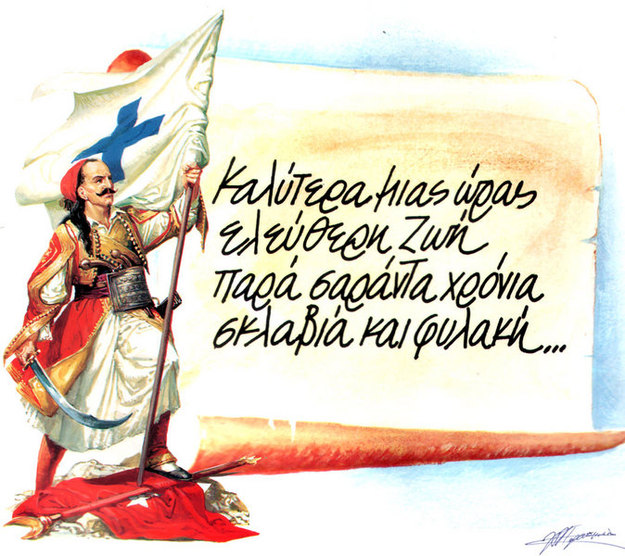
“They don’t want to kill us [the Greek people] but keep us down on our knees so we can keep paying them indefinitely.”
Eva Kyriadou
NYT
Athens No Longer Sees Most of Its Bailout Aid
By LIZ ALDERMAN and JACK EWING
May 29, 2012
PARIS — As Greek membership in the euro currency union hangs in the balance, it continues to receive billions of euros in emergency assistance from the so-called troika of lenders overseeing its bailout.
But almost none of the money is going to the Greek government to pay for vital public services. Instead, it is flowing directly back into the troika’s pockets.
And so, the €130 billion, or $162.2 billion, European bailout that was supposed to buy time for Greece is mainly only servicing the interest on the country’s debt — while the Greek economy continues to plummet.
If that seems to make little sense economically, it has a certain logic in the politics of euro-finance. After all, the money dispensed by the troika — the European Central Bank, the International Monetary Fund and the European Union’s member governments — comes from European taxpayers, many of whom are increasingly wary of the political disarray that has beset Athens and clouded the future of the euro zone.
As they pay themselves, though, the troika is also withholding other funds earmarked for keeping the Greek government in operation...
Read the rest here.


Barry Ritholtz on the Crisis: Causes, Cures, Corptocracy, and Suggested Reading
When you get bit by a dog, you don’t just look at the dog, you have to look at the owner who is holding the leash.To me, a lot of the regulatory changes, and a lot of what the Federal Reserve did, stand on their own as a major factor. But if you’ve read David Hume, if you’ve studied the philosophy of causation, you have to look at what motivated those changes.
I have these debates with friends. One group blames everything on big government; the other group blames everything on big corporations. The sad news is that there’s really no difference between the two: Big government and big corporations work hand-in-hand. If you want to know who is the puppet and who is the puppet master, it sure looks like Wall Street has been pulling the strings of Congress for many, many, many years.
I remember the Dick Durbin quote, right in the middle of the crisis. He was astonished at all the bankers and bank lobbyists running around the halls of Congress, and said, “I can’t believe these guys – they act as if they own the place.” The fact is, it’s not an act – they do own the place...
Read the rest here.