14 December 2015
Silent Night, 1914
Late on Christmas Eve 1914, men of the British Expeditionary Force (BEF) heard Germans troops in the trenches opposite them singing carols and patriotic songs and saw lanterns and small fir trees along their trenches. Messages began to be shouted between the trenches.
The following day, British and German soldiers met in no man's land and exchanged gifts, took photographs and some played impromptu games of football. They also buried casualties and repaired trenches and dugouts. After Boxing Day, meetings in no man's land dwindled out.
The truce was not observed everywhere along the Western Front. Elsewhere the fighting continued and casualties did occur on Christmas Day. Some officers were unhappy at the truce and worried that it would undermine fighting spirit.
After 1914, the High Commands on both sides tried to prevent any truces on a similar scale happening again. Despite this, there were some isolated incidents of soldiers holding brief truces later in the war, and not only at Christmas.
British Imperial War Museum, The Real Story of the Christmas Truce
13 December 2015
Gold and Silver Daily Trading Patterns For November 2015
Does anyone see a marked daily pattern in the precious metals for the month of November?
What a surprise!
These charts are from Nick Laird at goldchartsrus.com
Category:
gold intraday,
gold manipulation,
silver intraday,
silver manipulation
12 December 2015
Fear, Intolerance, and Anger
On the weekend I took a long autumn walk from my hotel down the Tiergartenstrasse past the park, and up to the Unter Den Linden, and from there to the Brandenburg Gate. The famous 'Checkpoint Charlie' was no longer standing, but you could see where it had been.
I had wanted to see the Pergamon Museum in what had been East Berlin on 'Museum Island' in the Spree River, to see the famous Pergamon Altar, and the Ishtar Gate and Processional Way. I also visited the Alte Nationalgalarie.
Some of the other buildings were old and in a state of disrepair. I remember how many still carried bullet holes and signs of the war, even after so many years.
But on the way there, between the Brandenburg Tor and the Staatsoper Haus, I happened to spot a memorial at Bebelplatz. And in the middle of the square was a metal plaque.
"In Der Mitte dieses Platzes verbrannten am 10. Mai 1933 Nationalsozialistische Studenten die Werke Hunderter freier Schriftsteller, Publizisten, Philosophen und Wissenschaftler."
In the middle of this square on 10 May 1933 National Socialist students burned the works of hundreds of freelance writers, publicists, philosophers and scientists.
In the federal elections of 1928, the Nationalsozialistische Deutsche Arbeiterpartei or NSDAP received only 2.6% of the national vote. They were widely considered to be an oddity and a joke.
Even though the German economy had stabilized by that time in the aftermath of the Weimar hyperinflation of 1918 to 1924, the Crash of 1929 drove unemployment rose from 8.5% to 30% by 1932.
In the federal elections of July 1932, the NSDAP received 37% of the national vote, but 230 seats in Parliament, it had become the largest single party.
In the federal elections of November 1932, the last free election in that nation for some time, the NSDAP received 33% of the national vote, and 196 of the seats.
In a January 1933 compromise promoted heavily by industrialists who feared socialism and communism, the NSDAP party leader was named chancellor of a coalition government.
In February 1933 there was a fire that destroyed part of the Reichstag building that was blamed on the communists. In response, the government passed the Decree of the Reich President for the Protection of People and State , Reichstagsbrandverordnung, which suspended civil liberties and outlawed all other political parties. This is also known as the Machtergreifung.
In March 1933, in an election marked by violent repression and the silencing of most political opponents, starting with the left but moving quickly to include the Social Democrats and the Zentrum, or Center Party, the NSDAP received 43% of the national vote, and 288 seats out of 647.
The Enabling Act, Gesetz zur Behebung der Not von Volk und Reich, was passed, and plenary power was granted to the Chancellor to enact laws without the involvement of the Reichstag.
By July 1933 there were about 27,000 key political leaders and journalists, in opposition to the NSDAP, housed in newly established concentration camps in Oranienburgm Esterwegen, Dachau, and Lichtenburg.
There were no more meaningful elections until 1949.
In their fear and anger the German people reached for a strong and decisive leader who promised them a return to normalcy and freedom from their confusion, and sought to preserve themselves as they wished to be with the heady fumes of power. The will to power serves none but itself.
The great majority of the people looked on, and did nothing.
And the rest, as they say, is history.
"Das war ein Vorspiel nur, dort
wo man Bücher verbrennt,
verbrennt man am Ende auch Menschen."
Heinrich Heine, Almansor: A Tragedy
Category:
false flag,
Reichstag Fire,
will to power
11 December 2015
Gold Daily and Silver Weekly Charts - FOMC Wednesday, Quad Witch Friday
Most of the economic reports before Wednesday afternoon will be interpreted in light of the pending FOMC decision on whether to end ZIRP.
Frankly, I don't see how the Fed can not raise rates now, and maintain their credibility, unless some major exogenous event occurs. The markets will wonder what the Fed is seeing that they are not, or even worse, what the Fed is hiding.
And I certainly do not think they are more concerned about the real economy now than they are with their own needs to get some policy room below their key rate so they can cut it again when their latest bubble implodes.
The economic reports coming out these days remind me of the painfully obvious special effects from the old 'Batman' television show.
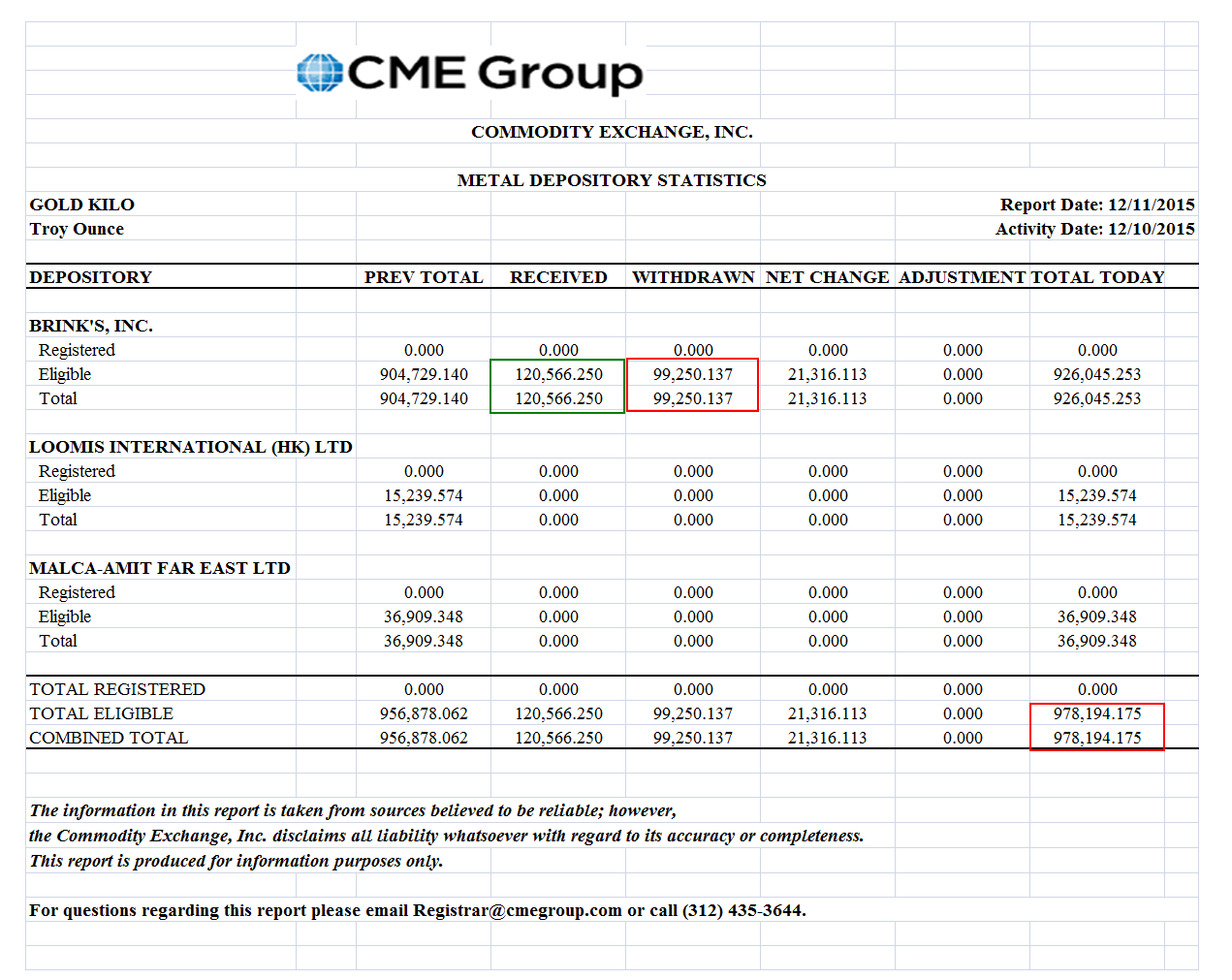
And speaking of painful reports, we saw some inconsequential precious metal deliveries at The Bucket Shop yesterday. There was some cursory movement in the gold warehouse, with more active 'pushing around the plate' in silver. That means there was quite a bit of movement, but nothing much to show for it in the end.
The CME is changing their rules for declaring force majeure as noted in this document.
And today was the day for the unscheduled exit of Harriet Hunnable from her post as the Executive Director of precious metals at the CME.
Gold caught a little bid today that felt like a minor flight to safety, and silver barely hung on to the 14 handle.
So let's see what antics the Street might deliver next week, with such a nice one-two events punch opportunity, with the Fed's 'big decision' followed two days later with a quad witch. Mining stocks might be a roller coaster. All the better to skin you with, my dear.
Have a pleasant weekend.
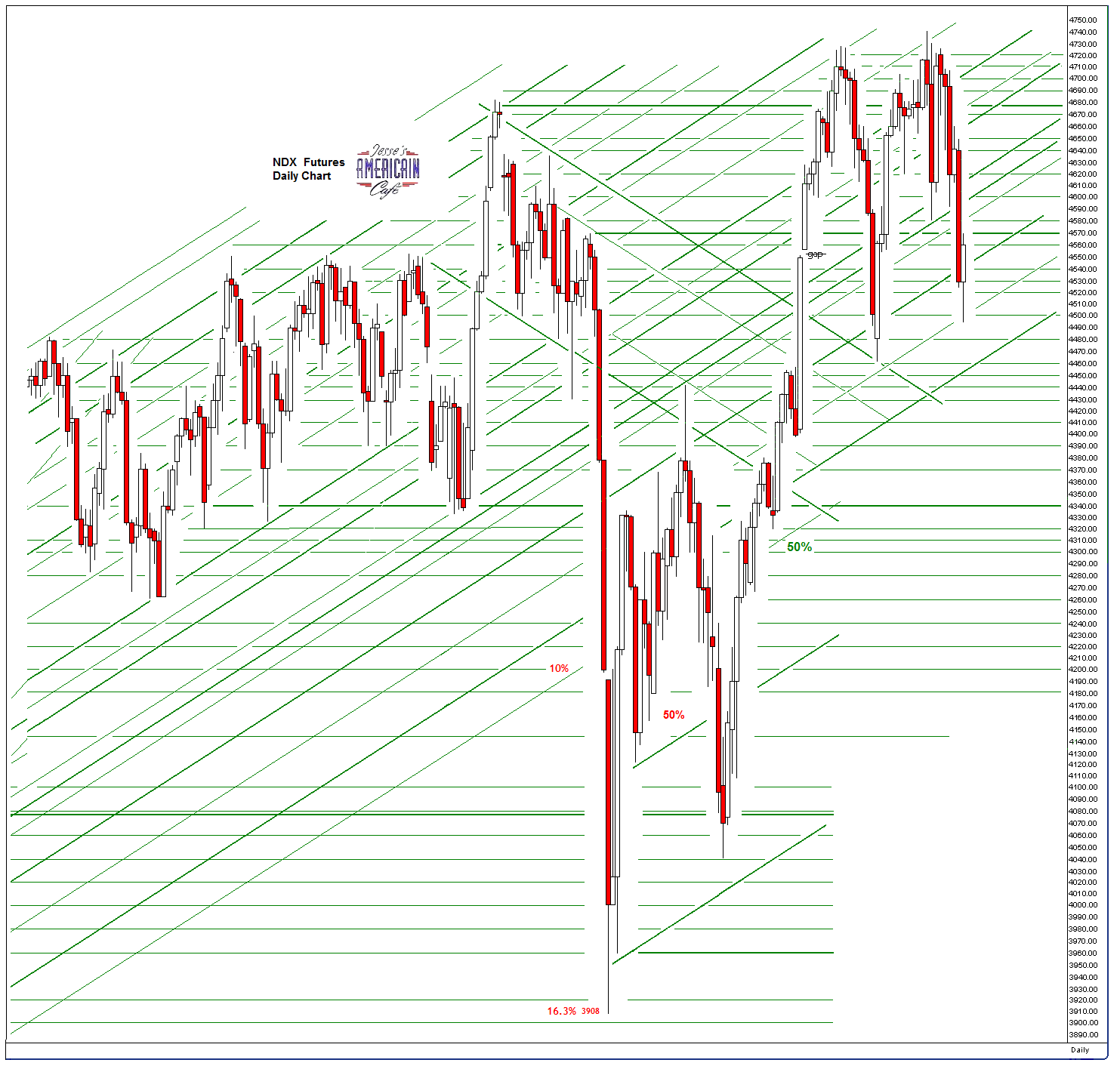
SP 500 and NDX Futures Daily Charts - Wobbly Ahead of Next Week
The Fed is widely expected to raise rates next week. I will show the entire economic calendar in tonight's precious metals commentary.
And next Friday is the December 'quad witching' option expiration.
So what is this really, fear of the Fed, or some antics de luxe ahead of the option expiry?
I'd give it even money at the moment with a lean towards cynicism.
Have a pleasant weekend.
Subscribe to:
Comments (Atom)