skip to main |
skip to sidebar
"Heroes are not giant statues framed against a red sky. They are people who say: This is my community, and it is my responsibility to make it better. Interweave all these communities and you really have an America that is back on its feet again. I really think we are gonna have to reassess what constitutes a 'hero.'"
Studs Terkel
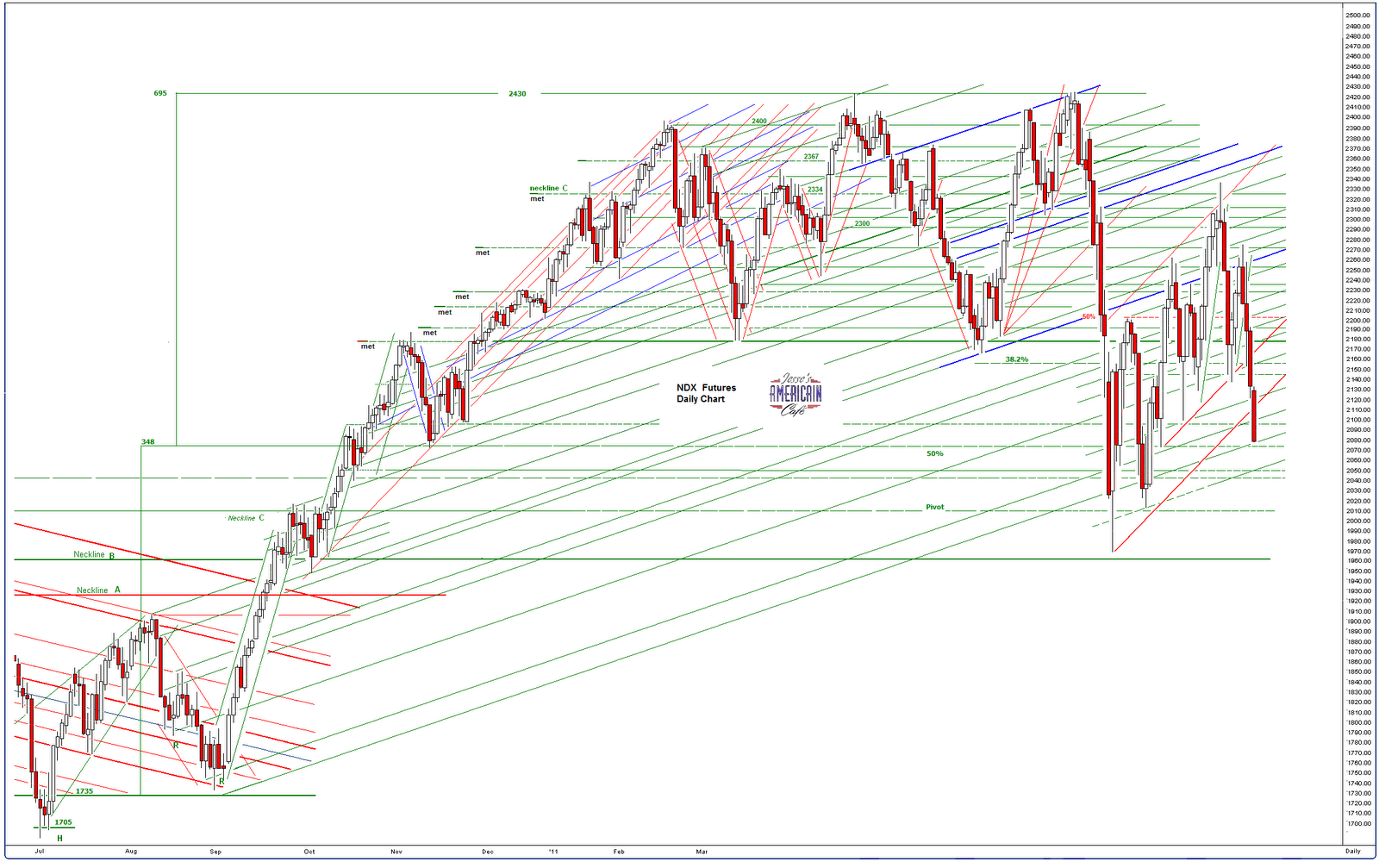
Big up day, third in a row, ahead of the Non Farm Payrolls report.
It was 'risk on' today. Let's see if it can hold through the weekend.
I would like to see a flat financial transaction tax enacted, applicable to any exchange. The tax would be $1 (or £1 or €1 or ¥100 for example) for any trade on any exchange public or private, for any registered security including derivatives, without regard to the size of the trade. I would even consider a lesser amount, say $.25 for example, based on better tax revenue estimates.
The real economy is being slowly strangled by an outsized financial sector that has purchased a politically sanctioned franchise for outsized fees and public subsidies.
The financial transactions tax would be paid on the buy side. No exemptions. None. Zip. Not even for 'wholesale' traders or banks, or those who own 'seats' on the exchange. It is a cost of doing business. You buy, you pay $1 for each purchase.
The purpose of the tax would be to fund the regulation of the financial industry and the Consumer Protection in the financial industry.
The tax 'burden' would fall most heavily on those engaged in High Frequency Trading. It would not halt the phony 'bid stuffing' phenomenon which would have to be dealt with in other ways. But it would help.
The money would be 'earmarked' for the Regulatory bodies. The government would not be able to divert it to other uses. This is similar in concept to the gasoline tax in the US which is a flat rate per gallon of gasoline, which is used to expand and maintain their Interstate Highway System.
The most common objection is that it would make the domestic exchanges less competitive, and that people would find ways to 'cheat.'
If this rule were to drive more fruitless speculation out of country, then perhaps one might add some incentives for these speculative companies to leave, and take more of their white collar con men with them. Let them see how they fare in Asian countries when they are caught in a fraud. Perhaps their could be a pay per view for the punishments.
Liquidity objections are a red herring, a joke. HFT adds no liquidity, it amplifies short term movements. It is not the same as the specialist system, not at all.
As for cheating, with a more fully funded set of regulatory bodies with professional career employees with an in depth understanding of the industry and continuity in position, not these revolving door suits who can't wait to work again for the industry companies they regulate, the cheating might become more manageable.
By the way, and in an somewhat unrelated discussion, I would use these funds to immediate tighten the regulations and enforcement against naked short selling, especially in the US and Canada.
Next up, reform of the transfer pricing abuses that allow international corporations to realize revenues in the country of their choice.
As for personal taxes, significantly raising the income triggers a flat 25% AMT to let's say $400,000 but tightening the exemptions until they include any 'income' of any sort from any source would be a good place to start. That is quickly achievable. We might also consider a modest AMT for corporations based not on 'income' but on reported revenues from whatever sources.
Businesses do not 'create jobs' like benificent gods. They respond to market opportunity and consumer demand for products and services. Incenting business in the face of failing demand cause by stagnant median wages and high unemployment is just a variation of the trickle down economic theory.
Create sustainable demand, and independent businesses will rush to fill it. The problem lies with the inefficient businesses, the zombie cartels, monopolies, and rentiers who have 'purchased' public franchises to take fees by buying politicians and favorable legislation.
These reforms would be almost easy to achieve, given a functioning political system responsive to the voters, compared to the biggest and most intractable problem facing the US, which is campaign finance reform, and the crowding out of the individual from the political process.
Never happen you say? I would agree that any proposals along these lines would be ignored, and if they gained notice, ridiculed and shouted down. It would be fun and informative to watch who screams the most, and who they do it for.
Well, all right then, but do not expect there to be any sustainable economic recovery.
The Banks must be restrained, and the financial system reformed, with balance restored to the economy, before there can be any sustained recovery.
As Hermann Hesse oberved, "When the suffering become acute enough, one moves forward."
A nice bounce in the metals with gold up to key resistance.
The trusts and funds are responding as well as the mining companies, ahead of tomorrow's important September Non-Farm Payrolls report.
One notable variant in this is the unusually large premium being given to the Central Gold Trust. This is almost certainly due to a short squeeze as it is one of the least 'liquid' of the closed end funds with only 16.6 million units. The premium on PSLV is expansive but it is usually so.
I have done some redrawing of the daily Gold chart which will be released this evening.
"...the unforgiven
Fire which Prometheus filch'd for us from heaven."
Lord Byron, Don Juan, Canto I.
"So we went to Atari and said, 'Hey, we've got this amazing thing, even built with some of your parts, and what do you think about funding us? Or we'll give it to you. We just want to do it. Pay our salary, we'll come work for you.' And they said, 'No.' So then we went to Hewlett-Packard, and they said, 'Hey, we don't need you. You haven't got through college yet.'"
"Innovation has nothing to do with how many R&D dollars you have. When Apple came up with the Mac, IBM was spending at least 100 times more on R&D. It’s not about money. It’s about the people you have, how you’re led, and how much you get it."
“Innovation distinguishes between a leader and a follower.”
“I didn’t see it then, but it turned out that getting fired from Apple was the best thing that could have ever happened to me. The heaviness of being successful was replaced by the lightness of being a beginner again, less sure about everything. It freed me to enter one of the most creative periods of my life.”
"The cure for Apple is not cost-cutting. The cure for Apple is to innovate its way out of its current predicament.” (1999)
"Almost everything -- all external expectations, all pride, all fear of embarrassment or failure -- these things just fall away in the face of death, leaving only what is truly important. Remembering that you are going to die is the best way I know to avoid the trap of thinking you have something to lose. You are already naked. There is no reason not to follow your heart."
“Do you want to spend the rest of your life selling sugared water, or do you want a chance to change the world?”
Steve Jobs
"The U.S. and Europe have always suppressed the rising price of gold. They intend to weaken gold's function as an international reserve currency. They don't want to see other countries turning to gold reserves instead of the U.S. dollar or Euro.
Therefore, suppressing the price of gold is very beneficial for the U.S. in maintaining the U.S. dollar's role as the international reserve currency. China's increased gold reserves will thus act as a model and lead other countries towards reserving more gold."
China World News Journal, Shijie Xinwenbao, 04/28/2009
The market rallied today again on headline hopes of an orderly resolution to the Greek default.
There is likely to be a Greek debt default and restructuring. What the market does not yet understand is how it will be packaged and the extent of the damage to the debtholders, in particular some of the European banks.
According to Bloomberg the Europeans are running new bank stress tests based on a range of scenarios. I think the biggest variable is a haircut on the debt ranging from 21 to 50 percent.
What is a bit disappointing is that gold and silver continue to move with stocks, in the 'risk on risk off' trade. It would be better if gold were to rise as a risk aversion flight to safety trade. But of course there is quite a bit of perception management going on.
Non-farm payrolls coming up, and it may remind the markets of other risks. Be careful. The downtrend is not yet broken.
I tend to view 1540 to 1580 as key support for the gold futures based on the third chart.
Depending on how they wrap the rescue I am still thinking that a rally and some spikes will take gold back into a track to hit $2000 by year end. But let's not get ahead of ourselves.
Another low is possible at the supports indicated. And there is significant risk yet in the year end target. But once the ball gets rolling a $150 up day could break the usual pattern of capping rallies at 2%. The western central banks have used quite a bit of their reserves in this latest beat down of bullion.
And I still think the silver Comex market will resolve into a de facto default with forced cash settlements. I am not sure how they will justify this travesty. I think a case could be made that we are already there with so many deliveries being pushed into paper settlements with GLD and SLV.
But let's allow this to play out to the almost inevitable bitter end. There will be a story, and there will have to be some provision to head off an avalanche of litigation.
Greece is going to default, one way or the other.
The real question is how they will package it, and how big the haircut will be to the debt holders, anywhere from 21 to 50 percent.
Europe is running 'stress tests' again on the banks, obviously to see how they will fare against a range of scenarios.
I think they might buy the news if the haircut is below 50 percent and no banks are taken down with it. But this *could* be a secondary reaction depending on how they spin the deal.
"The wealthy, not only by private fraud but also by common laws, do every day pluck and snatch away from the people some part of their daily living. Therefore, when I consider and weigh in my mind these commonwealths which nowadays do flourish, I perceive nothing but a certain conspiracy of rich men in procuring their own commodities under the name and authority of the commonwealth.
They invent and devise all means and crafts, first how to keep safely without fear of losing that which they have unjustly gathered together, and next how to hire and abuse the work and labor of the people for as little money and effort as possible."
Thomas More, Utopia
No chart updates tonight as I have out of pocket on personal business most of the day.
Here is a simple description of what is driving the markets. It is basically a counter party risk situation involving the biggest banks in the Western financial system.
If you keep this in mind most of the things that are happening will be more clear, even though the mind of the status quo rebels against it. People will believe what is in their best interests, long perhaps after it is beyond repair.
I think the endgame is well underway, and the outcome is not saving the public, but managing the transition to a new system, while hopefully keeping the same ruling class. That will not be disclosed while 'the players' jockey for advantage and position, 'turf' and the privilege of rents, if you will, well ahead of the crowd.
The European Central Bank and the Federal Reserve will bail out the banks again, and seek an 'orderly resolution' to the Greek situation. This will involve either an overt or de facto devaluation of the Euro and the Dollar. Make no mistake, the Dollar will not be allowed to appreciate dramatically for the same reasons that all the other currencies wish to avoid such an outcome.
The Dollar and the Euro are the relativistic value expressions of the financial system. They have no substance otherwise, no permanence except for the will of keepers of the system. The DXY is only an expression of the Euro and Yen and a few other fiat currencies. They are created at will.
And so in advance of the coming devaluation, gold is hit hard in order to maintain the confidence in the fiat system, with the clumsy propaganda pieces in the compliant mainstream media, and so that when bullion rises in reaction to the currency devaluations it will be easier to control, as Paul Volcker had suggested.
"That day the U.S. announced that the dollar would be devalued by 10 percent. By switching the yen to a floating exchange rate, the Japanese currency appreciated, and a sufficient realignment in exchange rates was realized. Joint intervention in gold sales to prevent a steep rise in the price of gold, however, was not undertaken. That was a mistake."
Paul Volcker, Nikkei Weekly 2004
And this is why some European countries are already taking action to throttle demand, and to prevent a 'run on the central bank.'
Asia sees what is happening and is already trying to prepare for the next phase in the currency wars. The western nations leave the ordinary person relatively defenseless, almost as if by design.
This would all have been simpler and less destructive if the Western nations had conceived the will to nationalize the big banks when the system began to deteriorate as a result of their recklessness, and to administer their restructuring or dissolution, and reform the system, as they had done in the S&L crisis. But that would have required genuine investigation, prosecution, and disclosure.
So now the developed nations are caught in a credibility trap, and the real economy is being drained to fill the gaping hole in the wealth amassed in the credit bubble, largely held by the monied interests, which Citi had referred to in 2005 as the 'plutonomy.'
Follow the Money: Behind Europe’s Debt Crisis Lurks Another Giant Bailout of Wall Street
By Robert Reich
Tuesday, October 4, 2011
...The Street has lent only about $7 billion to Greece, as of the end of last year, according to the Bank for International Settlements. That’s no big deal.
But a default by Greece or any other of Europe’s debt-burdened nations could easily pummel German and French banks, which have lent Greece (and the other wobbly European countries) far more.
That’s where Wall Street comes in. Big Wall Street banks have lent German and French banks a bundle.
The Street’s total exposure to the euro zone totals about $2.7 trillion. Its exposure to to France and Germany accounts for nearly half the total.
And it’s not just Wall Street’s loans to German and French banks that are worrisome. Wall Street has also insured or bet on all sorts of derivatives emanating from Europe – on energy, currency, interest rates, and foreign exchange swaps. If a German or French bank goes down, the ripple effects are incalculable.
Get it? Follow the money: If Greece goes down, investors start fleeing Ireland, Spain, Italy, and Portugal as well. All of this sends big French and German banks reeling. If one of these banks collapses, or show signs of major strain, Wall Street is in big trouble. Possibly even bigger trouble than it was in after Lehman Brothers went down.
That’s why shares of the biggest U.S. banks have been falling for the past month. Morgan Stanley closed Monday at its lowest since December 2008 – and the cost of insuring Morgan’s debt has jumped to levels not seen since November 2008.
It’s rumored that Morgan could lose as much as $30 billion if some French and German banks fail. (That’s from Federal Financial Institutions Examination Council, which tracks all cross-border exposure of major banks.)
$30 billion is roughly $2 billion more than the assets Morgan owns (in terms of current market capitalization.)
But Morgan says its exposure to French banks is zero. Why the discrepancy? Morgan has probably taken out insurance against its loans to European banks, as well as collateral from them. So Morgan feels as if it’s not exposed.
But does anyone remember something spelled AIG? That was the giant insurance firm that went bust when Wall Street began going under. Wall Street thought it had insured its bets with AIG. Turned out, AIG couldn’t pay up.
Haven’t we been here before?
Republicans and Wall Street executives who continue to yell about Dodd-Frank overkill are dead wrong. The fact no one seems to know Morgan’s exposure to European banks or derivatives – or that of most other giant Wall Street banks – shows Dodd-Frank didn’t go nearly far enough.
Regulators still don’t know what’s happening on the Street. They have no clear picture of the derivatives exposure of giant U.S. financial institutions.
Which is why Washington officials are terrified – and why Treasury Secretary Tim Geithner keeps begging European officials to bail out Greece and the other deeply-indebted European nations.
Several months ago, when the European debt crisis first became apparent, Wall Street banks said not to worry. They had little or no exposure to Europe’s problems. The Federal Reserve said the same. In July, Ben Bernanke reassured Congress the exposure of U.S. banks to European nations in trouble was “quite small.”
Now we’re hearing a different tune.
Make no mistake. The United States wants Europe to bail out its deeply indebted nations so they can repay what they owe big European banks. Otherwise, those banks could implode taking Wall Street with them. (And this is why the Fed is helping to finance the arrangement with eurodollars which are no longer tracked as part of M3 - Jesse)
One of the many ironies here is some badly-indebted European nations (Ireland is the best example) went deeply into debt in the first place bailing out their banks from the crisis that began on Wall Street.
Full circle.
In other words, Greece isn’t the real problem. Nor is Ireland, Italy, Portugal, or Spain. The real problem is the financial system centered on Wall Street. And we still haven’t solved it.
And that problem will not be solved in the way that you might think of it, because the people 'solving it' are the same ones who created it. Their every effort will be directed toward increasing their power and preserving their situations and advantages, to the exclusion of most other concerns.
Bounce today on a flight to safety, a concept that is still valid except during option expiration periods and panic liquidations perhaps.
There is a growing difference between the physical market and the paper markets. At some point they will converge.
"So the Western central banks got together, leased out some gold and the bullion banks sold the gold. The central bank gold being unloaded by the bullion banks is not to get the best price, but to smash the price. The smartest way to sell the gold would be to do it in the liquid sessions. But the pattern during the decline was they were selling it in the overnight session when things are quiet. This was no different that what we saw at the end of April, beginning of May on that coordinated smash.
You have to ask the question, why would anyone sell at the most illiquid times? It is not to get the best price, it is to move the market in the direction you want to move it...
The Asians have been buying like crazy, all through this takedown they have been buying. We have seen massive premiums and bottlenecks in supply, they simply cannot get enough physical metal as the prices have dropped. The demand has literally been insatiable. As I have stated before, the central bank gold, which was used to sell the market down, has gone to vaults in Asia. That’s a one way trip, it doesn’t come back into the market..."
'London Trader' at KWN, Insatiable Demand for Physical Gold
The downtrend is still not broken yet.
The equity markets are going to keep hacking up hairballs until Benny and Mario Draghi, Jean Claude's successor, gives them the big fat bowl of monetary cream that they want.


Downside on the stocks which went out on their lows, led by the financial stocks based on fears of contagion from a Greek default.
A few people have asked me about the recent story concerning France banning cash sales of gold and silver. The story originated here but was picked up by quite a few other sites last week. I was waiting to get some additional information before I posted it as well.
This is different from the reports of limits specifically on gold and silver sales in Austria.
"According to the bank representatives and manager we spoke with, Austrian banks have now been ordered to restrict the sale of gold and silver bullion purchases and are limiting personal acquisitions of precious metals to 15,000€ (approximately $20,700 USD) at a time, or 11 ounces of gold at today’s prices."
Here is a link to the French law that has caused this latest discussion.
Tightening the Noose: France Bans Cash Sales of Gold/Silver over $600
By Mac Slavo
September 23rd, 2011
"...It looks like this trend of restricting the peoples’ ability to acquire assets of real monetary value is expanding. If a recent report from France is accurate, and based on the French governments official web site it looks like it is, then as of September 1, 2011, anyone attempting to sell or purchase ferrous or non-ferrous metals, which includes gold and silver, will be required to pay for their purchase via a credit card or bank wire transfer if it exceeds 450€ (~ $600 USD)...
...According to independent reports the law was passed to curb the illegal sale of stolen metals like copper, steel, etc. Given the rampant rise in thefts of these metals from telephone poles, construction sites and businesses here in the United States, we can certainly see this as a reasonable assessment for why the French passed this law.
However, the fact that no exception was made for gold and silver simply cannot be ignored. The new law effectively makes it illegal to purchase even a single Troy ounce of gold or around 18 ounces of silver in cash."
So I asked an aficionado of the metals in France what the straight story is on this, and here is the reply:
This law is basically saying that retail “metal” transaction OF ANY AMOUNT cannot be paid in cash. It further says that there is a limit to how much metals can be transacted via retail up to a limit set by decree (not yet specified).
Any retail transaction above 450EUR must be paid via bank transfer (ACH). This is encompassing all goods and services, not just metals.
I called a gold coin & bar dealer whom I know in Paris.
They told me that their legal counsel is awaiting for the final interpretation of this new law sometimes this week.
In the mean time, they still sell gold to retail customers and accept cash payments without requiring an ID for transactions up to 3000 EUR per day per person.
She warned me that it may change any time.
And so there you have it. If you wish to buy gold and silver unobtrusively in France you may wish to do so now. Otherwise be prepared to start using bank transfers including credit cards for all transactions in any metal, and all large transactions for anything it seems.
It is hard to accurately judge official motives in this sort of action. It *could be* to restrict activity in stolen copper as some have said. It may very well limit demand for the 500EUR note. lol.
But it could also be to limit the incentive for a run on the banks by making cash less useful to hold. It also helps to channel more transactions through the fee-taking banks, which is a tax on the real economy.
And it might very well be designed to restrict a run on the metals if the western currencies are devalued. I have heard elsewhere that this is tied to the revaluation of gold relative to other currencies which will be included in the new composition of the SDR. I have also heard that one or two countries will include gold in their official reserves and tie it to their currency at some official rate that is substantially higher than the current spot prices, setting up an interesting change in market structure.
In other words, this law has the flavor of currency controls to prevent a bank run in preparation for a devaluation. And given the current nature of their trade deficit, I think it is a bit naive to assume that the US will stand idly by and not participate in this coordinated devaluation as well. Even that stalwart of hard assets Switzerland had to give way and weaken its currency to preserve its exports.
Restricting and manipulating short term prices can only go so far. At some point it appears they must also try to regulate and restrict access by private individuals if there is a market dislocation and a change in status quo. I fully expect that all exchange defaults will be force settled in cash at an official rate. And the retail bullion inventory would likely disappear from the shelves overnight except at the most outrageous prices.
With Asia moving to more widely encourage private ownership of gold and silver, the international dynamics may become most interesting.
This reminds me somewhat of restrictions and laws regarding foreign currency in Moscow and other eastern European countries in the 1990's. There was a state dictated exchange rate, and all currency was to be done in an official exchange office.
The practical effect was that no one wanted roubles except grudgingly, and most non-official transactions were made at street rates in hard currencies like Swiss francs, Deutsche marks, or Dollars. And there were official shortages of many staples as the markets moved 'underground.'
My, how times have changed. But they will never learn.
As I wanted to look into the gold and silver situation, and the concentrations there amongst the Anglo-Americans I left out an important fact about derivatives in general.
The US OCC report does include not only commercial banks and trusts with US subsidiaries, but also "Bank Holding Companies."
The bank holding company report, while shown at a high level, is not included in the breakdowns of positions in gold and silver, so it is not correct to assume that these fellows do not have positions there. Rob Kirby informs me that this is because the OCC has regulatory oversight for commerical banks and trust, but the Fed has authority over the holding companies.
As you can see from the attached below, Morgan Stanley is a huge player in the derivatives market, but at the Holding Company level. I am privately informed that they are also major players in the gold and silver derivatives trade.
This to me is important, since their CDS are recently amongst the weakest in the US banks, as Bloomberg has been recently emphasizing, and so they probably present some of the highest counter party risk amongst the current crop of players. As the OCC does not break down positions held at the holding company level, even though they claim to include off balance sheet items, it presents an incomplete picture.
Perhaps under regulatory reform, the Fed will begin to disclose more information to the OCC, and to the public, as to the true health and holdings of the Bank Holding Companies. The difference in the two categories with respect to derivatives positions is roughly $83 trillion.
I neglected completely to mention this and even contrasted Morgan Stanley with Goldman at the commercial bank level.
I ask your indulgence for this omission.