11 March 2011

SP 500 and NDX March Futures Daily Charts: Weekend at Bennie's


Neither snow, nor rain, nor riots in Saudi Arabia or once in a hundred year earthquakes shall deter these markets from rallying into the close. Good old Benny, always can depend on him to turn a frown upside down.

Seriously, although the major US indices had a nice bounce off their lows, they are far from out of the woods, and we cannot yet be complacent about this correction.

Defensive positions are recommended until the uptrend is re-established. While it was heartening to see the SP 500 climb back above its 50 DMA which is now around 1299, the NDX tech sector is still lagging withits 50 DMA around 2317, and this is the chart that I watch, in addition to financials and the Russell 2000, to judge the quality of any rallies. Too often they will jam the SP 500 futures higher and try to drag the rest of the market along with it.

I will be keenly interested in seeing the full extent of the damage in Japan, and any follow on problems to a quake of this magnitude, especially with regard to their nuclear infrastructure. I am sure they will handle it as they have done so many times in the past, rising as one people to the challenge. There will be many comparisons to how the markets reacted to the Kobe earthquake in the 1990's.

In terms of the US economy, there is no real recovery yet that I can determine. The earthquake of the financial crisis has left the country divided, its economy sputtering. Repairs have not been made, and those who created and benefited from the crisis are seeking conscripts to take their pain.

John Williams of Shadowstats had this to say:

"Markets Are Flying Blind.

In terms of meaningful economic reporting, the financial markets continue to be flying blind, at the moment. Economic data of questionable significance continue to flow from the government’s statistical bureaus, including this morning’s (March 11th) report of February retail sales. There will be a full review of the economic outlook in the Hyperinflation update, and the constant-dollar February retail sales will be assessed in the March 17th Commentary, following the CPI release.

On its surface, the February retail sales report was positive on a nominal (not-adjusted for inflation) basis, as well as likely in real (inflation-adjusted) terms. The reporting-quality problems remain in unstable monthly seasonal-factor adjustments. Seasonal patterns have been warped by the depth and duration of an economic downturn that is unprecedented in the post-World War II era of modern economic reporting. The retail data will be revised in a pending annual benchmark revision, scheduled for April 29th.

At that time, retail sales levels and growth of at least the last year should be subject to major downside revisions, showing a weaker economy than has been recognized previously. As with the recent, major downside revisions to payroll employment, and the pending downside revisions to industrial production later in March, the retail sales downgrade will be a precursor to major downside revisions in GDP history of the last several years, which are due for release in late July.

While there also are seasonal-adjustment issues with the trade data, the reported January 2011 deficit has set up a potential dampening of growth to be reported in first-quarter 2011 GDP, at the end of April."

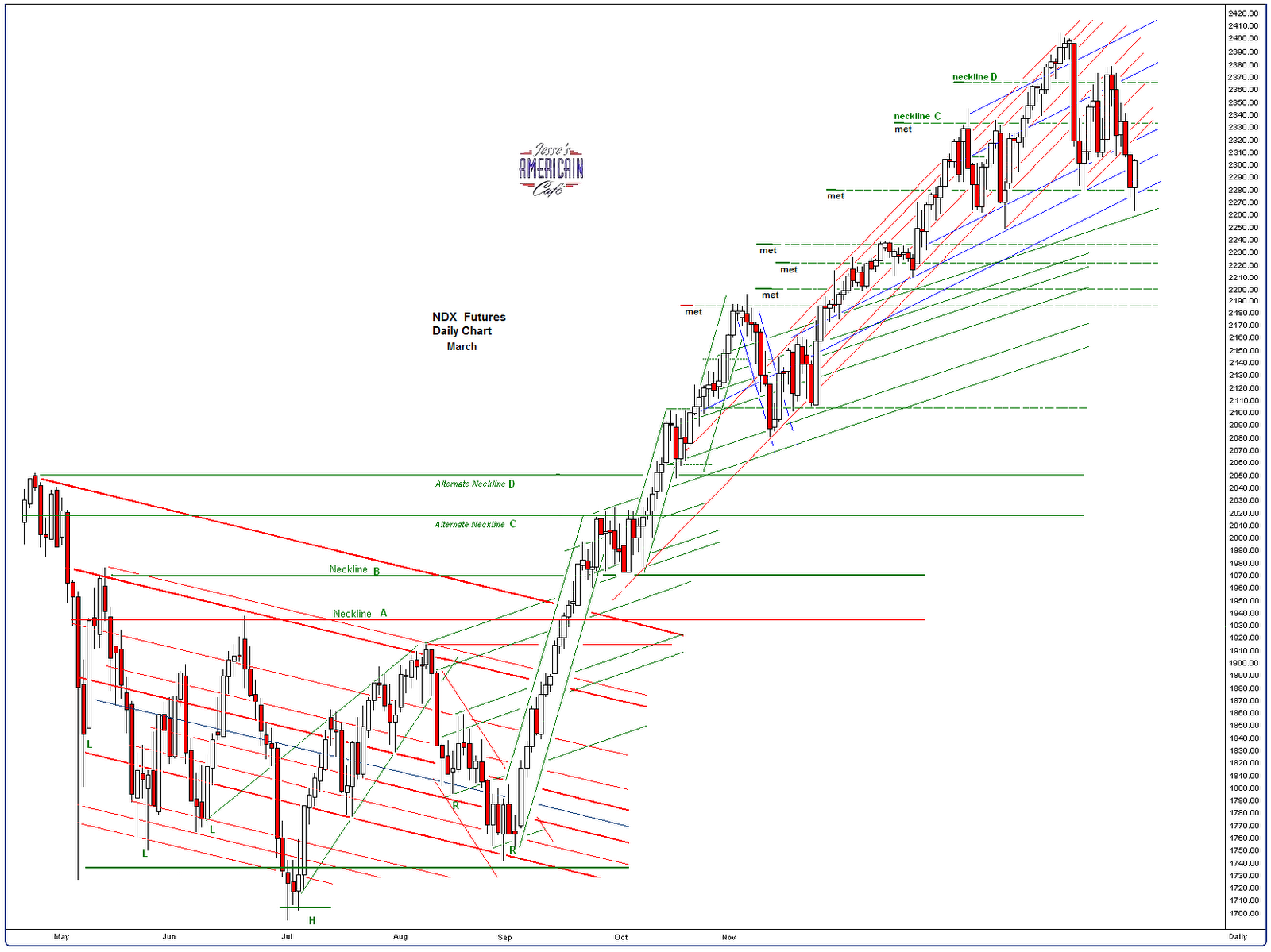

Weekend At Bennie's - Looking Good!

A Message Received From a Friend In Japan


As a side note I have taken profits and/or hedged out some of the risks on the somewhat oversized mining trades I had placed this morning in the precious metals complex when the Bankmistress and her crew threw their daily hissy fit over being trapped in a rather large silver short, with the plebes daring to demand delivery.

The news from Japan is not good, and Saudi Arabia is eerily quiet. But at the end of the day, all these US based markets are a hologram remotely related to economic reality anymore, just the dream of a Bernankesque butterfly.

"Just got home 3 AM.

The problem is that most trains are not running. People walking home, streets were packed, traffic really slow. Then they get to Shinjuku, Ikebukuro, Shibuya, and can't go farther, so are packing karaoke boxes and restaurants and sleeping in the station until morning. Ikebukuro station had people lining the walls napping.

So, for the most part, for most people in Tokyo, it was a big nuisance. Had that quake happened off the coast of Chiba or Tokyo Bay, it would have been unbelievably bad.

I have never seen this before. The megaquake seems to be setting off secondary quakes all over, from central Honshu to east Honshu... up to 500 miles from the megaquake.

These are not aftershocks. The secondary quakes are magnitude 4, 5, 6 and are happening so frequently, say every 5 to 10 minutes, that the newscasters can't speak fast enough. No sooner does the alert go off and they describe a quake, then the next one happens somewhere else. I can feel all these quakes even though they occur hundreds of miles from Tokyo.

Basically, there has been a quake you could feel every 10 minutes or so for the last 14 hours."

iPadから送信

A Modest Proposal for Some of the Unhedged Gold and Silver Producers


Going forward as your cash flows improve, one of the ways to combat the naked shorting of your stocks is to provide to your shareholders the option to receive small quarterly dividends in your own products, gold and silver.

Yes I know, those with cash flow will be on a merger and acquisition mania, scooping up the small producers and explorers. But this phase will pass and fall to a more sustainable level. I watched the same phenomenon unfold in the Canadian oil juniors markets last decade.

But returning dividends, not in cash, but in metal, is an extremely attractive proposition and certainly not a new thought. I have proposed it in the past. I was reminded of this while listening to an interesting audio interview that Jim Sinclair had with KWN. The problem is how one can manage the logistics. And so here is something to think about.

A producer or trust could do a direct distribution of physical but this would be awkward and costly. Distribution of things to shareholders is not their business, and requires a certain amount of expertise and infrastructure.

Rather, a producer could work with a group like Sprott to set up a physical gold and silver trust in the manner of a hard closed end fund like the Sprott Physical Trusts with redemption rights. Or they could work with some firm like Goldmoney, supplying them with bullion and then issue certificates to shareholders. Outsourcing the logistics might be the best solution.

This would require the naked shorts to start handing over physical gold and silver, which is much more difficult to do than to provide more paper.

Just a thought and not a complete plan, and the details are quite important. But there are several methods of rewarding shareholders while pulling in the reins on the naked shortsellers, and this is one of them.

Pleading with the regulators to do their jobs may not be fruitful, considering how the banks seem to have their way with them.

And if you are a junior, make it a priority to list on a major exchange in the States. The games being played on the Canadian exchanges are disgraceful, almost as bad as the US futures markets. And the US pink sheets are a snakepit, even by the current low standards of transparency and efficient in equity markets.