Keep an eye on the VIX.
As a reminder this is an options expiration week for stocks.


"The more power a government has the more it can act arbitrarily according to the whims and desires of the elite, and the more it will make war on others and murder its foreign and domestic subjects. Power will achieve its murderous potential. It simply waits for an excuse, an event of some sort, an assassination, a massacre in a neighboring country, an attempted coup, a famine, or a natural disaster, to justify the beginning of murder en masse."
R. J. Rummel, Mass Murder and Genocide, 1994


"Markets Are Flying Blind.
In terms of meaningful economic reporting, the financial markets continue to be flying blind, at the moment. Economic data of questionable significance continue to flow from the government’s statistical bureaus, including this morning’s (March 11th) report of February retail sales. There will be a full review of the economic outlook in the Hyperinflation update, and the constant-dollar February retail sales will be assessed in the March 17th Commentary, following the CPI release.
On its surface, the February retail sales report was positive on a nominal (not-adjusted for inflation) basis, as well as likely in real (inflation-adjusted) terms. The reporting-quality problems remain in unstable monthly seasonal-factor adjustments. Seasonal patterns have been warped by the depth and duration of an economic downturn that is unprecedented in the post-World War II era of modern economic reporting. The retail data will be revised in a pending annual benchmark revision, scheduled for April 29th.
At that time, retail sales levels and growth of at least the last year should be subject to major downside revisions, showing a weaker economy than has been recognized previously. As with the recent, major downside revisions to payroll employment, and the pending downside revisions to industrial production later in March, the retail sales downgrade will be a precursor to major downside revisions in GDP history of the last several years, which are due for release in late July.
While there also are seasonal-adjustment issues with the trade data, the reported January 2011 deficit has set up a potential dampening of growth to be reported in first-quarter 2011 GDP, at the end of April."

 |
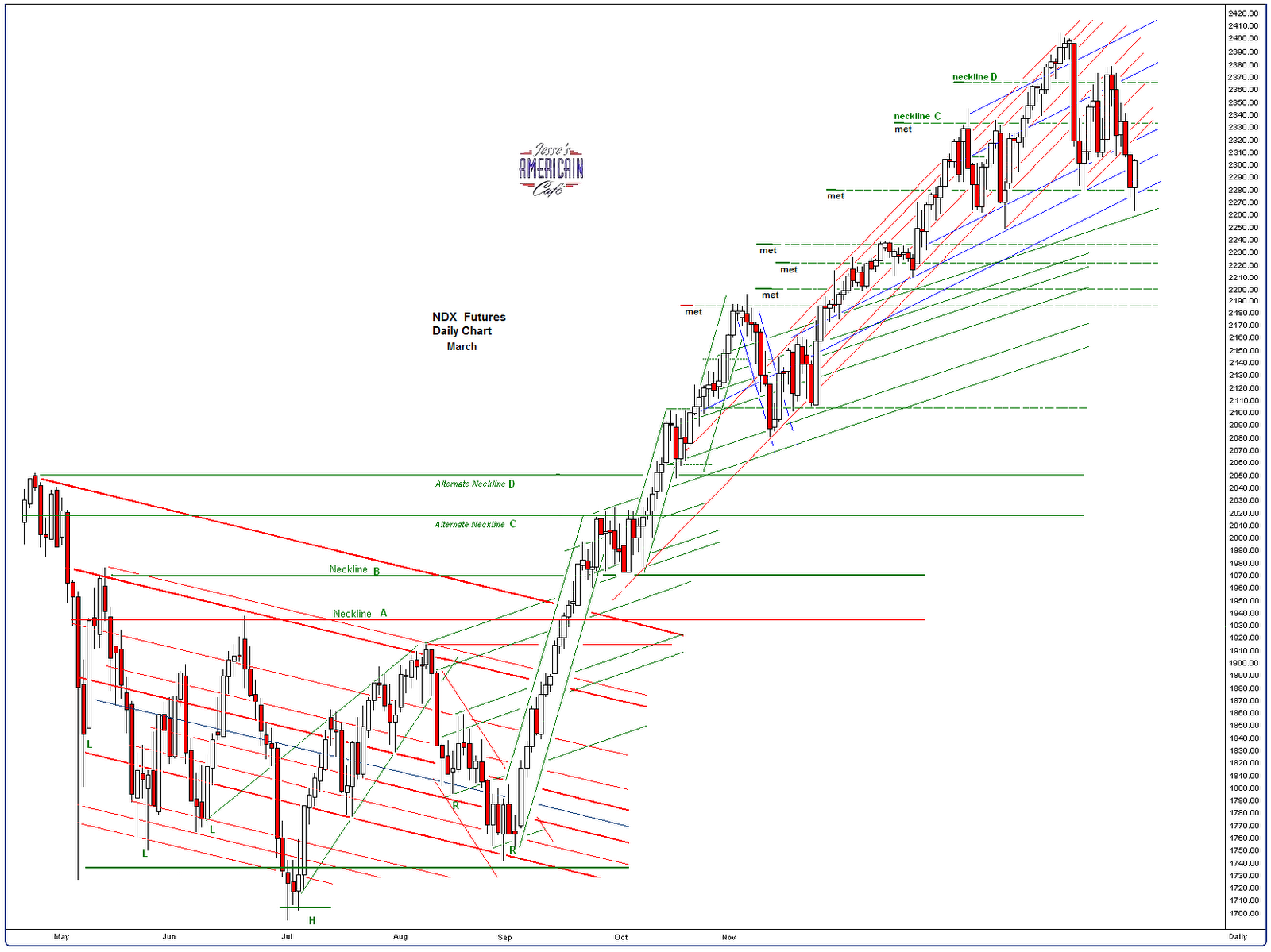
| Weekend At Bennie's - Looking Good! |
"Just got home 3 AM.
The problem is that most trains are not running. People walking home, streets were packed, traffic really slow. Then they get to Shinjuku, Ikebukuro, Shibuya, and can't go farther, so are packing karaoke boxes and restaurants and sleeping in the station until morning. Ikebukuro station had people lining the walls napping.
So, for the most part, for most people in Tokyo, it was a big nuisance. Had that quake happened off the coast of Chiba or Tokyo Bay, it would have been unbelievably bad.
I have never seen this before. The megaquake seems to be setting off secondary quakes all over, from central Honshu to east Honshu... up to 500 miles from the megaquake.
These are not aftershocks. The secondary quakes are magnitude 4, 5, 6 and are happening so frequently, say every 5 to 10 minutes, that the newscasters can't speak fast enough. No sooner does the alert go off and they describe a quake, then the next one happens somewhere else. I can feel all these quakes even though they occur hundreds of miles from Tokyo.
Basically, there has been a quake you could feel every 10 minutes or so for the last 14 hours."
iPadから送信
“So do not be afraid of them, for there is nothing which they conceal that will not be revealed, or hidden, that will not be made known. What is spoken in the dark will be heard in the light; what is whispered in the ear will be proclaimed from the rooftops. Do not be afraid of those who can harm only your body but cannot take your soul. Rather, be afraid of the One who can destroy both body and soul in hell. " Matt 10:26-28

 |
| Let's play a game. |
"Before I head over to the comex, for those newcomers, let me outline how the raid is orchestrated over at the comex. First the bankers send a signal the day before that a raid is coming. You need to get all the bankers in line that the raid is on for the next trading day. Then the bankers who also represent investors tell investors to hold their bids for later in the day. They will obtain gold and silver cheaper and thus they withhold their bids.
Then the bankers offer huge number of contracts at the opening with hardly anybody bidding. This dramatically forces the price down and in turn it trips all of those stop losses which in turn fuel another downturn. The bankers do not have any signal for a retreat. They only know to keep supplying massive contracts.
With 20 minutes to go, they start covering their shorts as quick as they can. Whatever they cannot cover, it increases the banks total shorts in the precious metals and he see this in the COT report. I will report on this on Saturday but the COT report is from last Tuesday to this past Tuesday. I will not pick up the major raid today.
That is the mechanics of the raid...
Many are calling me about the gold and silver shares. I think you should all be careful here as we are playing with crooks. The bankers are shorting gold and silver shares like crazy and they do not cover their shorts.
They use the money received for their nefarious activities. When time comes to deliver the shorted stock certificate, they say sorry I do not have the certificate. They are then in default and go on a list called failure to deliver or FTD's. The list of FTD's is enormous!! and our regulators do nothing to correct this!
The owner of the clearing house in the states is the DTC and you guessed it..who owns this fraudulent vehicle? JPMorgan and fellow bankers.
So please be careful when you buy mining companies. Please register your certificate and do not lose sleep over a falling mining share prices. However make sure your mining company is a producing mine and in good geographical areas where there would not be confiscation."
Portrait of a Bear Raid on the Precious Metals - Harvey Organ


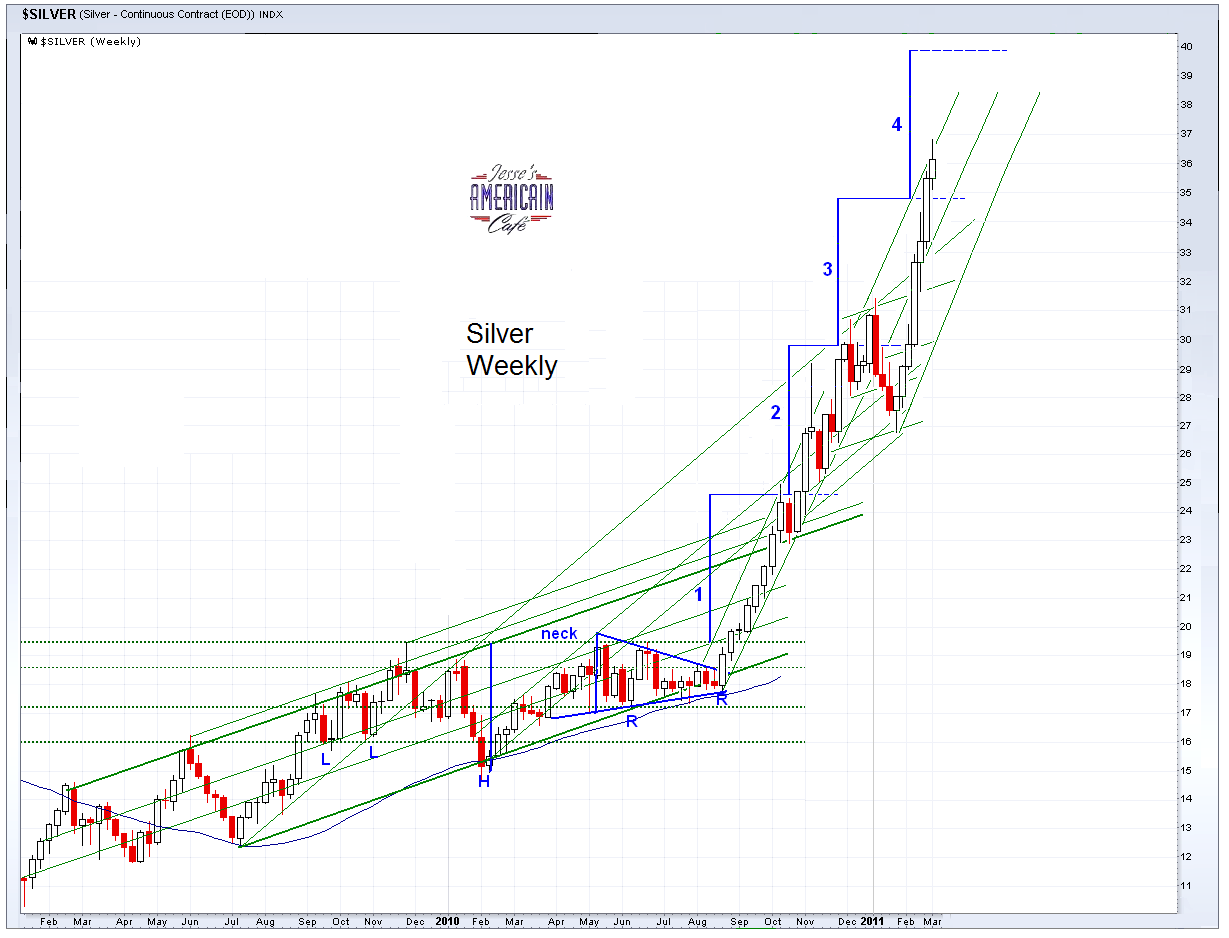
"As for the gold-silver ratio? It currently stands at about 41. Deutsche Bank, in a not particularly daring forecast, says it should fall below 40 in 2011 and 2012. We’re nearly there.Additionally, here is something a little more controversial. I am not quite sure what I think about it yet. In this interview Harvey is discussing what he perceives to be the musical chairs nature of GLD and SLV, Part 1 and Part 2. They work well in what might be called 'normal market conditions.' I would not use the word fraud, as it appears that it could be more in the nature of undisclosed counter party risk. And of course, I have little to no background in securities law. It is my very lack of knowledge that made this discussion interesting. I do think their comparison between PSLV and SLV is unfounded and incorrect, because one is a closed end fund and the other is an ETF.
They run through some history that hints that the ratio could drop even further. Among their tidbits:
* From the 12th to the 17th century, the ratio held at about 12.
* Isaac Newton set a ratio of 15.5 early in the 18th century.
* The earth’s crust: silver exceeds gold by a ratio of about 18.75.
Lastly, China and Hong Kong were the last places to abandon the silver standard, in 1935. The China word for bank: Silver House.
'Trading activity from China has increased considerably over the past several years; we believe that much of this is a function of increased investor demand within the country as inflation threats build.'So, like any good bull story these days, China plays a role."
Deutsche Bank: Silver Will Keep Streaking



The Independent - UK
Saudis Mobilise Thousands of Troops to Quell Growing Revolt
By Robert Fisk, Middle East Correspondent
Saturday, 5 March 2011
Saudi Arabia was yesterday drafting up to 10,000 security personnel into its north-eastern Shia Muslim provinces, clogging the highways into Dammam and other cities with busloads of troops in fear of next week's "day of rage" by what is now called the "Hunayn Revolution".
Saudi Arabia's worst nightmare – the arrival of the new Arab awakening of rebellion and insurrection in the kingdom – is now casting its long shadow over the House of Saud. Provoked by the Shia majority uprising in the neighbouring Sunni-dominated island of Bahrain, where protesters are calling for the overthrow of the ruling al-Khalifa family, King Abdullah of Saudi Arabia is widely reported to have told the Bahraini authorities that if they do not crush their Shia revolt, his own forces will.
The opposition is expecting at least 20,000 Saudis to gather in Riyadh and in the Shia Muslim provinces of the north-east of the country in six days, to demand an end to corruption and, if necessary, the overthrow of the House of Saud. Saudi security forces have deployed troops and armed police across the Qatif area – where most of Saudi Arabia's Shia Muslims live – and yesterday would-be protesters circulated photographs of armoured vehicles and buses of the state-security police on a highway near the port city of Dammam.
Although desperate to avoid any outside news of the extent of the protests spreading, Saudi security officials have known for more than a month that the revolt of Shia Muslims in the tiny island of Bahrain was expected to spread to Saudi Arabia. Within the Saudi kingdom, thousands of emails and Facebook messages have encouraged Saudi Sunni Muslims to join the planned demonstrations across the "conservative" and highly corrupt kingdom. They suggest – and this idea is clearly co-ordinated – that during confrontations with armed police or the army next Friday, Saudi women should be placed among the front ranks of the protesters to dissuade the Saudi security forces from opening fire.
If the Saudi royal family decides to use maximum violence against demonstrators, US President Barack Obama will be confronted by one of the most sensitive Middle East decisions of his administration. In Egypt, he only supported the demonstrators after the police used unrestrained firepower against protesters. But in Saudi Arabia – supposedly a "key ally" of the US and one of the world's principal oil producers – he will be loath to protect the innocent.
So far, the Saudi authorities have tried to dissuade their own people from supporting the 11 March demonstrations on the grounds that many protesters are "Iraqis and Iranians". It's the same old story used by Ben Ali of Tunisia and Mubarak of Egypt and Bouteflika of Algeria and Saleh of Yemen and the al-Khalifas of Bahrain: "foreign hands" are behind every democratic insurrection in the Middle East.
US Secretary of State Hillary Clinton and Mr Obama will be gritting their teeth next Friday in the hope that either the protesters appear in small numbers or that the Saudis "restrain" their cops and security; history suggests this is unlikely. When Saudi academics have in the past merely called for reforms, they have been harassed or arrested. King Abdullah, albeit a very old man, does not brook rebel lords or restive serfs telling him to make concessions to youth. His £27bn bribe of improved education and housing subsidies is unlikely to meet their demands.
An indication of the seriousness of the revolt against the Saudi royal family comes in its chosen title: Hunayn. This is a valley near Mecca, the scene of one of the last major battles of the Prophet Mohamed against a confederation of Bedouins in AD630. The Prophet won a tight victory after his men were fearful of their opponents. The reference in the Koran, 9: 25-26, as translated by Tarif el-Khalidi, contains a lesson for the Saudi princes: "God gave you victory on many battlefields. Recall the day of Hunayn when you fancied your great numbers.
"So the earth, with all its wide expanse, narrowed before you and you turned tail and fled. Then God made his serenity to descend upon his Messenger and the believers, and sent down troops you did not see – and punished the unbelievers." The unbelievers, of course, are supposed – in the eyes of the Hunayn Revolution – to be the King and his thousand princes.
Like almost every other Arab potentate over the past three months, King Abdullah of Saudi Arabia suddenly produced economic bribes and promised reforms when his enemy was at the gates. Can the Arabs be bribed? Their leaders can, perhaps, especially when, in the case of Egypt, Washington was offering it the largest handout of dollars – $1.5bn (£800m) – after Israel. But when the money rarely trickles down to impoverished and increasingly educated youth, past promises are recalled and mocked. With oil prices touching $120 a barrel and the Libyan debacle lowering its production by up to 75 per cent, the serious economic – and moral, should this interest the Western powers – question, is how long the "civilised world" can go on supporting the nation whose citizens made up almost all of the suicide killers of 9/11?
The Arabian peninsula gave the world the Prophet and the Arab Revolt against the Ottomans and the Taliban and 9/11 and – let us speak the truth – al-Qa'ida. This week's protests in the kingdom will therefore affect us all – but none more so than the supposedly conservative and definitely hypocritical pseudo-state, run by a company without shareholders called the House of Saud.


The Gartman Letter, understandably pleased with yesterday's very abrupt sell decision, suggests gold will retreat to the uptrend line at $1,340-$1350:
“…sometime in the course of the next two or three weeks…We'll be buyers there.”


“Hypocrisy in anything whatever may deceive the cleverest and most penetrating man, but the least wide-awake of children recognizes it, and is revolted by it, however ingeniously it may be disguised.”
Leo Nikolaevich Tolstoy


Bloomberg
Fed Treasury Purchases `Monetizing Debt,' May Spur Inflation, Hoenig Says
By Steve Matthews and Caroline Salas
Mar 2, 2011 9:56 AM ET
Federal Reserve Bank of Kansas City President Thomas Hoenig said the central bank is “monetizing debt” with its purchases of U.S. Treasuries, a program that he says may spur inflation.
“Yes, we are monetizing debt,” Hoenig said today in a speech in New York. “You buy bonds and you monetize debt. Right now, a lot of that is going into excess reserves so it is not having an immediate effect on inflation. It will initiate inflationary impulses. It takes time.”
Hoenig, the lone dissenter from every Fed meeting last year, warned that the central bank’s near-zero interest rates and record monetary stimulus could lead to asset price bubbles and increase inflation in a few years. He voted against the Fed’s plan to purchase $600 billion in U.S. Treasury securities through June during the final two meetings of 2010.
Hoenig told the Council on Foreign Relations the Fed needs to explain how it plans to reduce its record $2.54 trillion balance sheet. While he would avoid “shock therapy” of selling assets all at once, “we want to begin to show how we will withdraw that.”
Policy makers were divided over whether further evidence of a strengthening recovery would warrant slowing or reducing the $600 billion of purchases, according to minutes of their January meeting...."