27 November 2009

Weekend Viewing: Fall of the Republic


A bit overstated and at times over the top, at least to my tastes.

However, it is important to hear the issues raised here, and to be aware of them. The documentary settles down after the first ten minutes and presents several thought-provoking ideas and observations.

Obviously one may likely not agree with them all, but again, listening to different perspectives helps us to calibrate where we are in troubled and confusing times.


Well of Emptiness: Family Day at the New York Stock Exchange


Today was 'Family Day' at the New York Stock Exchange. No it is not the day in which the boys celebrate the families which they have made homeless, the retirements they have ruined, and the faces they have ripped with their lugubrious bump and grind.

It is a day on which the junior people, semi-professional greeters, and B class spokesmodels who are stuck working on a long holiday weekend bring their kids to play on the big empty floor, growing emptier by the day as volume migrates to the Matrix, and the dark pools of the vampire squids. The better to eat you with, my dear.

And befitting a day of low volumes and maximum cynicism, the futures did almost exactly what we thought they might do and, after a well managed performance, absolutely nothing has been decided. We were thankful for a low open and an opportunity cover short positions, and then a nice long drift higher to let the long sides of our hedged positions go. And of course, shorts back on into the close, with moderation we hasten to add. No underestimating Tim and Ben here.

Another Sunday night is in the cards. Remember those? The long nights in which the players hold their collective breath while Asia opens, and then Europe, to see if the rest of the world is buying it, or continuing to sell it. When press releases from corporate giants and their government functionaries begin to leak the true estimates of the damage, shortly after they announce 'the fix' for the problem that they most recently swore great oaths did not exist.

The story of a potential sovereign default such as that of Dubai is not so much which banks are holding the actual loans, but rather, which counterparties are holding the Credit Default Swaps, and to what degree. This is still a derivatively challenged system, oversexed, overlevered, and unfortunately over here.

If it turns out that AIG is a counterparty on the wrong side of the banks again, it really would be a bit much, and Timmy should be fired the following day if he dares to utter the "B word."

There is a lot of theater in the markets and the media, all designed to shape perception, which is the last resort of the financial engineers and their corrupt politicians.

That is not a segway necessarily to the Jobs Summit wherein The One will sequester with the nation's leaders of a sort, and puzzle out what can be done to 'get more jobs.' So far the Obama Administration has resembled that of Herbert Hoover, rather than that of Franklin Roosevelt.

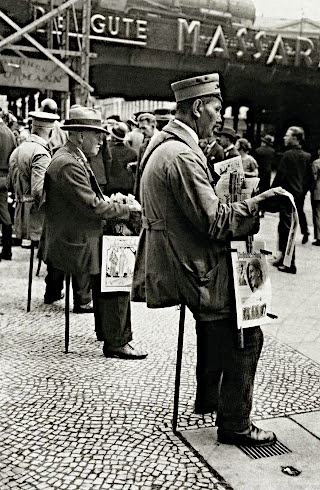
"Hoover quickly developed a reputation as uncaring. He cut unemployment figures that reached his desk, eliminating those he thought were only temporarily jobless and not seriously looking for work. In June 1930 a delegation came to see him to request a federal public works program. Hoover responded to them by saying: "Gentlemen, you have come sixty days too late. The Depression is over." He insisted that "nobody is actually starving" and that "the hoboes...are better fed than they have ever been." He claimed that the vendors selling apples on street corners had "left their jobs for the more profitable one of selling apples." Digital History Herbert Hoover and the 1930s
Have a pleasant weekend, and for our American readers, a tumultuous 'black Friday.' The results of the annual consumer binge will be portrayed and flayed to beat the band in the days to come. Remember that "you get what you pay for" but you also "pay for what you get," unless you are one of the bureaucractically blessed few who receive beyond all bounds of effort and any conceivable personal labour.

Here is the updated scorecard for the markets.


SP 500 Daily Chart: The Silence of the Turkeys


While Americans were celebrating their Thanksgiving Day holiday, the rest of the world gobbled 40 points from the December SP 500 futures.

Bears are doing high fives and the serial top callers are rolling.

Let's see if the correction will continue after the pilfering pilgrims are back on their prop desks.

Then again, maybe the Reverend Lloyd is just bringing in the sheaves. Why waste a crisis?

Up the trend, then down again. Trend is the trend, until it is not.

This *could* be the November selloff that was expected. Le Prop is on the short side to an acceptable degree. It could be a short ride, and so not taking it heavily short until we break this trend.

Until that point we either buy weakness and sell strength within the trends, or sit on our hands and do nothing.

Why is gold selling off, isn't it supposed to rise in times of crisis? Well, it did, and quite impressively, in the past week or so, in anticipation of this major failure in the world of paper finance. And now there is selling on the news.

Those who look for a one to one linear correlation between action and reaction will be sadly disappointed and confused, because that is not how the game is played by the banks. They trade in information, in dark pools and private whispers, and the dollars are the means of keeping score.

This is why timing buys and sells is so difficult, especially in hotly speculative markets like the US equity market, just for an example, because the game you are allowed to see on the table is not necessarily the one that is really being played. So better to play the long trends, where the short term does not matter.

But all is not lost. We still have a feeling that the word has gone out from Timmy to Lloyd that the puppies will not buy their puppy chow if the markets are gloomy, and this is why we are in a flat to rising trend in stocks.

Keep in mind that there is always an up and down movement within the trends, especially those whose action is artificial. We are nearing the downstroke on the charts on the overnight trade, which catches most small players unable to adjust and set up to take losses both in the running of their stops, and the severe adjustment from panic selling on the open.

So that's our play, but if we break the trend, well, it's a nice time to be in that safe harbor after all.

Dubai's Move On Debt Rattles Markets Worldwide - New York Times


US Dollar Index at 6:30 AM EST


25 November 2009

The Tide of History and The Spirit of Human Resilience


Why do so many people continue to turn their noses up at an investment with returns like those listed below? And not only that, why do small groups continue to aggressively attack the very notion that it is genuine, a real trend, a development with appeal across many nations and people, a sustained market trend that is telling us something?

Returns, I might add, that are supported by very strong fundamentals of supply and demand. Coming off a twenty year bear market in which supply was diminished, and burdened by years of central bank selling that seemed to be non-profitseeking and bureaucratically determined to crush any rallies, the market turned off the bottom in 2001 and has barely looked back since except for brief corrections.

"Since the start of the decade gold has been in a strong secular bull market in which it has had only one negative year (2001) while the S&P 500 has had four. Gold’s strong performance has produced a cumulative return of 311.54% for an annualized return of 15.18% per annum this decade. In stark contrast, the S&P 500 has been in a secular bear market in which its cumulative return has been a negative 24.52% for a negative 2.77% annualized return. While gold has had periods of volatility (risk), what the above numbers indicate is that gold has had a superior investment profile relative to the stock market.." Chris Puplava, Gold and Newton's First Law of Motion
Central banks are now net buyers in the aggregate for the first time in many, many years. This is a significant change since they were a major source of marginal supply. The post Bretton Woods dollar regime created by Nixon in 1971 is shaking hard, trembling the foundations of a world currency system based on financial engineering, empire, and oil.

When the unthinking mob starts buying, and gold and silver are no longer considered eccentric but essential, and local shops and banks start buying and selling the metal, then it will be the time to sell. But probably not before.

This is a phenomenon, a generational occurrence. Personally, it is fascinating, and worth having retired early to see it unfolding day by day.

I have analyzed this market trend repeatedly over time, from many different dimensions, and have listened to every argument, pro and con. It holds water, it makes sense, adds up; it seems grounded in free market principles, historical trends, the invisible hand of the market. It is a keystone of Austrian economics.

And unless it is otherwise impeded, it will most likely continue for some time, until the financial engineering of bubble-nomics subsides, and returns on paper become 'real' again. When the world of fiat currency and finance becomes less arbitrary and more predictable, more stable and just. More rational and some might say, conventional.

The rally in precious metals sparks fear and envy in many; it makes them genuinely angry and emotional, even otherwise intelligent and rational people. And one must surely ask, "Why?"

I remember vividly a warm spring day in Red Square in 1996, watching a small group of the old guard, long time Communists, demonstrating against Yeltsin and the reforms of Gorbachev. They did not like the changes, and railed against them, dressed in their shabby clothes with their once mighty banners, now drooping.

Their savings in roubles were decimated, and the worst devaluation was yet to come with the debt crisis of 1998. The once mighty Soviet republic was in disarray. They clearly did not like it, violently opposed it, denied it, while yearning for the past. There was no one in the queue at Lenin's tomb, and even though it was absolutely deserted in the middle of the day, the young soldier on guard yelled reflexively at us to "hurry, move along" in an almost surreal way. He did not know what else to do.

And no one cared, except for a few curious onlookers like our small group. No one noticed. They were being made extinct by change which they would not, could not, accept because it conflicted with their view of how the world had been and how it should continue to be. They held to their familiar, conventional wisdom, and became out of synch with the times, an oddity, almost atavistic.

There were vibrant business opportunities although the risks were high. Shortages and 'criminal gangs ' were in the ascendancy, to a notorious degree, but the surface was peaceful overall. Life goes on, always. I had long conversations with many entrepreneurs, including those who were acting to solve the problems that were plaguing many Western corporations, who were in business to make things work, to find opportunity in the change, who were trying to make their way. One door closes, but another door opens. We made a good business of it, and some friends who are remembered fondly to this day.

The discussions we had about value were grounded in practicalities but were profoundly philosophical, as is so common among the long-suffering. Such is the character of the Russian people. I loved the land and the culture with a natural affinity that was almost surprising. But on the whole, people are the same everywhere, but with their own particular attractions and character which makes them uniquely interesting. The spirit permeates the world.

The tide of history rolls in, and does not conduct focus groups, or popularity polls, or regard the consensus of the crowd. The smart money tests it, and then moves early with it, or at least does not fight it. The only traces of the trend are what the few are doing and where their money is flowing. The tide moves slowly, inexorably, but is there for any and all to see if they would just look past their preconceptions, their ideologies, the fog of government, and their desire for what once was, but can no longer be.

At this point in history, gold is a harbinger of change. People of the status quo fear change and change agents, always. And despite their best efforts to stop it, to discredit the messenger, obliterate its effects, to silence the message, the tide of history comes and washes over them, and the landscape is changed. And the familiar is a thing of the past.

We live in remarkable times. If you do not like to hear about change, if it upsets you, then do not read this blog, and stick to the mainstream media. Documenting and analyzing and surviving change in the financial sphere is what this is all about. No matter where reason and the data may lead, no matter what icons may fall, après déluge.

This is history.

Live it, and not the myth.


Gold Is Rallying Because....


Gold is a superior store of value.

It resists the attempts by the monetary authorities to debase it, because except for concerted attempts to suppress its price through non-profitseeking selling at key market points by central banks, and naked short selling by the global commercial banks in the paper markets, gold cannot be created and controlled by financial engineers like Ben Bernanke.

It provides a refuge, a store of wealth for private citizens during a period of general currency risk.

A simple chart should suffice.


As part of the quantitative easing regime, the Fed has so debased the financial system that dollar debt is paying negative interest rates once again as it did in the 1970's.

In other words, it is costing money to hold dollar financial assets because of the mispricing of risk being engineering by the G7 central banks.

So, people and some central banks are seeking refuge in a stable store of wealth that is beyond the control of the financial engineers.

"With the exception only of the period of the gold standard, practically all governments of history have used their exclusive power to issue money to defraud and plunder the people." Fredrich August von Hayek
"The gold standard has one tremendous virtue: the quantity of the money supply, under the gold standard, is independent of the policies of governments and political parties. This is its advantage. It is a form of protection against spendthrift governments." Ludwig von Mises
Alan Greenspan himself states the case most eloquently in his famous essay from 1966 Gold and Economic Freedom.
"This is the shabby secret of the welfare statists' tirades against gold. Deficit spending is simply a scheme for the confiscation of wealth. Gold stands in the way of this insidious process. It stands as a protector of property rights. If one grasps this, one has no difficulty in understanding the statists' antagonism toward the gold standard."
When the currencies of the US and Europe are debased by the financial engineers for the sake of the banks, when spendthrift governments run enormous deficits to fill the pockets of their special interests, informed wealth seeks a refuge in places where it cannot be so easily consumed for the exclusive benefit of the political elite.

This is sadly the case today, especially within the Anglo-American sphere of influence, from which the dollar had become the new opium trade, viciously addictive and debilitating. And so we have seen an historic flight to safety that began in the developing world, but is gaining momentum as the global dollar regime falters.

If you hold dollars, the Fed and the Treasury can confiscate your wealth, virtually at will. That is real power.

When the Fed lifts interest rates to again provide a positive return against inflation, then gold may stop rallying and reach a stable equilibrium price. This will be more difficult to do than it was to debase, as it is always easier to destroy than to create.

And it may be difficult to determine when that time comes, because the US bureaucrats have so thoroughly altered the Consumer Price Index over the past ten years that it is no longer a fair measure of inflation. Therefore it is a challenge to determine what is real and what is not, what is priced fairly and what is not. This is the hallmark of the modern western bankers and their accountants, and their demimonde in politics and the media.

Still, the message of the market is quite clear, to anyone who will listen.

A pleasant Thanksgiving holiday to my American friends, and a reminder to the rest of the world that you must muddle through without the direction of Wall Street for the next few days. How fitting that Thanksgiving was declared a national holiday by Lincoln in the depths of the Civil War, and made official by the Congress in 1941, at the end of the Great Depression, on the cusp of a terrible world war.

And Lloyd, I would not join the many and be happy at all if you took your own life as you have recently confessed that you feared they would. But there might be a cause for celebration if a master of the universe such as yourself would simply take this timeless message into you heart, and make it the light of the rest of your life. That is the right pricing of risk, the proper valuation of all that you are.

"Come, let us sing to the Lord; let us make a joyful noise to the rock of our salvation. Let us come before His presence with thanksgiving; let us make a joyful noise to Him with songs of praise. For the Lord is a great God, and a great King above all. In His hand are the deep places of the earth, the heights and strength of the hills. The sea is His, for He made it, and His hands formed the dry land. Come, let us worship respectfully, let us kneel before the Lord our Maker. For He is our God and we are the people of His pasture and the sheep of His hand. Now, if you will but hear His voice." Psalm 95
No time for despair, now is the time to be surprised by joy.
"I do not think of all the misery, but of the glory that remains. Go outside into the fields, nature and the sun, go out and seek happiness in yourself and in God. Think of the beauty that again and again discharges itself within and without you, and be happy." Anne Frank

24 November 2009

What Is a Tobin Tax?


The purpose of a Tobin Tax is to place a financial penalty on short term transactions to curb speculation. It was originally proposed by James Tobin in the 1970's as a means of discouraging international currency speculation after Nixon closed the gold window and rendered the Bretton Woods agreement moot, at least until the ascendancy of the current dollar reserve currency system.

The tax is generally discussed as being 0.1% of the total transaction, or 1.00 per 1,000. It certainly would have a discouraging impact on the daytraders, and some could argue, as I would, that a percentage of the transaction at .1% might be considered regressive, and a huge penalty on institutional trading.

The tax might be better targeted at 'frequency' of trading, rather than nominal size of the transaction, in order to target speculation, under some reasonable transaction limit.

So for example, a flat tax of .50 per transaction would be negligible for the average investor, but would seriously impinge high frequency trading that is de rigeur amongst professional speculation these days.

What is also of concern is the discussion of a Tobin Tax as a international source of revenue, let's say for the IMF. A system of direct taxes on US citizens for the funding purposes of an international entity like the IMF must surely be unconstitutional.

And it goes without saying that there are sure to be 'exemptions' for certain types of trading in this tax, if the lobbyists have anything to say about it.

There will be another bailout of the banks. There will be discussion about punitive and ameliorative legislation to deal with them, in addition to the general lack of discussion about existing antitrust and bankruptcy laws, and the Glass-Steagall law which stood the test of time for sixty years.

American Banking News
Is a Tobin Tax in Store for Large Banks?

By Christopher
November 24th, 2009

The phrase “too big to fail” may get retired in 2010, but for banks such as Goldman Sachs, Citigroup Inc., and Bank of America, they may face a new round of punitive legislation to deal with the political fallout.

According to a special report in Money Morning, heavy government intervention in the banking sector combined with low interest rates and ongoing stimulus has made 2009 a profitable year for many banks.

In fact, according to a special report in Money Morning, so-called “bad” banks including Goldman Sachs, Citigroup Inc., and Bank of America have turned out to be a better investment than good banks.

But as they look to 2010, these same factors may signal trouble.

To begin with, if the Federal Reserve raises interest rates as is widely expected, it would reduce trading profits, reduce the profitability of borrowing short-term and lending long-term, and reduce the prices of assets such as houses and commercial real estate – putting even more strain on loan portfolios.

But an increase in interest rates is only the first of three areas of concerns for investors.

The length and the level of U.S. unemployment have economists wading through unchartered waters. If unemployment rises above its current 10.5% level and tests a postwar period high of 10.8% set back in 1982, it could signal huge losses as the U.S. consumer-credit system is not “stress-tested” for such high unemployment rates over a prolonged period of time.

And if the losses start piling up, the Fed might very well intercede again with a second bailout. This would be yet another strike against bank stocks since politicians would try to penalize investors for needing taxpayer money twice in two years.

All of this, plus the recent news of record bonuses at Goldman Sachs is creating momentum for punitive legislation against the banks that goes beyond the premiums banks pay to the Federal Deposit Insurance Corp. (FDIC).

One idea being considered is a “Tobin tax”. Originally proposed by economist James Tobin after the Nixon administration effectively ended the Bretton-Woods system of tying the U.S. dollar to the gold standard.

The idea behind such legislation, which would fall most heavily on very big conventional banks and trading-oriented investment banks, would be to tax transactions in bonds, stock commodity and foreign exchange markets.

Opinions are divided between those who discern a Tobin tax could protect countries from spillovers of financial crises, and those who claim the tax would constrain the effectiveness of the global economic system and dry up world liquidity.

Massive Deflation Sighting in the US As Noted in the Asia Times


David Goldman says in the Asia Times that "It’s Still the Worst Deflation in US History." He shows a chart (below) of US commercial lending to prove his point.

Asia Times
It’s Still the Worst Deflation in US History
November 18th, 2009
By David Goldman

This morning’s news that housing starts “unexpectedly” dropped by 11 percent month on month is consistent with my grim view of the American economy. The crystal-meth monetary policy at the Fed makes everyone feel better, until they don’t.

The nonstop rise in the price of dollar hedges tells us that it can’t last forever. Large balance sheets attached to the Fed’s money pump can show profits, and the price of spread assets (as PIMCO’s Bill Gross keeps emphasizing) is stupid rich. But at the capillary level, through, the economy is dying and gangrene is setting in.

Here’s year on year growth in commercial and industrial loans from weekly reporting banks in the US:


A 20% decline year on year does not look like a recovery. In fact, it looks like nothing we have seen since the Great Depression. C&I loan growth lags the end of recessions, to be sure, but this extreme level of credit reduction suggests profound trouble....


Yes commercial lending is slack and gone negative. And yes, it does signal severe economic distress in the productive economy. But is that deflation?

No, it is a sign of a very slow GDP growth and deleveraging in the aftermath of a credit bubble, with a GDP that I think is still negative in real terms. The US economy is still very bad, and David is probably less gloomy about that than Le Proprietaire.

One could assume that by 'deflation' David means 'a recession/depression' or 'a lousy economy.' But that is not deflation, as the economists learned in the economic stagflation of the 1970's. Words count, and this is an important distinction, because one reacts to situations as diverse as inflation or deflation, hyperinflation or stagflation, differently.

Is this a deflation which we see now in the US, even if it is not the 'worst in history?' Is there a steadily strengthening US dollar ,and low money supply growth relative to demand, or GDP relative to money suppy as indicated by an abnormally high velocity of money?

Only in the mind and imagination of someone who already believes in a deflationary outcome with all their mind and heart.

Can deflation happen? Yes. That is inherent in a fiat currency.

If the Fed raised the overnight interest rates to 20% tomorrow, we would have a deflation 'lickity split' because that would be an extreme policy action which relative to the underlying demand for money and economic conditions, is purposeful and dramatic towards a specific end. And this is the Fed's 'hole card,' the means by which they think they can control inflation in the future once the US economy has recovered (if it does sustainably I would add, and not just another asset bubble).

Inherent in David's conclusion is that money supply can only grow through bank lending. This is economic illiteracy. The Weimar inflation, for example, was not caused by excessive lending by German commercial banks in a vibrant economy. It was caused by the monetization of existing debts, the war reparations debt, without a corresponding growth in productive GDP.


So, absent a conscious policy decision by the Fed to strangle the US economy premature to recovery, deflation becomes a likely outcome if the Federal Reserve runs out of debt obligations, both public and private, which it is willing and able to monetize. That is the only 'hard stop' in the game on that side of the equation, and good luck with that.


Deflation would hurt those who owe debts in dollars, and be a boon to those who are the creditors. The American people are the debtors, and they control the growth of their money supply, at least for now.


The obvious pivot point, one key vector, in all this is one simple question: "Can the US economy become self-sustaining again, productive in its own right without having to export inflation by printing currency and living on credit?"

A second, but important question is can China and the rest of the mercantilist world adjust gracefully to a rebalancing in the distribution of demand, while maintaining sustainable growth of their own, despite their fears of a rising middle class?

We say yes, but only with a serious effort at fiscal and economic rebalancing. Cutting spending alone is not enough. That is the route to self-destruction, economic anorexia, if nothing else changes. Liquidationism alone is inherent in the neo-Calvinist roots in the US that emphasize the justice of non-redemptive suffering. They have sinned, so they must suffer, and the more the better.

There are three things the US must do: reform, reform, reform. Everything else is a palliative, to buy time at best while you seek to make the necessary systemic changes.

What does it matter, the details of the outcome, as long as the economy is in a slump?

If you want to suffer, go into a serious and protracted stagflation in the US holding dollars as the bulk of your wealth, and that will give you a taste of hell.

What is the most likely outcome? Would you care to buy a vowel? I would suggest that you buy an "I" and then see if there is an "S."

Deflation and straight inflation are relatively easy to hedge. Stagflation is the most difficult outcome to manage from an investment perspective. We'll talk more about this later if that appears to be the case.

Stagflation will be the unintended consequence that will catch the most people unprepared. This is the outcome most feared by the Fed, because it renders their monetary policies ineffective. The Fed can create money until the dollar goes to zero, but it cannot manage fiscal and industrial policy, and confer productive vitality which is essential to a sustainable recovery.

You cannot say that Bernanke did not warn you about what he will do. Deflation: Making Sure "It" Doesn't Happen Here

But we cannot stress enough that the outcomes are not predetermined, except in the minds of true believers. Therefore flexibility and clear-headed watchfulness are important now, more than ever.


The Last Bubble


The purpose of monetary and fiscal stimulus in economics is similar to the use of anesthesia and antiseptics during an important surgical procedure to correct some systemic difficulty, some disease, some serious problem in a patient. They enable the procedure, help the patient get through it without excessive pain and death from infection or systemic shock.

To apply stimulus and the other monetization programs which the Treasury and the Fed and the Congress and the system of global trade settlements are now doing without enacting sigificant and serious systemic reform to correct the underlying problems, the disease itself, is like taking a patient with a life threatening condition, applying large amounts of anesthetic and antibiotics and antiseptics to keep them stable and quiet, but then refusing to perform the operation to correct the life threatening condition.

Because in this case the disease that is infecting the patient and consuming their life has bribed the physicians and hospital administrators and nurses to leave it alone. It wants to maintain the status quo as long as is possible.

The pulse of patient, their blood flow, is the dollar. And the dollar is laboring under serious difficulties. The disease is consuming it, and the Fed is adding clear plasma to replace it, but is unable to add vitality, the white and red blood cells. They cannot create life, only sustain its appearance.

The liquidationists, by the way, would simply take the patient off all medications, and see how well he can fight the disease while running on a treadmill, hoping his body can cure and correct itself on its own. If the patient is not too sick, this has worked in the past. But if the problem is systemic, if the disease is advanced, then the patient is likely to go critical and sustain a stroke, and a major loss of functionality, even death. Benign neglect might work, it might not. Sometimes the cure is worse than the disease when applied without a perceptive diagnosis.

The Obama Administration (the doctors) and the Congress of both parties (the hospital administrators) and banks (the hospital owners) and the mercantilist trade system most notably China and Japan (the medical suppliers) are failing to deal with the problems of the US economy at hand, merely applying the anesthetic and antiseptics, for which they are being paid handsomely as the hospital bills run higher and higher.

This may be the last bubble, the one that takes the patient to a hospice for long term care in a zombie like condition, or worse, to the morgue. It is the last bubble, malpractice of the highest order, the mother of all policy errors. Nothing is inevitable here except selective default most likely through inflation.

The banks must be restrained, and the financial system reformed, and balance restored to the economy before there can be any sustained recovery.

Associated Press
Third-Quarter U.S. Growth Revised Lower
November 24, 2009

WASHINGTON (AP) — The economy grew at a 2.8 percent pace last quarter, as the recovery got off to a slower start than first thought.

The government’s new reading on gross domestic product was not as energetic as the 3.5 percent growth rate for the July-September period estimated just a month ago.

The main factors behind the downgrade: consumers did not spend as much, commercial construction was weaker and the nation’s trade deficit was more of a drag on growth. Businesses also trimmed more of their stockpiles, another restraining factor.

The new reading on G.D.P., which measures the value of all goods and services produced in the United States — from machinery to manicures — was slightly weaker than the 2.9 percent growth rate economists surveyed by Thomson Reuters had expected.

Still, the good news is that the economy finally started to grow again, after a record four losing quarters. The bad news is that the rebound, now and in the months ahead, probably will be lethargic.

The worst recession since the 1930s is very likely over, but the economy’s return to good health will take time, Fed officials and economists say...

23 November 2009

The US Dollar Is In a Secular Bear Market and Will Remain in One Until...


Contrarians might take some cheer from dollar bearishness, but one needs to be aware that not everything that is fundamental and recognizable is overdone and wrong.

Markets do overrun their trends, especially on the short term and by amateur speculators, setting up very nice opportunities for the professional market makers. The attractiveness of being a 'contrarian' is that when you are right you can set yourself up as superior to those who were wrong, distinguishing yourself from the mere mortals, and feel the euphoria of God's favored hand.

But being a contrarian requires a superior sense of what is real, and what is out of synch with reality. In general few amateurs possess this level of judgement and perspective, and end up just looking silly and eccentric after a few correct calls, taking the opposite position because it is the opposite, proclaiming night to be day, and the moon to be cheese.

Oh they deny it, and keep changing their forecasts, and burying their mistakes, fooling no one really but themselves, constructing ever more intricate theories about why they are right and will be ultimately vindicated in their 'beliefs.' But on the whole they lose money and take a terrific financial beating for being obstinately. Every seasoned trader learns this lesson, at least once, and bears its scars. They become superior traders when they are able to take a position again and hold it, despite the market head fakes, because they are right and they know it.

Markets do fluctuate. This is why it is so important to determine whether a move in a market is a purely 'technical move,' ie a bounce or dip to skin the overleveraged speculators who have piled on to a momentum move, and a genuine and sustainable change in direction underpinned by some fundamental reason.

And this news piece provides an important clue as to when a change in the dollar bear market may begin to occur.

“History tells us the dollar shouldn’t start rising on a sustained basis until 12 months after the Fed starts to lift rates.”
The rise in rates will be relative to other currencies and commodities in valuation, but the forecast here is substantially correct. The dollar is in a bear market and will remain there for the foreseeable future. Again, with bounces and dips to tempt the punters in to be fleeced and skinned.


Dollar Slump Persisting as Top Analysts See No Bottom
By Bo Nielsen

Nov. 23 (Bloomberg) -- The most accurate dollar forecasters predict the world’s reserve currency will continue sliding even when the Federal Reserve begins to raise interest rates, which policy makers say is an “extended period” away.

Standard Chartered Plc, Aletti Gestielle SGR, HSBC Holdings Plc and Scotia Capital Inc. say the dollar will depreciate as much as 6.4 percent versus the euro. About $12 trillion of fiscal and monetary stimulus, the world’s lowest borrowing costs and a record $4 trillion of government bond sales between 2009 and 2010 will weigh on the currency, they said. So will the nation’s 10.2 percent unemployment rate and signs that the economic recovery may falter, they said.

“History tells us the dollar shouldn’t start rising on a sustained basis until 12 months after the Fed starts to lift rates,” said Callum Henderson, the Singapore-based global head of foreign-exchange strategy for Standard Chartered.

The best forecaster of the dollar against the euro in the six quarters ended June 30 in Bloomberg’s ranking of 46 firms last month predicts the greenback will weaken 5.3 percent to $1.58 per euro in 2010, from $1.4970 today.

It’ll take time to drain the oversupply of dollars from the market,” Henderson said. “The dollar will remain weak until the Fed’s rates rise above the competitors’....”


Has the American Model of Capitalism Failed?


This video is well worth watching to provoke thought and provide a perspective which you may not obtain from the mainstream media, particularly in the States

Naomi Klein, Howard DeSoto, and Joe Stiglitz on Economic Power and the Financial Crisis in the US

Has the American system failed? What is the American system of markets?

Is the US becoming a 'banana republic' and if so how has this happened?

What are the roots of the financial crisis?

Howard DeSoto is interesting, but takes a decent macro concept and then flogs it to death without taking it to the next step towards relevancy. Naomi Klein is more of a popularizer but makes some interesting points and explains them exceptionally well. Stiglitz is his usual brilliant self, and one must only regret that he and Volcker have no voice or real place in the Obama Administration.

But at the end of the day, one still suspects that all this talks around the basis for this financial crisis, which is a determined, if loosely organized campaign to undermine of the rule of law and to 'fix the game' in a way that has numerous historical examples.

It is best epitomized by the well-funded campaign led by Sandy Weill to capture the regulatory and political process in the US, and to overturn Glass-Steagall and the restraints on markets and leverage and oversight for the Wall Street banks. It was more sophisticated in its own way than Bernie Madoff's ponzi scheme and certainly on a grander scale than Enron, but is of the same general species of financial fraud.

As the book title says, It Takes a Pillage...

Dimon Touted as Replacement for Geithner


This news story is what is known in American parlance as a 'trial balloon.' It is a little leak to the press to assess the public and media reaction to a proposed change.

The game plan appears to be one of creating change you can believe in by replacing Bernanke and Geithner with Larry Summers, currently Obama's chief economic advisor and financial Rasputin, and Jamie Dimon, the CEO of J. P. Morgan bank. Lloyd Blankfein apparently is not available for the job, having found his vocation in doing God's work.

At least that is the plan that is being put 'on the table' by an influential group of financiers, or so we have been informed. Senator Chris Dodd, often the message bearer for Wall Street, mentioned last week that Mr. Bernanke's confirmation as Fed chief was not a certainty.

Jamie Dimon learned the business from Sandy Weil, one of the chief architects of the efforts of the Wall Street banks' campaign to overturn Glass-Steagall. He is also very smooth and politique, as opposed to Mr. Geithner who is in quite a bit of political trouble and not handling it with the gravitas mixed with detached joie de vivre expected in elite circles.

As Treasury Secretary perhaps Jamie can help out his old firm with their 130 million ounce naked short in silver. Oops, the US Treasury is out of silver too.

We are discounting rumours that President Obama is considering an executive pardon for Bernie Madoff, with the condition that he agree to serve as Treasury Secretary. "Take those T bills and put them where the mooncakes don't shine, Hu Jintao."

Reuters
Dimon seen as successor to Geithner
By Ajay Kamalakaran in Bangalore
On 4:52 am EST, Monday November 23, 2009

(Reuters) - Several U.S. policy makers consider J P Morgan Chase & Company Chief Executive Jamie Dimon as a potential successor to U.S. Treasury Secretary Timothy Geithner, the New York Post said, citing sources.

Dimon "would love to serve his country," the paper quoted people familiar with his thinking as saying.

JPMorgan could not be immediately reached for comment by Reuters outside regular U.S. business hours.

Geithner endured a grilling last week before the U.S. Congress over his role in the rescue of American International Group Inc in 2008, when he was president of the New York Federal Reserve Bank.


22 November 2009

US Commercial Banks: the Turkeys Are Stuffed


The increase in the monetary base created by the Fed's monetization of debt is striking, not seen since the early stages of the Great Depression.


Banks are not lending despite the massive quantitative easing. They are fat with reserves, paying huge bonuses again, and obviously doing something with their money other than providing funds for the commercial activity of the nation.


Excess Reserves are an accounting function. The banks themselves do not reduce their reserves significantly through lending in the aggregate, but seek to minimize the opportunity cost of reserves. But it is symptomatic in the sense that the lack of reserves is most definitely NOT an issue with lending.

No one can deny with any credibility that if the Federal Reserve reduced their payment on reserves to zero, or even a negative, that lending activity would not increase. And yet they do not. Why?

Because the first priority of the Fed is the health of the banking system itself, and not the national economy and the availability of credit to non-banking institutions. They are seeking to drive commercial entities out of secure savings to risk investment again, but providing a safe harbor for the banks while they are doing it, while attempting to maintain the appearance of financial system solvency.

The critical, unspoken factor is that the US banking system is not yet healthy, is not sound, is not well capitalized despite the record expansion in the monetary base and its specific direction to the banks themselves. They have simply not taken the writedown necessary to make themselves financially sound, because they do not wish to take the hit to earnings, salaries, stock options and bonuses.


Ben Bernanke's gambit is as much financial fraud as it is a monetarist exerperiment in cynicism with regard to the management of a nation's money.

20 November 2009

Gold and the SP 500 Charts


The SP is looking a little 'heavy' going into a holiday short weekend in the States. This is where the bulls need to hold the trend.


Here is where we find out if the Fed and Treasury effort to reflate the financial asset sector will 'stick' or not. Their approach to the bailouts was a political policy error of the first order, almost shockingly naive to see from an Administration headed by skilled politicians. One has to think that Timmy will be a fall guy at some point, with Larry Summers tossing him under a bus.


Watch the lower trend line because if it gets broken and confirmed we could go down for a 50% retracement of this rally, and perhaps further to set a new low. As it is, a 5% corrective in a short holiday week looks likely.


Gold is performing an 'in your face' breakout and holding its gains into an option expiry next week which is wildly bullish. The target on the weekly is 1240ish, and one has to wonder if there will be enough of a pullback to allow the bears to cover their shorts before they are taken out on stretchers. It will take a severe correction in stocks to do it I suspect. But let's see.


19 November 2009

Short Term T Bills Go Negative


Too many dollars chasing too few opportunities because of mispriced risk, so they are piling into short Term Treasuries again.

Grab something solid and hold on tight. Could be rough seas ahead.

Three Month T Bill Rates Go Negative On Concern Risk Rally Overdone
By Cordell Eddings

Nov. 19 (Bloomberg) -- Treasury three-month bill rates turned negative for the first time since financial markets froze last year on concern that the rally in higher-yielding assets has outpaced the prospects for economic growth.

Investors were willing to pay the government to hold their money as stocks slid amid speculation the eight-month, 68 percent rally that drove the valuation of the MSCI World Index to the most expensive level in seven years already reflects forecasts for a 25 percent rebound in corporate earnings next year. Federal Reserve Bank of St. Louis President James Bullard yesterday said experience indicates policy makers may not start to increase interest rates until early 2012.

“As long as the economy is stuck in a rut and there are not viable fixed-income alternatives, they will buy Treasuries,” said George Goncalves, chief fixed-income rates strategist at Cantor Fitzgerald LP, one of 18 primary dealers that trade directly with the Fed.

Rates turned negative on some bills maturing in January, according to Sarah Sobeck, a Treasury trader at primary dealer Jefferies & Co. The three-month bill rate was at 0.0051 percent, the least this year. Six-month bill rates dropped to the lowest since 1958. Treasury bills turned negative last December for the first time since the government began selling them in 1929 as investors scrambled to preserve principal and were willing to sacrifice returns in the months following the collapse of Lehman Brothers Holdings Inc.

The two-year note yield fell five basis points to 0.70 percent at 4:24 p.m. in New York, according to BGCantor Market Data. The 1 percent security due October 2011 rose 3/32, or 94 cents per $1,000 face amount, to 100 18/32. The yield touched 0.6759, the lowest since Dec. 19. It fell to an all-time low of 0.6044 percent on Dec. 17.

Don’t Dismiss

“Investors are preparing early for year-end and trying to ensure liquidity,” said Sobeck. “The move in the two-year resulted from the bid for collateral.”

Banks typically buy the safest maturities at the end of the year to improve the quality of assets on their balance-sheets.

Two-year yields rose yesterday following the comments from Bullard, who will be a voting member of the Federal Open Market Committee next year.

“The fact that he introduced the idea should not be dismissed as the ranting of a madman,” according to a report by senior economist Tom Porcelli and interest-rate strategist Christian Cooper at primary dealer RBC Capital Markets in New York. “Even the most bearish analysts weren’t talking about 2012 as a possibility. But the idea has just received credibility.”

Bullard’s comments followed a Nov. 16 speech by Fed Chairman Ben S. Bernanke in which he indicated that the central bank’s extended period of low borrowing costs may be even longer amid economic “headwinds.”

New Asset Bubbles

Bill Gross, who runs the world’s biggest bond fund at Pacific Investment Management Co., said the “systemic risk” of new asset bubbles is rising with the Fed keeping interest rates at record lows.

The Fed is trying to reflate the U.S. economy,” Gross wrote in his December investment outlook posted on the Newport Beach, California-based company’s Web site today. “The process of reflation involves lowering short-term rates to such a painful level that investors are forced or enticed to term out their short-term cash into higher-risk bonds or stocks.”

The central bank lowered its target rate to a range of zero to 0.25 percent in December and purchased $300 billion of Treasuries this year as part of its effort to lower consumer borrowing costs and support the housing market, the collapse of which triggered the worst slump since the Great Depression....

GAZ and UNG: A Classical Gas


An intriguing divergence for two funds that are purported to have a .99 correlation and are tracking essentially the same thing.

Right now, for example, UNG is down .67% for the day and GAZ is up .61%.

UNG is considerably more 'liquid' as they say on the Street. Does that make it a more efficient price discovery mechanism?

Or more amenable for gaming the retail markets?


The Partnership Between Wall Street and the Government Will Continue Until the System Collapses?

“Hindsight is a wonderful thing,” said Timothy W. Long, the chief bank
examiner for the Office of the Comptroller of the Currency. “At the height of
the economic boom, to take an aggressive supervisory approach and tell people to
stop lending is hard to do.” Post Mortems Reveal Obvious Risks at Banks, NY Times


Well, the boom is over, so what about now?

The current notional value of derivatives on US commercial banks’ balance sheets is $203 trillion. 97% of these ($196 trillion) sit on FIVE banks’ balance sheets, according to a recent report from that very same Office of the Comptroller of the Currency.

It is obvious from this report that Goldman Sachs is by no means a bank, and deserves no consideration as such. It is a hedge fund. In general, Wall Street is out of control.


Today's testimony by Timmy Geithner in front of the US Congress is interesting to watch. It serves to reinforce my opinion that the Administration is incompetent, caught in old solutions and the status quo, and that the Republican alternative is morally and intellectually bankrupt, given to demagoguery, and owned by a similar but slightly different set of special interests.

Most of the congress are indifferent to the interests of the American people as a whole, whether through self interest or mere cravenness, despite their occasional histrionics for the cameras. It is remarkable how they can act as outraged bystanders, when they have long been at the heart of the corruption and decline. It is their job to manage the government. They have classic American CEO amnesia and 'incredible denial.'

The key to a general reform has been and still is campaign finance reform and a reduction of lobbying payments and campaign contributions as soft bribes to Congress. As the banks cannot regulate and reform themselves, at least according to John Mack's recent advice to the American people, so the Congress and the federal government seem incapable of reforming and managing themselves. If one does it, takes liberties with the law, then they all want to do it to a greater or lesser degree; and in some ways they must if they are to be competitive, if the administration of justice creates the opportunity for selective exceptions, the weakening of regulation.

And too many in the States are yearning for a strong leader, someone who will tell them what to do. A great man, who will exercise authority with a directness and little or no discussion. Someone who will 'put things right.' The primary question seems to be less policy than fashion, whether to wear brown shirts or black, and whether torchlight is too 'retro.'

On a brighter note, the Noveau beaujolais for 2009 is rather nice, dry almost to a fault, but not too tannic. A little more 'fruitiness' would have been a highlight.

SP 500 Daily Chart: Pete and Repeat Were on a Boat...


Just another day doing God's work on earth...


"Hello Lloyd? Yeah, Larry and I were talking, and we would like to see the market go up, not too fast, but on a nice gentle slope, within a range.
Whatever gains you make doing this are yours to keep. Ben will supply the liquidity. We need to make it look like the Administration's policies are working.
And most Americans will think they are if the stock market is up."


18 November 2009

Alternative View: Housing Prices Have Fallen Significantly Towards the Trend


Here is the graph associated with a view of the deflating housing bubble that shows we have appreciably fallen, further than the 25% in the blog entry from yesterday.


For the details on this view read here.

It appears that both sets of numbers, the ones above and the ones from yesterday, have been adjusted somewhat.

The numbers from yesterday are Indexed to 1980 = 100, and are therefore a percentage of increase.

The numbers above are nominal prices, and then adjusted for inflation using some governmental measure presumably.

One appears to be based on median prices, and the other on total transactions.

I have not yet reconciled the two views, as I am rather tired and 'under the weather,' compliments of the children's propensity to bring home their sniffles and sneezes at this time of year, the head colds that seem to linger endlessly, despite the repeated application of vitamins, chicken soup, sudafed, ibuprofen, and the occasional sip of Beaujolais Noveau. But for today at least I am, like Mr. Buffett is to the economic recovery, 'all in.'

And yes, I did finally break down and listen to the spouse, obtaining a swine flu vaccination. Perhaps it will help me think like a Fed banker and figure out their gameplan. lol.

17 November 2009

Have Home Prices Only Fallen 1/4 of the Way to Trend?


Interesting chart to say the least.

Ben is pumping the money buttons so hard that the trend may be realized a bit higher in nominal terms once inflation kicks in.

But it may not yet be the best time to buy that new home, unless it is done for a primary residence, and with great care.

As forecast here several times earlier this year, commercial real estate will be a train wreck in 2010. That should help housing find another leg down.

New Observations.net
Values Have Fallen Only 25% of the Fall Needed to Reach Trend
By Michael White
November 11, 2009

PRICE TRENDS / WAR OF THE WORLDS (Part 4): Property owners nationwide have lost only one dollar for every four dollars they can ultimately expect to lose on their home...


Read the rest here.

NAVs of Certain Precious Metal Funds and ETFs