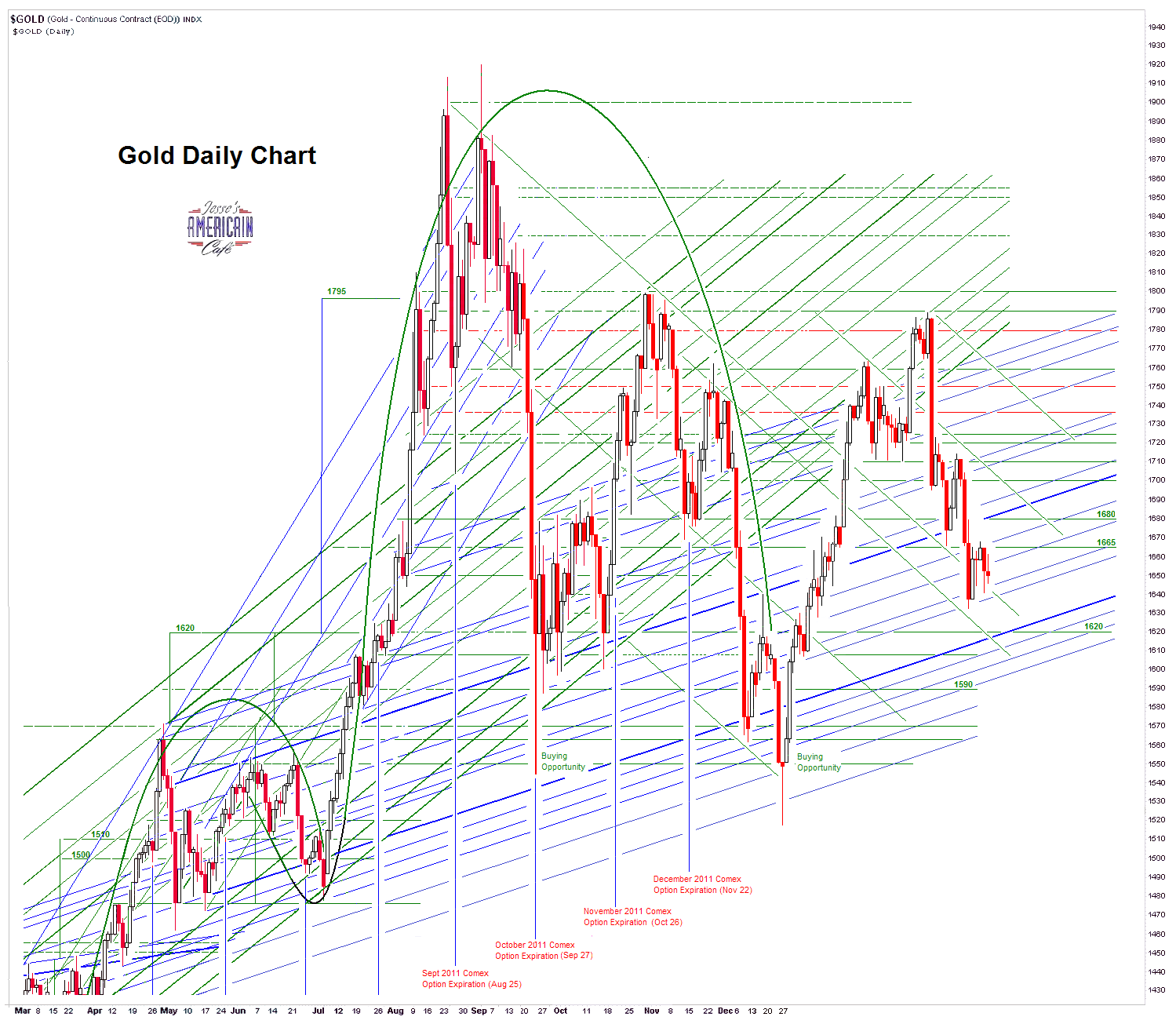
27 March 2012

Franklin Roosevelt's First Inaugural Address


"And finally, in our progress towards a resumption of work, we require two safeguards against a return of the evils of the old order.

There must be a strict supervision of all banking and credits and investments. There must be an end to speculation with other people's money."

Franklin Delano Roosevelt, First Inaugural Address, 4 March 1933

The year 1933 was a pivotal year in modern history. While Roosevelt spoke these words, Adolf Hitler had already risen to the post of Chancellor of Germany after the Reichstag fire. By April 1 the Enabling Act had made him the dictator of Germany. The autocratic leader of Italy, Mussolini, published La dottrina del fascismo, The Doctrine of Fascism. Japan withdrew from the League of Nations and had invaded Manchuria and bombed Shanghai.

And a small group of wealthy Americans were already plotting a fascist military coup by a band of hired brigands designed to overturn the Constitution and place the country in the hands of the rich and the powerful as they had helped to do in Germany.

It is our generation that allowed the repeal of these safeguards created during the depths of the Great Depression, epitomized by the long campaign to overturn Glass-Steagall, and the handing back the republic, and the fate of our children and their children, to the unscrupulous monied interests.

Even now, people act reflexively to this warning, conditioned by years of propaganda and public relations to hate their protectors and love those who plunder them, in the hopes that they will be spared, and perhaps even participate in such spoils.

What a generation of the craven, the self-loving, the deluded, and the foolishly proud.

President Hoover, Mr. Chief Justice, my friends:

This is a day of national consecration. And I am certain that on this day my fellow Americans expect that on my induction into the Presidency, I will address them with a candor and a decision which the present situation of our people impels.

This is preeminently the time to speak the truth, the whole truth, frankly and boldly. Nor need we shrink from honestly facing conditions in our country today. This great Nation will endure, as it has endured, will revive and will prosper.

So, first of all, let me assert my firm belief that the only thing we have to fear is fear itself -- nameless, unreasoning, unjustified terror which paralyzes needed efforts to convert retreat into advance. In every dark hour of our national life, a leadership of frankness and of vigor has met with that understanding and support of the people themselves which is essential to victory. And I am convinced that you will again give that support to leadership in these critical days.

In such a spirit on my part and on yours we face our common difficulties. They concern, thank God, only material things. Values have shrunk to fantastic levels; taxes have risen; our ability to pay has fallen; government of all kinds is faced by serious curtailment of income; the means of exchange are frozen in the currents of trade; the withered leaves of industrial enterprise lie on every side; farmers find no markets for their produce; and the savings of many years in thousands of families are gone. More important, a host of unemployed citizens face the grim problem of existence, and an equally great number toil with little return. Only a foolish optimist can deny the dark realities of the moment.

And yet our distress comes from no failure of substance. We are stricken by no plague of locusts. Compared with the perils which our forefathers conquered, because they believed and were not afraid, we have still much to be thankful for. Nature still offers her bounty and human efforts have multiplied it. Plenty is at our doorstep, but a generous use of it languishes in the very sight of the supply.

Primarily, this is because the rulers of the exchange of mankind's goods have failed, through their own stubbornness and their own incompetence, have admitted their failure, and have abdicated. Practices of the unscrupulous money changers stand indicted in the court of public opinion, rejected by the hearts and minds of men.

True, they have tried. But their efforts have been cast in the pattern of an outworn tradition. Faced by failure of credit, they have proposed only the lending of more money. Stripped of the lure of profit by which to induce our people to follow their false leadership, they have resorted to exhortations, pleading tearfully for restored confidence. They only know the rules of a generation of self-seekers. They have no vision, and when there is no vision the people perish.

Yes, the money changers have fled from their high seats in the temple of our civilization. We may now restore that temple to the ancient truths. The measure of that restoration lies in the extent to which we apply social values more noble than mere monetary profit.

Happiness lies not in the mere possession of money; it lies in the joy of achievement, in the thrill of creative effort. The joy, the moral stimulation of work no longer must be forgotten in the mad chase of evanescent profits. These dark days, my friends, will be worth all they cost us if they teach us that our true destiny is not to be ministered unto but to minister to ourselves, to our fellow men.

Recognition of that falsity of material wealth as the standard of success goes hand in hand with the abandonment of the false belief that public office and high political position are to be valued only by the standards of pride of place and personal profit; and there must be an end to a conduct in banking and in business which too often has given to a sacred trust the likeness of callous and selfish wrongdoing. Small wonder that confidence languishes, for it thrives only on honesty, on honor, on the sacredness of obligations, on faithful protection, and on unselfish performance; without them it cannot live.

Restoration calls, however, not for changes in ethics alone. This Nation is asking for action, and action now.

Our greatest primary task is to put people to work. This is no unsolvable problem if we face it wisely and courageously. It can be accomplished in part by direct recruiting by the Government itself, treating the task as we would treat the emergency of a war, but at the same time, through this employment, accomplishing great -- greatly needed projects to stimulate and reorganize the use of our great natural resources.

Hand in hand with that we must frankly recognize the overbalance of population in our industrial centers and, by engaging on a national scale in a redistribution, endeavor to provide a better use of the land for those best fitted for the land.

Yes, the task can be helped by definite efforts to raise the values of agricultural products, and with this the power to purchase the output of our cities. It can be helped by preventing realistically the tragedy of the growing loss through foreclosure of our small homes and our farms. It can be helped by insistence that the Federal, the State, and the local governments act forthwith on the demand that their cost be drastically reduced. It can be helped by the unifying of relief activities which today are often scattered, uneconomical, unequal. It can be helped by national planning for and supervision of all forms of transportation and of communications and other utilities that have a definitely public character. There are many ways in which it can be helped, but it can never be helped by merely talking about it.

We must act. We must act quickly.

And finally, in our progress towards a resumption of work, we require two safeguards against a return of the evils of the old order. There must be a strict supervision of all banking and credits and investments. There must be an end to speculation with other people's money. And there must be provision for an adequate but sound currency.

These, my friends, are the lines of attack. I shall presently urge upon a new Congress in special session detailed measures for their fulfillment, and I shall seek the immediate assistance of the 48 States.

Through this program of action we address ourselves to putting our own national house in order and making income balance outgo. Our international trade relations, though vastly important, are in point of time, and necessity, secondary to the establishment of a sound national economy. I favor, as a practical policy, the putting of first things first. I shall spare no effort to restore world trade by international economic readjustment; but the emergency at home cannot wait on that accomplishment.

The basic thought that guides these specific means of national recovery is not nationally -- narrowly nationalistic. It is the insistence, as a first consideration, upon the interdependence of the various elements in and parts of the United States of America -- a recognition of the old and permanently important manifestation of the American spirit of the pioneer. It is the way to recovery. It is the immediate way. It is the strongest assurance that recovery will endure.

In the field of world policy, I would dedicate this Nation to the policy of the good neighbor: the neighbor who resolutely respects himself and, because he does so, respects the rights of others; the neighbor who respects his obligations and respects the sanctity of his agreements in and with a world of neighbors.

If I read the temper of our people correctly, we now realize, as we have never realized before, our interdependence on each other; that we can not merely take, but we must give as well; that if we are to go forward, we must move as a trained and loyal army willing to sacrifice for the good of a common discipline, because without such discipline no progress can be made, no leadership becomes effective.

We are, I know, ready and willing to submit our lives and our property to such discipline, because it makes possible a leadership which aims at the larger good. This, I propose to offer, pledging that the larger purposes will bind upon us, bind upon us all as a sacred obligation with a unity of duty hitherto evoked only in times of armed strife.

With this pledge taken, I assume unhesitatingly the leadership of this great army of our people dedicated to a disciplined attack upon our common problems.

Action in this image, action to this end is feasible under the form of government which we have inherited from our ancestors. Our Constitution is so simple, so practical that it is possible always to meet extraordinary needs by changes in emphasis and arrangement without loss of essential form. That is why our constitutional system has proved itself the most superbly enduring political mechanism the modern world has ever seen.

It has met every stress of vast expansion of territory, of foreign wars, of bitter internal strife, of world relations. And it is to be hoped that the normal balance of executive and legislative authority may be wholly equal, wholly adequate to meet the unprecedented task before us. But it may be that an unprecedented demand and need for undelayed action may call for temporary departure from that normal balance of public procedure.

I am prepared under my constitutional duty to recommend the measures that a stricken nation in the midst of a stricken world may require. These measures, or such other measures as the Congress may build out of its experience and wisdom, I shall seek, within my constitutional authority, to bring to speedy adoption.

But, in the event that the Congress shall fail to take one of these two courses, in the event that the national emergency is still critical, I shall not evade the clear course of duty that will then confront me. I shall ask the Congress for the one remaining instrument to meet the crisis -- broad Executive power to wage a war against the emergency, as great as the power that would be given to me if we were in fact invaded by a foreign foe.

For the trust reposed in me, I will return the courage and the devotion that befit the time. I can do no less.

We face the arduous days that lie before us in the warm courage of national unity; with the clear consciousness of seeking old and precious moral values; with the clean satisfaction that comes from the stern performance of duty by old and young alike. We aim at the assurance of a rounded, a permanent national life.

We do not distrust the -- the future of essential democracy. The people of the United States have not failed. In their need they have registered a mandate that they want direct, vigorous action. They have asked for discipline and direction under leadership. They have made me the present instrument of their wishes. In the spirit of the gift I take it.

In this dedication -- In this dedication of a Nation, we humbly ask the blessing of God.

May He protect each and every one of us.

May He guide me in the days to come.


A Brief Look at the 2012 French Political Landscape


I doubt that most non-French readers will know the complete cast of characters, but the video is so well done and funny in and of itself that it is worth showing. Its not Pixar, but I was impressed. And the caricatures cross the language barrier.

I would like to see something as witty and clever done with the American or British cast of characters.


Tavakoli on the Ongoing Fraud in the Financial System 'Epitomized By MF Global'


Janet Tavakoli and Lauren Lyster discuss the widespread control frauds that permeate the US financial system, continuing after the financial crisis and Dodd-Frank, and epitomized by the reckless disregard for the employees and customers at MF Global as led by Jon Corzine.

Tavakoli has one word for the 'CEO defense' being parroted by the mainstream US media in this case. "Nonsense."

She has some fairly hard words for the Congress and the media in their coverage of the financial scandals.


Barofsky: MF Global Still Looks Like a Fraud


I doubt very much justice will be done, unless Edith O'Brien cuts a deal for immunity and has some proof of what was said and known by the executives of MF Global.

The foundations for the cover stories have been well laid already in the press.


26 March 2012

Gold Daily and Silver Weekly Charts - A Burst of Liquidity Expectations Sparks a Flight to the Metals


A sharp rally in the metals as Bernanke dispels the deflationary delusion.


SP 500 and NDX Futures Daily Charts - The Bernanke Bubble


A big rally, but on remarkably light volume.

Bernanke is running the presses, but pumping another paper asset bubble that primarily benefits the already wealthy.

As noted earlier today, I think we are seeing the American financiers starting to leave Europe and Asia. If this trend continues, look for the currency war to enter another phase in which its effects will be unmistakable, even for the mainstream muppets.

This will end badly.


NY Times Says They Saw an Email that Says Corzine Did Not Know, Was Apparently Misled


Now it starts to get really interesting.

Of course Jon Corzine did not know. He's only the CEO.

Leak, and counter-leak.

He said.  She said.

Check your closet floor, Edith. What were you wearing that day?

You look like the designated patsy.

One thing that the email seems to indicate, however, is that at least $175 million of the customer money was never missing or vaporized, but was sitting in an account at JPM in London. And they never received back confirmation that the money was NOT customer funds.

That account was MF Global's account. Did JPM seize the money when MF Global went bankrupt? Their rationale would be that it was a settlement, and therefore exempt from laws against fraudulent conveyance based on a 2005 law.

NYT
E-Mail to Corzine Said Transfer Was Not Customer Money
By BEN PROTESS and AZAM AHMED
March 25, 2012

Jon S. Corzine, the former chief executive of MF Global, was told during the brokerage firm’s final day of business that a crucial transfer of $175 million came from the firm’s own money, not from a customer account, according to an internal e-mail.

The e-mail, sent by an executive in MF Global’s Chicago office, showed that the company had transferred $175 million to replenish an overdrawn account at JPMorgan Chase in London. The transfer, the e-mail said, was a “House Wire,” meaning that it came from the firm’s own money. The e-mail, sent at 2:20 p.m. on Oct. 28 to Mr. Corzine and two of his assistants in New York, says the transfer came from a “nonseg” account, industry speak for a noncustomer account.

But the e-mail, a copy of which was reviewed by The New York Times, did not capture the full story behind the wire, which turned out to contain customer money. MF Global employees in Chicago had first transferred $200 million from a customer account to the firm’s house account, people briefed on the matter said. Once it was in the firm’s coffers, the people said, Chicago employees then promptly transferred $175 million of the money to the MF Global account at JPMorgan in London — the account that was overdrawn....


Miloš Kopecký and the mainstream media financial cold war boogie woogie.

Gold Futures Daily Chart - Intraday With Key Support and Resistance


The short term trend is downwards and in red.

The longer term trend is upwards and in green.

The very long term trend is steep and pointing to much higher prices.

The support and resistance on the chart is rather easily seen.

I would put the key levels in blue.


JPM's Asia-Pacific CEO Leaving the Firm


The spokesmodels were crying insipid crocodile tears for Gaby this morning. "With all this regulation, it's just not fun anymore."

Yes, even plunder can become tedious.

Except I think this is part of a greater trend.

The American derivatives dealers and agents of fortune are leaving Europe and Asia, as the currency wars intensify, and the Banksters are sent home.

WSJ
J.P. Morgan's Asia-Pacific CEO Leaving
By ALISON TUDOR
March 26, 2012

HONG KONG—J.P. Morgan Chase & Co.'s chairman and chief executive officer for the Asian Pacific region, Gaby Abdelnour, is leaving the bank after 14 years and the building up of the bank's platform in China.

Mr. Abdelnour, 58 years old, will leave the New York-based bank this summer to pursue personal interests, according to a memo signed by Chief Executive Officer James Dimon and investment-banking head Jes Staley and circulated internally. The bank hasn't named a successor...

Bernanke Spurs Stock Market with Pledge to Inflate the Currency


The problem with this approach is that only the wealthy can gain the greatest benefit from it, and the real economy picks up the scraps.

The banks can borrow at almost zero, and buy treasuries paying two or three percent, and the wealthy can continue to buy income producing assets and other companies to strenghten their monopolies.

There will be no sustainable recovery until the system is reformed. The greater fault is of Obama and the Congress, since they control fiscal policy and enforcement of the law, although the Fed as regulator does very little to reform the financial system and the Banks.

The limit of this current quantitative easing policy is the value of the dollar in international trade, or the spontaneous action of the people to demand change.

Reuters
Wall Street gains after Bernanke comments
By Ryan Vlastelica March 26, 2012

NEW YORK (Reuters) - Stocks rallied on Monday after Federal Reserve Chairman Ben Bernanke suggested the central bank would continue supportive monetary policies even as the unemployment rate improves.

The economy needs to grow more quickly if it is to produce enough jobs to bring down the unemployment rate further, Bernanke told a gathering of the National Association for Business Economics.

"Further significant improvements in the unemployment rate will likely require a more rapid expansion of production and demand from consumers and businesses, a process that can be supported by continued accommodative policies," he said.

Leo Grohowski, the chief investment officer at BNY Mellon Wealth Management in New York, called the remarks "the best of both worlds..."

25 March 2012

Martin Luther King - On Civil Disobedience


Excerpt of Transcript of the Sermon "But If Not" by Martin Luther King

O Nebuchadnezzar, we do not need to defend ourselves before you in this matter. If we are thrown into the blazing furnace, the God we serve is able to save us from it, and he will rescue us from your hand, O king.

But if not, even if he does not preserve us, we want you to know, O king, that we will not serve your gods or worship the images of gold you have set up and commanded us to worship." Daniel 3:16-18

Now I want you to notice first, here, that these young men practiced civil disobedience.

Civil disobedience is the refusal to abide by an order of the government or of the state or even of the court that your conscience tells you is unjust. Civil disobedience is based on a commitment to conscience. In other words, one who practices civil disobedience is obedient to what he considers a higher law.

And there comes a time when a moral man can't obey a law which his conscience tells him is unjust. And I tell you this morning, my friends, that history has moved on, and great moments have often come forth because there were those individuals, in every age and in every generation, who were willing to say "I will be obedient to a higher law." These men were saying "I must be disobedient to a king in order to be obedient to the king."

And those people who so often criticize those of us who come to those moments when we must practice civil disobedience never remember that even right here in America, in order to get free from the oppression and the colonialism of the British Empire, our nation practiced civil disobedience.  For what represented civil disobedience more than the Boston Tea Party.

And never forget that everything that Hitler did in Germany was legal. It was legal to do everything that Hitler did to the Jews. It was a law in Germany that Hitler issued himself that it was wrong and illegal to aid and comfort a Jew in Hitler's Germany. But I tell you if I had lived in Hitler's Germany with my attitude, I would have openly broken that law. I would have practiced civil disobedience.

And so it is important to see that there are times when a man-made law is out of harmony with the moral law of the universe, there are times when human law is out of harmony with eternal and divine laws. And when that happens, you have an obligation to break it.

And I'm happy that in breaking it, I have some good company. I have Shadrach, Meshach, and Abednego. I have Jesus and Socrates. And I have all of the early Christians who refused to bow...

And this is what I want to say finally, that there is a reward if you do right for righteousness' sake...Don't ever think you're by yourself. Go on to jail if necessary but you'll never go alone.

Take a stand for that which is right, and the world may misunderstand you and criticize you, but you never go alone, for somewhere I read that "One with God is a majority," and God has a way of transforming a minority into a majority.

Walk with him this morning and believe in him and do what is right and he'll be with you even until the consummation of the ages. Yes, I've seen the lightning flash, I've heard the thunder roll, I've felt sin breakers dashing trying to conquer my soul but I heard the voice of Jesus saying still to fight on, he promised never to leave me, never to leave me alone; no, never alone, no, never alone. He promised never to leave me, never to leave me alone.

Where you going this morning, my friends, tell the world that you're going with truth. You're going with justice, you're going with goodness, and you will have an eternal companionship. And the world will look at you and they won't understand you, for your fiery furnace will be around you, but you'll go on anyhow.

But if not, I will not bow, and God grant that we will never bow before the gods of evil."


"For we wrestle not against flesh and blood, but against principalities and powers, against the rulers of the darkness of this world, against spiritual wickedness in high places."

Ephesians 6:12

Weekend Reading for Sunday 25 March 2012


“We are slow to master the great truth that even now Christ is, as it were, walking among us, and by His hand, or eye, or voice, bidding us to follow Him. We do not understand that His call is a thing that takes place now. We think it took place in the Apostles' days, but we do not believe in it; we do not look for it in our own case.

God's presence is not discerned at the time when it is upon us, but afterwards, when we look back upon what is gone and over. The world seems to go on as usual. There is nothing of heaven in the face of society, in the news of the day.

And yet the ever-blessed Spirit of God is there, ten times more glorious, more powerful than when He trod the earth in our flesh.

God beholds you. He calls you by your name. He sees you and understands you as He made you. He knows what is in you, all your peculiar feelings and thoughts, your dispositions and likings, your strengths and your weaknesses. He views you in your day of rejoicing and in your day of sorrow. He sympathizes in your hopes and your temptations. He interests Himself in all your anxieties and remembrances, all the risings and fallings of your spirit.

He encompasses you round and bears you in His arms. He notes your very countenance, whether smiling or in tears. He looks tenderly upon you. He hears your voice, the beating of your heart, and your very breathing.

You do not love yourself better than He loves you. You cannot shrink from pain more than He dislikes your bearing it; and if He puts it on you, it is as you would put it on yourself, if you would be wise, for a greater good afterwards.

There is an inward world, which none see but those who belong to it. There is an inward world into which they enter who come to Christ, though to men in general they seem as before. If they drank of Christ's cup it is not with them as in time past. They came for a blessing, and they have found a work.

To their surprise, as time goes on, they find that their lot is changed. They find that in one shape or another adversity happens to them. If they refuse to afflict themselves, God afflicts them.

Why did you taste of His heavenly feast, but that it might work in you—why did you kneel beneath His hand, but that He might leave on you the print of His wounds?

God has created me to do Him some definite service; He has committed some work to me which He has not committed to another. I have my mission -- I may never know it in this life but I shall be told it in the next.

I am a link in a chain, a bond of connection between persons. He has not created me for naught.

I shall do good, I shall do His work. I shall be an angel of peace, a preacher of truth in my own place while not intending it if I do but keep His commandments.

Therefore I will trust Him. Whatever I am, I can never be thrown away. If I am in sickness, my sickness may serve Him; in perplexity, my perplexity may serve Him. If I am in sorrow, my sorrow may serve Him.

He does nothing in vain. He knows what He is about.

He may take away my friends. He may throw me among strangers. He may make me feel desolate, make my spirits sink, hide my future from me -- still He knows what He is about.

Let us feel what we really are--sinners attempting great things. Let us simply obey God's will, whatever may come. He can turn all things to our eternal good. Easter day is preceded by the forty days of Lent, to show us that they only who sow in tears shall reap in joy.

Contemplate then yourself, not as yourself, but as you are in the Eternal God. Fall down in astonishment at the glories which are around you and in you, poured to and fro in such a wonderful way that you are dissolved into the Kingdom of God.

The more we do, the more shall we trust in Christ; and that surely is no morose doctrine, that leads us to soothe our selfish restlessness, and forget our fears, in the vision of the Incarnate Son of God.

May the Lord support us all the day long, till the shades lengthen, and the evening comes, and the busy world is hushed, and the fever of life is over, and our work is done.

Then in His mercy may He give us safe lodging, and a holy rest, and peace at last.”

John Henry Newman

This is a collection of quotations from J. H. Newman woven into a whole cloth by Le Proprietaire as a young man for a small circle of Christian humanist friends.


NY Times Floats the Corzine 'CEO Defense'


As the NY Times notes in its expansion of the statements of Corzine's attorney, it is going to be a bit hard to pin Mr. Corzine down in the case of MF Global, because it is unlikely that he sent an email to Ms. O'Brien saying "Please meet our margin call with funds stolen from the customers' accounts."

The defense will be that Mr. Corzine, who had been personally running the prop trading gambits that took MF Global down, could not be bothered in understanding his own firm's cash position, and that no one dared to tell him that they were dipping into customer funds.

The weight of this of course would naturally have to seem to fall on someone, but the defense offered will be that this will have been an inadvertent error, that the firm was so hopelessly mismanaged and out of control that they were not even able to keep their own books straight.

Like most of the mainstream media, the NY Times expands on the Talking Points being promoted the spokesmen and public relations campaign for Mr. Corzine.   Given the nature of this story, and the blanket of secrecy that was thrown over it by most of the involved parties, except the customers of course, it would be a real effort to do otherwise. 

I am still quite intrigued by who leaked the Congressional memo to Bloomberg news.

Dealbook/NY Times
New Details Emerge on MF Global, but No Smoking Gun
By AZAM AHMED and BEN PROTESS
March 23, 2012, 6:19 pm

New details have emerged about MF Global’s chaotic final days and a critical transfer of customer money that has become a central focus in the wide-ranging federal investigation into the firm’s collapse.

In a memo prepared for a coming Congressional hearing, investigators described how Jon S. Corzine, the firm’s former chief executive and former New Jersey governor, asked an executive in the Chicago office to transfer $200 million to replenish an overdrawn account at JPMorgan Chase in London.

The Congressional memo cites an e-mail from the Chicago employee, Edith O’Brien, who authorized the transfer, saying it was “Per JC’s direct instructions,” referring to Mr. Corzine.

At first, the revelation fueled speculation that Mr. Corzine had instructed the transfer of customer funds, despite his assertions to the contrary. But it appears to be no smoking gun.

While the memo makes clear that Mr. Corzine was involved in patching the overdraft, it does not indicate that he requested the funds be drawn from customer accounts. He asked only that the overdraft be fixed. And in a footnote, the memo noted that futures brokerage firms like MF Global frequently deposit firm money into customer accounts and may withdraw it at will.   (Do they?  Do they frequently deposit their own money into customer accounts? Is that what this memo really says? - Jesse)

While the memo makes clear that Mr. Corzine was involved in patching the overdraft, it does not indicate that he requested the funds be drawn from customer accounts. He asked only that the overdraft be fixed. And in a footnote, the memo noted that futures brokerage firms like MF Global frequently deposit firm money into customer accounts and may withdraw it at will.

In a statement on Friday, a spokesman for Mr. Corzine said the former chief executive stood by his earlier testimony before Congress. In December, Mr. Corzine told lawmakers that he did not authorize the illicit transfer of customer money.

“I never gave any instructions to misuse customer money, never intended to give any instructions or authority to misuse customer funds, and I find it very hard to understand how anyone could misconstrue what I’ve said as a way to misuse customer money,” Mr. Corzine, a Democrat who also served in the Senate, said before the Senate Agriculture Committee.

The spokesman, Steven Goldberg, added that Mr. Corzine “never directed Ms. O’Brien or anyone else regarding which account should be used to cure the overdrafts, and he never directed that customer funds should be used for that purpose. Nor was he informed that customer funds had been used for that purpose...”

Read the rest here.

24 March 2012

W. C. Handy: Father of the American Blues


Listen to the PBS Radio Documentary W. C. Handy's Blues.

"William Christopher (better known as WC) Handy didn’t invent the blues -- but he heard them in a deep and understanding way. He figured out how they worked. He wrote them down, arranged them, and did the business of bringing them to the world.

Handy’s classic “St. Louis Blues” is one of the most recorded songs ever. But even though Handy’s blues were phenomenally popular, he also strove to secure respect for himself and for other African-American composers. He was one of the first black composers to hold onto the rights to his music, and he published his own and other black composers’ work.

In this hour-long radio special, host Dr. Ysaye Maria Barnwell (of Sweet Honey in the Rock) celebrates the life and legacy of WC Handy the musician, the composer, the arranger, the publisher and the pioneer."

Here is the PBS Documentary Home Page For W. C. Handy's Blues.

Five Simple Rules to Remember


It is amazing what one can find on the Internet.

I was looking for a quote about suffering and love, to be able to source it, and I found this bit of foolishness from 2001, an old posting from a chatboard, nine days before Sept 11, 2001.

I had recently 'retired' from corporate life, and was just starting to act on some personal plans that were to be changed radically by unexpected events.

Jesse's Rules for Life

Rule 1: Nothing is worth doing before 8 AM with your clothes on.

Rule 2: Never attribute to evil what can be attributed to stupidity.

Rule 3: To learn to love, we must first yearn to be comforted.

Rule 4: In any game, at least one guy has YOU pegged as a sucker.

Rule 5: Don't be a sucker.

I suppose I should add:
Rule 6: "No one knows the day or hour, not even the angels in heaven, nor the Son, but only the Father."

23 March 2012

Corzine Gave 'Direct Instructions' To Transfer $200 Million From Customers to JPM London


Jamie's crew is probably safe, but it looks like Jon is facing his 'Kenny Boy' Enron moment, although he may find some shelter in the Sargeant Schultz defense. I know nothing. NOTHING.

I guess the fellows who said that they had found nothing incriminating in the emails forget to mention this one.

Edith O'Brien's appearance before the Congress just became potentially more interesting, although she could still plead the Fifth.  I wonder if the email turned up because so did she.

Corzine will almost certainly claim that there was a mix up, and that he merely said to meet the margin call, but did not know it involved customer funds.  He said, she said.   Save the dress.

It also looks like the spin might be that it was a 'mistake' because they were mingling customer funds with 'excess firm funds' in some third account.

And then the Anti-Bernanke of the financial apocalypse vaporized the money and all traces of it. And everyone was happy, except for a few small specs.

No harm, no foul. Just a simple error. Fine and a wristslap and a promise to better when he gets back on his Street feet.

Great job Phil Mattingly of Bloomberg for snagging this Congressional memo and releasing it.  I wonder which staffer slipped it. I'd book on GOP but I never really was a very sophisticated politico.

I still have major doubts for justice being done, but I do wish to see the customers released from their financial hell. Perhaps this will help.

Oh Jonny boy, the pipes, the pipes are calling....

Bloomberg
MF Global’s Corzine Ordered Funds Moved to JPMorgan, Memo Says
By Phil Mattingly and Silla Brush
Mar 23, 2012 4:04 PM ET

Jon S. Corzine, MF Global Holding Ltd. (MFGLQ)’s chief executive officer, gave “direct instructions” to transfer $200 million from a customer fund account to meet an overdraft in one of the brokerage’s JPMorgan Chase & Co. (JPM) accounts in London, according to an e-mail sent by a firm executive.

Edith O’Brien, a treasurer for the firm, said in an e-mail sent the afternoon of Oct. 28, three days before the company collapsed, that the transfer of the funds was “Per JC’s direct instructions,” according to a copy of a memo drafted by congressional investigators and obtained by Bloomberg News.

O’Brien’s internal e-mail came as the New York-based broker found intraday credit lines limited by JPMorgan, the firm’s clearing bank as well as one of its custodian banks for segregated customer funds, according to the memo, which was prepared for a March 28 House Financial Services subcommittee hearing on the firm’s collapse. O’Brien is scheduled to testify after being subpoenaed this week.

“Over the course of that week, MF Global (MFGLQ)’s financial position deteriorated, but the firm represented to its regulators and self-regulatory organizations that its customers’ segregated funds were safe,” said the memo, written by Financial Services Committee staff and sent to lawmakers.

Vinay Mahajan, global treasurer of MF Global Holdings, wrote an e-mail on Oct. 28 that said JPMorgan was “holding up vital business in the U.S. as a result” of the overdrawn account, which had to be “fully funded ASAP,” according to the memo...

Read the rest here.

Gold Daily And Silver Weekly Charts - HFT Distorts Commodity Prices


At the close there was breaking news regarding an email at MF Global identifying Jon Corzine as having ordered the customer funds transferred to meet a margin call. There is a more complete discussion and story of that topic above.

Gold and silver bounced back today, but they still finished up below key resistance. We'll have to see if they can continue to gain their footing and move higher next week.

Report Reuters UK: High Frequency Trading Distorts Commodity Prices


SP 500 and NDX Futures Daily Charts - Breaking News, MF Global 'Smoking Gun'


A dull day with only a little excitement as BATS exchange went IPO, and flubbed its own price quotes trading it for pennies, and a major error in APPl to the downside set off circuit breakers.

Other than that a snooze, with the usual uplift into the afternoon close after having been down most of the day.

Have a pleasant weekend.


"...How vainly seek
The selfish for that happiness denied
To aught but virtue! Blind and hardened, they,
Who hope for peace amid the storms of care,
Who covet power they know not how to use,
And sigh for pleasure they refuse to give,--
Madly they frustrate still their own designs;
And, where they hope that quiet to enjoy
Which virtue pictures, bitterness of soul,
Pining regrets, and vain repentances,
Disease, disgust and lassitude pervade
Their valueless and miserable lives...

But hoary-headed selfishness has felt
Its death-blow and is tottering to the grave;
A brighter morn awaits the human day,
When every transfer of earth's natural gifts
Shall be a commerce of good words and works;
When poverty and wealth, the thirst of fame,
The fear of infamy, disease and woe,
War with its million horrors, and fierce hell,
Shall live but in the memory of time,
Who, like a penitent libertine, shall start,
Look back, and shudder at his younger years."

Percy Bysshe Shelley, Queen Mab

Vanity Fair: Jon Corzine's Riskiest Business


This is an interesting article on MF Global and Jon Corzine more broadly.

It is the story of industry wide greed, influence peddling, and the weakening of the regulatory agencies in a combination of powerful persuasion and anti-regulatory ideology aggressively promoted by money from self-serving financial interests.

It is good to remember that attempts to regulate and reform the industry are blocked by a powerful minority at almost every turn, and that the CFTC has two Republican appointees who oppose most of the proposals that Chairman Gensler puts forward.

However, it is not clear at all what support Gary Gensler and his Democratic colleagues were able to obtain from the economic people in the Obama Administration,  the tone of which was set by Tim Geithner and the now departed Larry Summers. The Obama Administration has been particularly hard on whistleblowers and internal dissent, and very quick to compromise on financial matters.

One thing that is lacking in American politics, that I have always admired in the Europeans, is the principled resignation. That is a tall order for a group of leaders who can barely scrape up enough moral fiber to take a principled stand, even on their own elected mandates, unless it is in the service of their rich and powerful benefactors in their ongoing game of thrones.

Vanity Fair
Jon Corzine’s Riskiest Business
By Bryan Burrough, William D. Cohan and Bethany McLean

"...Gary Gensler, a former Goldman colleague of Corzine’s, wanted to restrict the ability of a firm to invest its customers’ assets in sovereign debt and to use its customers’ cash to make loans to itself.

MF Global (along with the rest of the industry) freaked out, writing to the C.F.T.C. that the agency was trying to “fix something that is not broken.”

Corzine personally lobbied each of the C.F.T.C.’s commissioners, and after Gensler realized he didn’t have support from anyone, he was forced to delay a vote that was scheduled for July..."

Read the full article here.

In Honor of the 70th Anniversary of the Munich Students Movement - 3rd Leaflet


I have been remembering the 70th Anniversary of Die Weiße Rose, the Munich Students Movement and the series of leaflets which they produced and distributed in Nazi Germany during the height of the reign of terror and the madness.

You may read more about these brave souls here and here.

The two saddest words in any language are 'If only...'

The White Rose
Third Leaflet
Munich, 1942

Salus publica suprema lex
The good of the people is the law of the land.

All ideal forms of government are, of course, utopias.

But a state cannot be constructed on a pure ideal, a theoretical basis; rather, it must grow and ripen in the way an individual human being matures. But we must not forget that at the starting point of every civilization the state was already there in rudimentary form. The family is as old as man himself, and out of this initial bond mankind, endowed with reason, created for himself a state founded on justice, whose highest law was the common good.

The state should exist as a parallel to the divine order, and the highest of all utopias, the civitas dei, is the model which in the end it should approximate. Here we will not pass judgment on the many possible forms of the state - democracy, constitutional monarchy, and so on.

But one matter needs to be brought out clearly and unambiguously. Every individual human being has a claim to a useful and just state, a state which secures freedom of the individual as well as the good of the whole. For, according to God's will, man is intended to pursue his natural goal, his earthly happiness, in self-reliance and self-chosen activity, freely and independently within the community of life and work of the nation.

But our present "state" is the dictatorship of evil. "Oh, we've known that for a long time," I hear you object, "and it isn't necessary to bring that to our attention again." But, I ask you, if you know that, why do you not act, why do you allow these men who are in power to rob you step by step, openly and in secret, of one set of your rights after another, until one day nothing, nothing at all will be left but a mechanized state system presided over by criminals and fools?

Is your spirit already so crushed by abuse that you forget it is your right - or rather, your moral duty - to change this system? But if a man no longer can summon the strength to demand his rights, then it is absolutely certain that he will perish. We would deserve to be dispersed through the earth like dust before the wind if we do not muster our powers at this late hour and finally find the courage which, up to now, we have lacked. Do not hide your cowardice behind a cloak of expediency, for with every new day that you hesitate, failing to oppose this offspring of Hell, your guilt, as in a parabolic curve, grows higher and higher.

Many, perhaps most, of the readers of these leaflets do not see clearly how they can practice an effective opposition. They do not see any avenues open to them. We want to try to show them that everyone is in a position to contribute to changing this system. It is not possible through solitary withdrawal, in the manner of embittered hermits, to prepare the ground for the overturn of this "government" or bring about the revolution at the earliest possible moment. No, it can be done only by the cooperation of many convinced, energetic people - people who are agreed as to the means they must use to attain their goal. We have no great number of choices as to these means. The only one available is passive resistance.

The meaning and the goal of passive resistance is to topple National Socialism, and in this struggle we must not recoil from any course, any action, whatever its nature. At all points we must oppose National Socialism, wherever it is open to attack. We must soon bring this monster of a state to an end. A victory of fascist Germany in this war would have immeasurable, frightful consequences. The military victory over Bolshevism dare not become the primary concern of the Germans. The defeat of the Nazis must unconditionally be the first order of business, the greater necessity of this latter requirement will be discussed in one of our forthcoming leaflets.

And now every convinced opponent of National Socialism must ask himself how he can fight against the present "state" in the most effective way, how he can strike it the most telling blows. Through passive resistance, without a doubt. We cannot provide each man with the blueprint for his acts, we can only suggest them in general terms, and he alone will find the way of achieving this end...

Please distribute this as widely as possible.


"Before the crown comes the cross."

Martin Luther King


"Easter Day is preceded by the forty days of Lent, to show us that they, and they only, who sow in tears, shall reap in joy."

John Henry Newman

Thankfully few are called to the martyr's crown, but we are all called to take up the cross and follow, each day, in each of our own small ways. That is all most of us can do, be still, and faithful, and wait on the Lord.

And for anyone who has done it, they know well that raising a family, going to work each day and doing all things well, being kind and understanding especially when you would like to do otherwise, and even staring a mortgage in the face for thirty years, all of these things are no picnic.

I realized today that when I was a younger man, I recall hearing people talk quite a bit about 'conscience.' Even in the public news, there was talk of acts of conscience, and a defense of their inherent nobility, and right and wrong in the moral sense, doing the right thing.

These days what we seem to hear about most is winning, continual war, and a ruthless culture of death.

Now the moral sense is just dollars and cents, and a continuing sacrifice to the gods of greed. We take pride in the ability to put a price on anything, but we seem to have lost a relative sense of the value of everything, or at least all that really matters.

America has faltered from its high ideals, that even if not always adhered to closely, were still a light to the world. Today the nation stands before God and the world not in humility but in defiance, with the blood of prophets on its hands, as the greatest power on earth, the unquestioned ruler of all it surveys. And that is an exceptional tragedy.

Bill Black on the MF Global Financial Collapse and Aftermath - Obama's Hurricane Katrina


Bill Black is interviewed on the Capital Accounts Show on RT.

I would be glad to show a video of Bill Black discussing important financial matters such as this on a mainstream US video program but there don't seem to be any.

There were a number of disturbing things in Gary Gensler testimony to the Congress about the role of the CFTC in this. Some of these things are discussed here.

I doubt very much that justice will be done at MF Global. The Banks have been getting away with everything they have done so far, up to and including the blatant stealing of funds from customers that were being held on account, and not even subject to active trading margin.

He can try to pass the buck on this, and there is plenty of company in this on both sides of the aisle and in the media. But the ultimate responsibility for the handling of this falls on Barack Obama and his Administration. It happened on his watch, and it was their job to make it right. That is price of leadership.

He can continue to ignore it, plead ignorance, and even make excuses, but at the end of the day he should be ashamed at how this was handled, and the Congress and the media along with him.

I can only imagine what they would be saying if the President was George W. Bush, and Jon Corzine was his leading Republican fund raiser. With a few notable exceptions, largely solitary voices, where are the so-called progressives on this? Hypocrites!

I do not expect to see justice done here. There are too many powerful people and interests involved, and justice, being truth in action and not words, is not en vogue for misdeeds of the TBTF financial sector. We are way beyond that with this generation of vipers that has infested the Beltway for the past twenty years.

I would just like to see the stranded customers made whole for what was taken from them, and their long anxiety ended, which is what has happened promptly in every brokerage failure that I am aware of post WW II, including Lehman Brothers and Bear Stearns. Oh no, you just don't understand. It is different this time.

Yes, because of who is involved. How naive do they think the people are? If the individual customers had not banded together and taken proactive legal measures, the system would have had their way with them. Almost all the good that has come of this wretched affair is due to the actions of the people in the Commodity Customer Coalition, and not those sworn to protect them.
"When bad men combine, the good must associate; else they will fall one by one,
an unpitied sacrifice in a contemptible struggle."

Edmund Burke
And the public relations campaign of spin, leaks, and misinformation that has enveloped this financial scandal since day one is an absolute disgrace and a failure of the greater part of the independent press.

So far they have ignored it. Next they will be ridiculing those who call for reform such as the Occupy Wall Street movement as ignorant and rabble. But reform is inevitable, it will happen, or there will be no sustainable economic recovery, and no peace.

This is Obama's Hurricane Katrina. And viewed not as an isolated incident, but in the context of all that has happened, it is an effect of the credibility trap that grips the nation's leadership, of both financialized political parties.


22 March 2012

Taibbi: Gangster Banks Keep Winning Public Debt Business - Surprised By Joy


Matt Taibbi is out with a double barrelled critique of Bank of America and JP Morgan.

It is a very important issue, vital to the public good, and it receives almost no attention from the mainstream media or the political candidates.

Why are a few large financial institutions, the recipients of enormous amounts of public monies, able to maintain an active hand in the public debt markets after multiple violations of the law, punished only by a slap on the wrist, with a promise 'not to do it again.'

Matt asks why they are able to do it. I think that is a good question.

The gangster Mackie Messer was able to get away with a life of crime in the Three Penny Opera because one of his best friends and silent accomplices was 'Tiger' Brown, the Chief of Police.

Life imitates art?

In the case of MF Global, it seems to imitate high school.


Rolling Stone
Gangster Banks Keep Winning Public Business. Why?

By Matt Taibbi
March 22, 9:40 AM ET

A friend of mine sent this article from Bloomberg, along with the simple comment: "Perfect." What's perfect? That the banks that have been caught repeatedly ripping off communities and munipalities -- banks that have paid hefty settlements for rigging bids, bribery and other sordid misdeeds -- keep winning the most public business. Apparently, our public officials aren't concerned about whom they hire to serve as the people's investment bankers.

From the piece, entitled "JPMorgan Claims No. 1 for Government Debt After Jefferson County":

JPMorgan, which emerged from the worst financial crisis since the 1930s as the most profitable U.S. bank, has parlayed crisis-era loans to cities and states and a willingness to outbid other firms in local government bond auctions into becoming the top underwriter of municipal debt last year, according to data compiled by Bloomberg. It was the first time the firm held that rank.

The turnaround was a milestone for JPMorgan’s municipal- bond department, which has been marred by its involvement in two of the biggest scandals in the history of U.S. public finance: a so-called pay-to-play scheme in Jefferson County, Alabama, that contributed to the biggest-ever U.S. municipal bankruptcy, and a federal probe that uncovered bid rigging of municipal-bond investment products.
This story dovetails with the larger story I have out in the magazine now about Bank of America, another Too-Big-To-Fail behemoth that placed a very close second in the area of municipal bond business, according to the Bloomberg survey. Chase managed $35.7 billion in long-term bond sales, while BOA/Merrill Lynch came in at about $200 million less.

Why does this matter? Because both banks, Chase and Bank of America, have been repeatedly tied to scandals involving the issuance of public debt. Bank of America paid a $137 million settlement for rigging the bids of bond issues in numerous communities (including places as far away as Guam), while Chase also paid a big settlement of $211 million last year for more or less exactly similar offenses involving localities in 25 different states....

Read the rest here.


As a cultural aside, if you look closely at the beginning of this excerpt of film, as the people turn the corner into the square to hear the street singer, there is an address on the building on the corner on their right.

The address is 55 Wall Street, New York.

That was the headquarters at the time of the Crash of 1929 of The National City Bank, which had pioneered the mass selling of securities, under CEO Charlie Mitchell, to 'the little man' and the small speculator. You may remember the interviews with his children in one of the former mansions from the clips of "The Great Crash of 1929" by The American Experience. His son has one of the worst cases of "Long Island lockjaw" that I have heard.

It is a bit of an odd touch for a scene supposed to be of the London Docks even if you are creating a film for a German audience. Looks like the Yanks had a spot on Canary Wharf even back then.

And although I am sure it is not him, the fellow wearing a cap and smoking a pipe on the right when Mackie Messer first appears looks remarkably like Ernest Borgnine.

It is funny how one picks of these bits and pieces of things as you go through life, stuffed in a pocket of the mind for later. And then a chance encounter or thought brings them out again, and we can admire our bits and baubles, and enjoy them, or understand their meaning. Sometimes they merge into a synthesis, a picture, and at other other times they merely sparkle for a moment once again, and are gone.

I remember running across a phrase in a very old volume of Tait's Edinburgh Review many years ago, about 1974 or so, in a LIfe of William Cobbett, that at the time seemed not only antiquated but very odd, at least to me.
"He was at this time living in the bosom of his family on his farm of Botley, in the midst of domestic enjoyment of no ordinary kind, and leading no inglorious or useless life."
At that time despite having a classical education under my belt, I was a bit of a twenty-something wildling, a restless young man making his way, and such things meant nothing to me. Even at that tender, barely human age, I was a budding antiquarian bookman, and incessantly read, even the oddest things, and certainly beyond the range of my maturity and experience. But I tucked it away with many other other things, and thought little of it until now.

I understand it now, perhaps, at least I think that I do, and that is how I finally settled down, after all too many years away, roaming the world, and found real happiness, at of all places, home with loved ones, children and dogs and a small garden, as C.S. Lewis wrote, 'surprised by joy.'

I apologized to my wife a few years ago, after a visit to a friend's new home that was rather expansive, in the 15M+ range, for bringing her along on my current adventure, and causing her to curtail her home and lifestyle to something more fitting with the idea of 'sufficient simplicity.' As the ancients described it, 'in nidulo meo.'

And she looked straight at me, as only a wife of over thirty years can do, and laughed, and said, "Men are stupid. You don't know anything."

It truly is the little things that make life worth living.

Gold Daily and Silver Weekly Charts - Welcome to the Jungle


"It is critical that the derivatives markets – both futures and swaps – work for hedgers, the farmers, ranchers, producers and commercial companies in the real economy. Futures and swaps markets allow them to lock in a price and focus on what they do best – servicing customers, producing products and investing in our country’s future. As it’s the hedgers in the real economy – the non-financial side – that provide 94 percent of private sector jobs, it’s all the more important that these markets work for America’s job providers.

The derivatives markets that the CFTC oversees are where hedgers across the country meet financial firms, and others generally called speculators. Over time, the makeup of these markets has shifted dramatically. Financial firms and speculators now make up the vast majority of these markets.

For instance, producers, merchants, processors and other end-users make up approximately 15 percent of the crude oil futures market. Swap dealers, managed money accounts and other financial actors make up the remaining 85 percent. In Chicago Board of Trade wheat contracts, end-users make up nine percent of the long and 29 percent of the short positions, meaning that over 70 percent of this market consists of financial interests.

The CFTC is not a price-setting agency. Our critical mission is to ensure that derivatives markets are transparent, and free of fraud, manipulation and other abuses. Our mission is particularly important considering hedgers, America’s job creators, use these markets to lock in a price and make their investments. Given the dominance of financial actors and speculators in these markets, it’s that much more crucial that the CFTC is well funded so that we can ensure these markets work for hedgers. The need for adequate funding is highlighted by rising gas prices at the pump."

Futures Magazine, CFTC's Gensler Addresses Budget at Senate Hearing, March 21, 2012

Most astute market participants do not need Mr. Gary Gensler to tell them that the financial interests dominate the US commodity markets.   But it is good to hear nonetheless.

Perhaps he can drop a note to his boss, President Obama.  And cc a certain Nobel-Prize-winning economist whose models apparently inform him it is impossible for the financial tail to wag the dog, even when those financiers dominate the market with virtually free money supplied to them by the Federal Reserve Bank.

While it is obviously necessary for Chairman Gensler to have more funds if he is asked to regulate the much larger swaps market, I would be negligent in not mentioning that the figures he quotes about market distortions represent areas that are already under his purview and not some new addition.

The futures industry in America is starting to look like a modern day version of Upton Sinclair's The Jungle. Except in the update they slaughter people's livelihoods and wealth to feed the greed of Wall Street, instead of butchering animals to eat.

The CFTC has been almost notorious in its failure to act on repeated complaints of market manipulation under its existing authority except in the most symbolic of ways, as if handing out tickets for jay-walking, during a period of all out gang war on the public interest.   And the public is getting tired of it. 


SP 500 and NDX Futures Daily Charts - Poltergeist, the Presidency


The political demonstrators of days gone by, when people actually cared about things,  assumed a posture of non-violence.

The leadership class of today has adopted a culture of general non-involvement in almost everything about what they have agreed, or even sworn, to do, except collecting enormous paychecks for not doing it, of course.

When anything goes wrong, none of the leaders knows anything, and no one in charge is involved. Money vaporizes, people disappear, decade long wars continue on, and things just happen by themselves.

A person elected on a reform platform of change immediately brings back the people who created the problem in the first place, and smothers most of the impulse for reform, cutting deals and giving it away to a renegade business class and their representatives. He accepts massive campaign contributions from those he was hired to bring to justice, prosecuting no one. 

And one of his top financial advisors and campaign fund raisers, considered a top candidates for Treasury Secretary, presides over an abuse of customer funds so repugnant and rarely done that even Wall Street recoils in horror.

And yet his opponent, the pre-selected alternative, is from that very same predatory class, with a penchant for forgetting almost everything he has ever said or done in the past whenever he chooses, even denying things that he has said just yesterday, where it is not possible to claim non-involvement due to a preoccupation or some random out of body experience.  His own people liken his record to a slate, which can be wiped clean at will.

And amongst his peers he is the one judged to be 'most reliable.'   Are the American people gone barking mad?

Its like a very bad sequel to the long national nightmare from which people thought they had just escaped.  We are bit players and extras in Poltergeist, the Presidency.  And no matter who is elected, they keep coming back.


MF Global's Edith O'Brien Comments on the Safeguards of Customer Segregated Accounts


This is from a transcript of the CFTC Roundtable Discussion of Individual Customer Collateral Protection on Oct. 22, 2010.

As you may recall, Edith O'Brien is the Assistant Treasurer of MF Global whom Jon Corzine identified in his own Congressional testimony as the key manager over fund transfers of monies, and who has been recently subpoenaed to appear before the House.

In talking down to the 'myopic' particpants, Edith O'Brien makes the point that there are interconnected layers of protections for customer accounts, making the misuse or misappropriation of customer assets highly unlikely.

This transcript is followed by brief excerpts of the Nov 2011 and Fed 2012 testimony of the CFTC to the Congress about MF Global.

Ms. Edith O'Brien: "That's okay. Thank you all for participating today.

I think that a number of individuals from this table don't have the benefit of the extensive experience of the FCM structure, and I've heard two hours of dialogue about seg customer movements between the clearinghouses and the exchanges, and as the conversations continued, it appears that this is an extraordinarily myopic view of the current safeguard structure that operates in America and has effectively worked, to the best of my knowledge, for years.

This safeguard structure in this financial framework is not just about customer seg money moving from FCMs to exchanges, it is based on layers of partners and components across banking institutions who are approved to be exchange settlement banks, exchanges approved participating FCMs. FCMs do credit reviews of clients.  It's layered. Everybody has a role, some of the roles cross over. There's segregation rules, there's segregation calculation. There's now capital rules. There's now capital calculations. There's rule of 15(c)(3) about what can be done of the firm while FCMs are holding them.

So, as we continue the conversation this afternoon, I want everyone to consider the fact that there's a greater framework at hand here, one that has actually worked extremely well. One of the comments that I've heard over the last couple of weeks is how do we prevent a Lehman from happening here? We did. Lehman happened in the U.K.; it did not happen in America.

So, I think that Bob does want to explore the risk components this afternoon, and I want everyone to consider the wider framework that does effectively work at this time, always looking at ways to enhance this to protect customer funds. There's no question about that. But an enhancement is different than the entire change to an infrastructure."

MR. WASSERMAN: I would just make one note in response.

Certainly, Lehman was an example of how well things worked in the future seg world, (in protecting customer funds in futures accounts) and I am very gratified, one might even say personally gratified at how that happened such that futures customers, I think, things worked well with barely a hiccup. But understand that Lehman was an issue outside of the customer account. This was not due to a fellow customer, this was due to a problem essentially on the prop level and at the parent level.

What we're dealing with here is what happens if there is a problem at the customer level, and while that has been happily very rare in the future space, and very happily so, and that's in large part due to the excellent work that's done by a lot of people over here both at the clearinghouse and at the firms, we're bringing in a new environment here on the OTC, where it would be, I feel, a little bit premature to assume just how well things are going to work.

Obviously, we hope that we are developing a system where things will work as
7 well, but there's some different risks that we're going to be confronting, and, so, there's some different issues out there. With that, I think it's important to talk about what the costs are on the risk level because this absolutely changes the risk environment..."

CFTC Roundtable Discussion: Individual Customer Collateral Protection, Oct 22, 2010, transcript.

The November 2011 testimony of the CFTC's Gary Gensler on the taking of customer money at MF Global.


Testimony of CFTC's Gary Gensler on February 29, 2012


Net Asset Value Premiums of Certain Precious Metals Trusts and Funds


The premiums are rather low by historical standards.


Did the SEC Facilitate the Fraud at MF Global?


I did not treat this particular issue of the MF Global scandal sufficiently when I first became aware of it thinking, perhaps foolishly, that additional facts and information from the financial press and the investigation would be forthcoming.

That does not appear to be the case. So here is the story that suggests that the SEC had been providing MF Global special treatment to mask its financial difficulties while it floated a large bond offering. They betrayed their sworn duty to make the information public, and to act to protect the average account holder by promoting transparency and the symmetrical disclosure of information to maintain the confidence in the system, and quite likely out of a deference to power and influence.

We have seen many examples of the Fed hiding information and stonewalling legitimate disclosure of key financial information to 'protect the system.' The problem is that this merely serves to allow powerful insiders to game the system, and guarantee the system's decline, while reform withers.

Professional investors, through their own sources and resources, became aware of the MF Global problems and began to flee the firm, leaving the small independent investors 'holding the bag' as it were. It is not likely that JPM was unaware of this.

We have seen other instances of this sort of thing, such as the SEC whistleblower who lost his position when attempting to act on strong evidence of insider trading by one of the TBTF titans.

The Street has had it in for Jon Corzine ever since he betrayed them and profited from the Fed enforced LTCM rescue when he was the head of Goldman Sachs. And MF Global appears to have been the payback.

A dirty business, but as I have said, it is not likely that justice will ever be done. Mr. Corzine may not even be banned from dealing again in the financial markets.

I just would like to see people made aware of this, so they might protect themselves from these rapacious sociopaths and their enablers. And of course, to see the monies stolen from the innocent account holders returned.

MF Global is one of the most outrageous scandals in recent financial history, involving one of the principal donors and fund raisers to the Democratic presidential incumbent.

And yet it receives no mention in the debates or from the Republican candidates, and very little mention in the press except for the repetition of spin and slogans and disinformation. Are they planning to use this as an 'October Surprise' or perhaps as a sophisticated form of Wall Street blackmail? Or is just the foolish groupthink that possesses insular groups of powerful insiders when the system that provides their status and extravagant privilege is threatened?

And at least from the outside looking in the 'investigation' has the appearance of a very professional damage control and public relations campaign with all the trappings.

The warning for investors from MF Global is that The Financial Markets Have Not Been Fixed, and therefore the money you have in the markets is not safe.

WAS CRITICAL DISCLOSURE OF MF GLOBAL DOCUMENTS DELAYED, PROVIDED SPECIAL TREATMENT AT SEC?
By ManagedFutures

Why was release of critical disclosure apparently delayed? Why were time stamps suspiciously altered?

Critical documents related to MF Global’s financial condition appear to have been delayed for release by the Securities and Exchange Commission (SEC) at an important time just before a MF Global floated a bond offering to professional investors.

While possibly a coincidence, approximately the same time the documents in question were finally made public, MF Global professional account holders were beginning to flee the company, leading to an eventual liquidity crisis and the firm’s bankruptcy.

The document in question is MF Global’s Annual Audited Report on Form X-17-A-5. What is critical about this report is that it contained information regarding of MF Global’s risky sovereign debt trades, including some subtle, yet important, details that were not available anywhere else. Had professional investors had this information weeks after the May 31, 2011 initial filing date, as is said to be typically the case with such documents, they may have avoided purchasing what ultimately became near worthless MF Global bonds...

To further highlight special treatment, Mr. English points out that the document was held by the SEC concurrent with negotiations that FINRA and the SEC were having with MF Global over foreign sovereign debt exposure, which has now been widely reported after the fact. “It appears as though someone at the SEC may have been holding the document while negotiating with Mr. Corzine over his sovereign debt exposure,” Mr. English speculated, noting that between the May Filing date and September release date FINRA and SEC negotiated with MF Global and finally demanded an increase of capitalization to support Corzin’s sovereign debt trade. He notes that the documents were de-indexed from the SEC database and then reposted–unusual activity given that a sampling of smaller brokerage firms found no instances of missing or amended audits. “Astute industry participants may have been watching for the Annual Audited report of the broker unit,” noted Mr. English. “That report did not surface until September at the earliest. This is clearly out of the norm with respect to how the SEC usually scans and publicly posts these reports...”

When the Annual Audit Report in question was finally released weeks later, knowledgeable professional investors were said to start fleeing the FCM. Contrary to initial reports, this was not a “run on the bank” because these were futures accounts under the auspices of the Commodity Futures Trading Commission (CFTC). This widely assumed investor protection is critical because then the liquidation falls under the auspice of the Commodities Exchange Act (CEA), which assumes a “segregated account priority above all else” legal protection in the case of a bankruptcy through a liquidation process.

Special Privilege Provided Mr. Corzine

The document tampering raises serious questions about the relationship between the SEC and Mr. Corzine, painting a picture of special treatment the firm may have received, according to industry consultant, Elaine Knuth.

“This is really an important story because it goes beyond the SEC messy handling of filings. A filing delay before the bond offering, and during ongoing meetings between the SEC and MF Global, points to coziness, resulting in regulatory failure,” noted Ms. Knuth, who also contributes to the blog at www.MFGFacts.com. “It shows regulators favoring and protecting Wall Street investment bank interests over investor protections...”

Read the rest here.

21 March 2012

Gold Daily and Silver Weekly Charts - Heart of Gold


Anatomy of a Silver Bear Raid
- ZeroHedge


SP 500 and NDX Futures Daily Charts - Por Mi Amigos y Amigas


House Subpoenas MF Global's Assistant Treasurer O'Brien


As the article notes, Edith O'Brien oversaw the fund transfers at MF Global, and almost certainly knows exactly what transpired, and who knew what about the misuse of the customer funds.

Reports have stated that Ms. O'Brien has been refusing to cooperate with investigators unless she is granted immunity from prosecution. And as the article notes, she is likely to plead the Fifth Amendment in her House appearance.

At least we might get a look at her and find out how she came to be in such a position. Information about her has gone largely missing from the web.

But I did find her LinkedIn page in case anyone would like to hire her.


WSJ
House Panel Subpoenas MF Global's Assistant Treasurer
By JULIE STEINBERG And AARON LUCCHETTI
March 21, 2012, 2:31 p.m. ET

An MF Global Holdings Ltd. employee who oversaw fund transfers in the final week before the firm sought bankruptcy protection has been subpoenaed by a U.S. House subcommittee to testify next week about the securities firm's collapse.

The Oversight and Investigations subcommittee of the House's Financial Services Committee voted at about 2 p.m. Wednesday to subpoena Edith O'Brien, the company's assistant treasurer when it filed for Chapter 11 bankruptcy protection Oct. 31.

"Ms. O'Brien has unique, personal knowledge regarding how and why customer funds went missing," said Rep. Randy Neugebauer, the chairman of the subcommittee. "We owe it to the thousands of customers of MF Global—the ranchers, farmers and investors who lost money—to get to the bottom of how this could have happened."

Ms. O'Brien is expected to invoke her constitutional rights against self-incrimination and refuse to answer questions at the hearing next week, according to people familiar with the matter. Ms. O'Brien has so far declined to be interviewed by investigators and members of the committee...

Read the rest here.

20 March 2012

Gold Daily and Silver Weekly Charts - Classic Bang Into the Close of the Comex


Intraday commentary here.

As I said of stocks, despite their bravado, the fear runs deep in New York and Washington these days.

William K. Black has a new piece out called "The Criminogenic JOBS Act."

Apparently the only jobs that the US oligarchy can generate these days are fraud related.

And it appears that the Lady Hilary has backed off the US threat of imposing sanctions against those who continue to do business with Iran. This might be called 'saving face.'


SP 500 and NDX Futures Daily Charts - Another Day, Another Low Volume Uplift


I think we might actually go down hard at least once before the end of the month. But that is hard to say.

Despite their bravado, the people in New York and Washington seem very afraid these days.