08 April 2010

A Pox on Both Their Houses: A Failing Presidency and a Country Adrift


An alternative title for this might be, "Of Rats and Sinking Ships."

Larry Summers is reportedly leaving later this year, and Andrew Cockburn reports that Rahm Emanuel, Obama's acutely verbal Chief of Staff is said to be looking for other employment, preferably a high paying job on Wall Street with little work and enormous perks and privileges.

This is the sort of thing that one would expect to be happening at the end of the first term of a President, five years into the job. Perhaps that event is being moved up because Obama is likely to be a one term president, in one of the most spectacular flame outs from high, and in retrospect misplaced, expectations since the Segway.

Obama was clearly the wrong man for the job. He might have been the kind of reformer for the good times, when you really do not need him, dedicated to getting the various squabbling parties to hold hands and sing Kumbaya. Unfortunately, a crisis demands leadership, and Obama is all fluff in that department. Leaders lead, they do not hold other people up as the leaders, and take them to task for their failure to do the risky things when their leader hides behind a non-existent consensus. I hate to say this, but both Clinton and W were far superior leaders, unfortunately with deeply flawed visions and moral compasses.

The Democrats are most likely looking at a November massacre in the election, unless some event occurs to pull the nation together such as an externally focused crisis.

The problem of course is that if one looks at the alternatives, there are none too attractive in the Republican Party which is also deeply tarnished with the financial corruption that actually came to full flower under their stewardship with George W. And part of the reason that legislation for reform languishes is that the Republicans are openly in the camp of the corporatocracy, and obstructing any nascent reform attempts from a small core of independent minded legislators.

Is it time for a Third Party as some have suggested? Maybe, although it seems more likely to me that it will take a much greater degree of pain and collapse for America to wake up and reform its system, from the Media to Washington to Wall Street. Splinter parties at the extremes appear probable in the short term.

And then who knows what might be slouching towards Pennsylvania Avenue, its moment come round at last?

CounterPunch
As Rahm Eyes Exit
Financial Reform Bids Collapse Into Farce
By ANDREW COCKBURN

Word from the White House is that Rahm Emanuel is still fishing around for a lucrative berth in the financial industry (“money first, then the deal” he reportedly barked at a recent industry caller discussing business possibilities in the private sector) so we needn’t hold our breath too hard waiting for the administration to bring law enforcement, or even its emasculated sibling “regulation reform,” to Wall Street anytime soon. Not that the banks have ever really felt threatened, given the conntemptuous ease, which I described here last December, with which they were able to gut the reform bill spawned last in the House of Representatives.

The retiring and long since neutered Senate Banking Committee Chairman Christopher Dodd has his own meek version of a financial reform program currently before the Senate, but this came pre-gutted on the issue of a Consumer Finance Protection Agency dedicated to protecting us from banker loan-sharks. Dodd’s proposed legislation consigns the putative CPFA to the bowels of the Federal Reserve, with a right of veto over any unappealing consumerist initiatives granted to a “Financial Stability Oversight Council” made up of banker-friendly regulators...

Read the rest here.

07 April 2010

Derivatives Exposure Among US Commercial Banks


I have not looked at this in some time. The amounts are still quite impressive and highly concentrated in a handful of the TBTF banks.

As in the case of LTCM, leverage is a source of income, the higher the leverage, the greater the profits from which you can claim and take your salaries and bonuses.


Here is how things looked in the middle of 2008 Derivates Report June 30, 2008

"My Son...Went Inside There And Basically Saw that the Vault was Empty."


Every day when I think I am going to get a day off from this story, some revelation seems to come out, each as compelling, shocking, and suspicious as the others, but all fitting together in what looks like a nasty picture of reckless behaviour gone wrong developing.

Apparently some banks and brokers had been selling gold and silver which they do not have. We know it happens because Morgan Stanley was caught doing it, and was even charging storage fees from unsuspecting investors.

Do these banks not have auditors? Are the regulators sweeping this under the rug? Are the insiders and their spokespeople correct in just dismissing this as a problem, as was done with the subprime market even by Ben Bernanke himself before it collapsed into a bank run that shocked the financial system?

Now, we have to carefully distinguish between allocated metal, in which one holds a certificate and are assured of a firm ownership of actual metal, and an unallocated holding in which you hold basically a paper claim on metal, for which you may be an unsecured creditor, even if you are paying regular storage fees. But in the cases I am hearing about it is a firmly stated ownership of something that does not exist, and cannot be obtained at current prices.

This is important because although there is always shorting, and some fractional reserve aspect to all banking , even in the case of bullion banking, in this case the proportion or leverage of the selling of the assets starts to look more like a Ponzi scheme than a rational and efficient market. There is a point at which 'speculation' becomes fraud, and the fraud becomes large enough to start risking the health of the bank.

And in our under-regulated and excessively leveraged financial system, that becomes a problem because it all looks to be a pyramid scheme of sorts. JPM alone is holding derivatives with notional values approaching a very large portion of World GDP.

The banks seem to be pointing to bullion supplies elsewhere, such as the LBMA in London, or in this case Hong Kong, and saying, "See if certificate holders demand their bullion, we can easily fulfill their requests." The problem with this is that it appears that they are ALL doing this, overleveraging their supplies, becoming counterparties and potential sources of supply to each other, with few having a full supply of what they say they have.

Make what you will of this. It is important to understand what is stated by the bank or institution on the certificate for bullion that you hold. As outlined above, you might just be an unsecured creditor to an unallocated account. There is no fraud in that, only a risk of actual delivery should you ever ask for it.

I am sure more will be coming out, eventually. But for now this information is barely penetrating the radar of the mainstream media. These fellows may be wrong, but so far no one is denying specifically what they are saying with any persuasive proof. They just seem to be hiding behind secrecy and opaque transactions, saying 'Prove it, prove it.'

As I have stated before, the problem I have with this is the lack of transparency and auditing in these markets, which makes them absolutely ripe for fraud and excessive leverage by the usual suspects in the TBTF banks.

This seems to be exactly what caused the subprime crisis and the bank run in 2008: a lack of liquidity and the mispricing of risk. How can one not be suspicious? We have just seen it happening, even though the herd behaviour is to simply ignore it because it is too alarming, too inconvenient.

Let the truth come out. Let justice be done.

Have we learned nothing?

Today's FCIC Hearings: What a Disappointment


This morning when I tuned to Bloomberg's coverage of the Financial Crisis Inquiry Commission hearings, I thought Richard Belzer was questioning Alan Greenspan.

Mr. Belzer is an American actor, famous for his portrayal of a rather tough policeman, Detective John Munch, in the Law and Order series.

Alas, it was only Phil Angelides, the chairman of the FCIC.


It would take a Richard Belzer to pry the truth out of Greenspan, that fox.

Cox: Don't you even wonder why?
Munch: Why what?
Cox: Why he lied.
Munch: I'm a Homicide Detective. The only time I wonder why is when they tell me the truth.

Well, here comes a little emotional satisfaction. Jim Grant is reacting to the testimony now, and is just excoriating Greenspan's testimony as 'exculpating nonsense.'

If they are going to stage these shows for the public, that purport to actually achieve something, some progress towards the truth, perhaps they should hire famous actors to do the questioning.
The politicians and bankers are good enough actors to portray themselves.

This might be a commercially viable idea. If it becomes a hit reality show all I ask is a small creative fee, not nearly the amount that Sarah Palin is asking.

Entertainment is always good for filling the gaps that reality leaves.

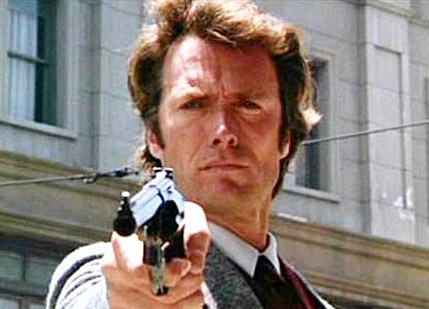
What the American people voted for was this:


But what they got was this:


And even worse, this:


06 April 2010

For Warren Mosler: A Primer on the Difference Between Honesty and Fraud


Warren Mosler is "an economist specializing in monetary policy and running for Senator Dodd's Senate seat in the November elections." He has written the following piece for the Huffington Post. He is so incredibly off the mark that I thought a bit of correction to that spin might help his thinking before he hits the campaign trail.

Mr. Mosler. I have been following this case closely. No one at GATA, or anyone else looking at the state of the regulatory climate in Washington and the quality and tarnished reputation of US markets, is complaining about the normal sort of trading that has been going on 'for thousands of years.' Most of the people with whom I have spoken and questioned are seasoned traders with a profound understanding of the commodity markets, and equity markets, and derivatives.

What many people are complaining about is fraud. In this case fraud can loosely be defined as doing something and then lying about it. Saying you did not do something, or disguising the nature of what you have been doing, can turn even a prima facie benign action into a fraud, depending on the intention and degree.

Many people around the world are not complaining that the US has lent out its gold, and the 'depositories are filled with paper,' which may some day be replaced by gold again. Although they do point out that it will be replaced at MUCH higher prices if their suspicions are correct. They are pointing out that government officials have said repeatedly that they have never lent it out in the first place but refuse to submit to audits and transparent accounting. And if it did occur, such lending may be of questionable legal status, which is why so many have denied it has occurred. Only the Congress can allow for the attachment of binding claims to sovereign assets. Have they? And if, in exercising some new presidential prerogative, the executive has done so, where is the public disclosure? Where is the law?

And further, in the case of commercial entities like the TBTF bullion banks JPM and HSBC, they are not complaining about short selling that is backed by physical metal, duly paid and accounted for. They are asking questions about what appear to be enormous naked short positions against silver, questionable ownership and claims to collateral, and naked shorting by banks using public funds and powerful influence over the regulators, with selling patterns indicating the intention of manipulating the price in order to gain from it. Sound familiar? It seems as though this has been the very basis of the US financial system since the repeal of Glass-Steagall.

Although your essay contains a number of factual errors, this does stand out as a particularly misleading statement:

"If you hold gold, lending it is a way to make extra money with very little risk."

Tell that to the miners like Barrick that took a multi-billion dollar bath on their hedge book. Derivatives and transactions involving naked shorting and selling the same thing multiple times are never, ever relatively riskless or easy. There is always the real risk of the mispricing of risk and miscalculation of probability, and counterparty failure, which at times can reach the point of becoming systemically risky, as we most recently have seen in the case of AIG et al. This is the story of all bubbles and bank runs. Reckless leverage and mispricing of risk.

Janet Tavakoli sounded the alarm that a short squeeze in gold could bring JPM and the banks to their knees, and risk the global markets again. JPM is dealing in trillions of derivatives exposure, with a leverage that is breath-taking. To dismiss the complaints and concerns about this is as reckless as some of the more outlandish assurances made by Greenspan,and then Bernanke, just prior to the credit crunch about the housing bubble.

In the end the Fed had Paulson come running to Congress pleading for $780 billion in taxpayer money with no strings attached, or face a complete and utter meltdown, riots and martial law. Oh well, and tra la, today is a new day, and back to gorging on risk again, eh? Not to worry.

At the end of the day its about honesty. And playing by the rules, the same rules for everyone. Its about justice, for all, and not just the powerful few. Not privatizing outlandish profits, and then socializing the mispricing of risk that is at the heart of the imbalances creating those outsized profits for a few in the first place. That is the very basis of fraud, and it requires secrecy and regulatory annulment to flourish.

"The very word 'secrecy' is repugnant in a free and open society; and we are as a people inherently and historically opposed to secret societies, to secret oaths, and to secret proceedings." John F. Kennedy
So thank you for the primer on gold lending. I see you have also read the primer about answering the question you wish you had been asked, rather than the one which you have been asked, in order to divert the conversation away from something you do not wish to discuss at all.

Huffington Post
A Primer on Gold Lending


"Recently there have been a lot of what I believe to be gross misconceptions regarding the lending of gold and the absence of actual gold in various gold depositories. I'm writing this to clarify the lending process itself and the further ramifications of gold lending...

GATA (Gold Anti-Trust Action Committee) is complaining that the US govt. has lent gold and is therefore artificially keeping the price of gold lower than it would otherwise be. There is some truth to the idea that lending keeps spot gold prices lower than otherwise, as it keeps the spreads between spot an forward prices 'in line' but you can just as easily say that lenders selling spot and buying forward keep the forward prices higher than otherwise, giving gold producers a better price than otherwise.

So all that gold 'missing' from depositories is in the form of cash in the depositories and contracts to buy gold in the forward markets. And with gold being produced in large quantities for untold years into the future it's hard to say for sure that there isn't enough gold coming to market over that time to satisfy the demand. In fact, market theory would say the continuously changing clearing price means there is always exactly the right amount."

P.S. OMG, I cannot believe you resorted to the 'efficient market hypothesis' to attempt to prove that market fraud cannot exist, given all that has happened over the past ten years. That is truly embarrassing. Even Chris Dodd knows better than that. That prompted me to take a look at your CV. Word of advice. Peter Schiff is going to hammer you in the unlikely event you agree to debate him, unless you tighten up your thinking a bit.

"So all that gold 'missing' from depositories is in the form of cash in the
depositories and contracts to buy gold in the forward markets
. And with gold
being produced in large quantities for untold years into the future it's hard to
say for sure that there isn't enough gold coming to market over that time to
satisfy the demand. In fact, market theory would say the continuously
changing clearing price means there is always exactly the right amount.
"

Like Daniel Drew said, "He who sells what isn't his'n, Must buy it back or go to prison." And it seems that lately the price the financiers have had to pay to buy it back, and make good on their promises, is punishingly higher than they have reserved, arranged or accounted for, especially when calculating their salaries and bonuses. This is the undercurrent of the frauds that have been perpetrated in this brave New World of innovative financing and dodgy derivatives and bonuses paid on the if-come. And the public is being forced to make up the difference and pay the price, for the good of the system, don'tcha know. And they are not even allowed to ask 'why?'

AIG Gets Away With It


Do you think the paper shredders and 'delete keys' were working overtime?

Do you think the Justice Department was highly motivated to nail the guy who could probably implicate the biggest of the TBTF banks and their enablers in the government?

Do you think the American President was just playing you when he said, "I did not run for office to be helping out a bunch of fat cat bankers on Wall Street."

Do you think Joe knows where a lot of the bodies are buried - on Wall Street and in London and Washington?

Do you think it pays to be a 'Friend of Lloyd' and a feeder source of campaign contributions to most of the Congress?

Do you think the people are just itching to vote out every incumbent in November?

Do you think the spineless lack of serious investigation and reform is setting the US up again for another, even bigger, fianncial scandal and crisis?

You might be right.

CBS News
No Criminal Charges Likely in AIG Collapse
By Armen Keteyian
April 2, 2010 6:43 PM

CBS NEWS has learned that former AIG executive Joseph Cassano - the prime focus of the investigation into its collapse - will meet with Department of Justice attorneys next week in what will likely be an end to the two year criminal investigation into the company.

Sources tell CBS News that the criminal case against Cassano - once called "the Man who Crashed the World" - has "hit a brick wall" - meaning that it is likely no one will be held criminally liable for the downfall of the company that triggered a $182 billion dollar federal bailout.

Sources tell CBS News federal investigators have been unable to uncover any evidence that Cassano lied to his bosses or shareholders about financial problems at AIG.

In recent months, Cassano's lawyers - citing internal documents - argued that he never broke the law. Instead, he simply got caught up in a financial tsunami that engulfed Wall Street.

05 April 2010

Net Asset Value of Certain Precious Metal Funds and Trusts


The Sprott Physical Gold Trust continues to add bullion, and is now almost on a par with the Central Gold Trust, which is several years old.


SP Futures Daily Chart - Nasdaq 100 Futures Daily


Still reaching for that high note. Looks like 1200 may just be out of reach, and a big inhale is coming soon, maybe short of resistance at 1190.

The Fed still seems to be following the policy of blowing an asset bubble, and then using monetary policy to clean up afterwards. I had hoped they would have learned their lesson after the housing bubble, but that is apparently not the case.

The Fed is doing the same thing over and over, and each time they run through a cycle of bubble and collapse, more wealth is transferred from the real economy to a few oligarchs, and the result of the collapse is more debilitating on real production and jobs.

I don't think the Fed can stop, because they are fearful of the results. And their owners like the status quo. Obviously I cannot know how far the bubble can go this time, and it may just be an 'echo bubble' since the real economy seems incapable of responding to it. The next leg down will shake things up.

I am thinking they will do a 'wash and rinse' with short term reversals in stocks and bonds to churn up the specs and generate some fees and some food for the trading desks. But it will probably not break key support unless 'something happens.'

The Wall Street demimonde in the financial media is drooling all over themselves for Dow 11,000 which is an essentially meaningless number, but important as a lure to bring mom and pop back in for another shearing. Wall Street is the very definition of 'useless eaters,' but what they consume is the vitality of the nation.


Addendum at 3 PM EDT

The NDX is failing to surmount resistance.

I just put some shorts back on the US stock indices to balance my metals longs.


04 April 2010

Is the Fed Likely to Act If There Is Another Stock Market Bubble?


That title is a bit of a rhetorical question, because I think the stock market bubble has already arrived, and the Fed is pumping the bellows. But let us not allow that detail to impede the progress of our discussion. Let's assume that only the next leg up in this monetary experiment will be breaching the limits of the bubblesphere.

Mark Thoma has 'reblogged' a review of Dean Baker's book False Profits from Brad DeLong Site at his own, The Economist's View.

Brad, the blogging professor from Berkley, takes issue with Dean Baker's book, concluding:

"But let me start by saying how I disagree with the book. I think that its story of the linkages between our current crisis and Federal Reserve policy is significantly overstated. Its argument about how excessively-low interest rates caused the housing bubble is exaggerated. I think that its belief that the Federal Reserve could have taken much more action to curb the housing bubble while is underway is also exaggerated..."
Well, at least he is consistent. In censuring my criticisms of Mr. Greenspan's monetary policy back in 2004 which I made as comments on his blog, Mr. DeLong said that Greenspan "never made a policy decision with which I disagreed." Although I was incredulous, I took him at his word.

Not even Greenspan apparently is willing to say that anymore. Although he is very willing to forget the activist role he took in promoting banking deregulation and the expansion of leverage and derivatives, and the rough treatment measured out to those who dared to disagree with the powerful bureaucrats at the Treasury and the Fed. Reich Levels Broadside at Greenspan, Rubin, Summers and Phony Financial Reform

But the comments to this blog were quite interesting and led me to another review of Dean Baker's book by 'Daniel' over a Crooked Timber.

I found the first comment after Daniel's review to be particularly interesting.
kevincure: 04.03.10 at 6:21 PM

"I was at the Fed in 2006. Everybody at the Fed was aware that there was a housing bubble. The fact that rents and house prices had diverged was known to all of the policymakers I interacted with.

The question was not, is there a bubble, but rather, can monetary policy improve welfare by popping that bubble. The general opinion was no
. First, monetary policy is an economy-wide hammer, and housing in only one sector. Second, housing bubbles were prevalent worldwide, and in fact were stronger in many other countries than the US, so it was difficult to imagine that non-extreme changes in policy would affect the bubble. Third, “use policy to clean up the mess after the bubble pops” was, I think, absolutely the right policy in 1987 and 2000, so a model of housing bubbles would have needed to explain what was different this time – even now, lost wealth from housing price declines are not, as far as I know, greater than the wealth decline of the dot-com bubble. That is, the housing bubble in and of itself required no different monetary policy, even with perfect hindsight.

The difference was in the financial markets, where for a variety of reasons (high leverage ratios, principal-agent problems, etc.), the decline in house prices led to what was functionally a bank run. The Fed was not the primary regulator of investment banks in the US, and is one of at least five regulators of local banks (OCC, FDIC, OTS, and state regulators among the others). This isn’t to excuse the Fed – they should have had an office looking at systemic risk! – but merely to point out that very few people saw systemic risk as a major problem in 2006, primarily because of a belief that shareholders and managers were capable of taking better care of their own firms and jobs. This was wrong, but the common criticisms of Baker and Shiller and others about Fed policy and housing bubbles completely abstract away from the real cause of the crisis, which was financial.

In any case, a housing bubble – by itself – would have been straightforward to deal with ex post with policy. That was not the problem."

This is not some outlier comment, but an expression of what is a very mainstream thought among a certain class of American economists, especially those who covet positions of power with the US government.

The 'collateral damage' caused by the dot.com and housing bubbles, all those ruined lives and families, is really not a problem and can be addressed by monetary policy (inflation) after the bubble runs its course. The problem in this last financial crisis is that the housing collapse caused a bank run, and the banks themselves were injured, instead of profiting, in the bubble collapse. Talk about an unintended consequence. Good God, not the Banks! This is a fast being remedied by the enormous subsidies granted by the Fed, and their man Timmy at the Treasury, to set the Banks back up again at the roulette tables, bringing home those eight figure paydays.

If you think the Fed has learned anything, that they are somehow more prudent, more aware of the greater economy and the impact of their behaviour on the American people after this latest financial crisis, you are sadly mistaken. Their hubris is boundless, and they are able to rationalize almost any damage to the republic as a minor glitch in their experiments.

The answer to our initial question about a new stock market bubble is of course is "no." The Fed will allow a stock market bubble to develop, run its course, collapse, empty even more of the savings and retirement funds of mom and pop, and go happily along on its way as long as the banking sector is maintained in the manner to which it has become accustomed.

And if you think this latest financial crisis has stilled the animal spirits of the merry pranksters on Wall Street you are sadly mistaken. The sociopaths will continue to gamble the nation's future, and the propeller heads at the Fed will stand idly by waiting to clean up the mess, only afterwards. But the clean up will be carefully targeted to the FIRE sector, and the public will likely have to fend for itself.

And the Congress would like to make the Fed the overarching regulator and the primary owner of an expanded Consumer Protection Agency? Only afer huge amounts of lobbying contributions to assuage their consciences it must be said. To the Fed, the consumer is only grist for the mill from which the bankers obtain their bones to bake their bread.

Asset bubbles are a form of fraud, in that and mispresentation and deception are employed to circumvent genuine price discovery. And like most Ponzi schemes and financial frauds, they are an effective wealth transfer mechanism from the many to the few. And the few will do quite a bit to create them, and then keep them in place.

Some are critical of people like Robert Reich who 'tell it like it is' although in softer terms than they might desire to have them speak. Let me tell you, the establishment in the US is closing ranks, and is going to try to ostracize and silence anyone who speaks out against the status quo. And the intimidation of critics and witnesses continues.

Here is some knowledge, tempered by actual experience, from William K. Black, an economist and regulator involved in the Savings and Loan Scandal.


The banks must be restrained, and the financial system reformed, and the economy brought back into balance before there can be any sustained recovery.