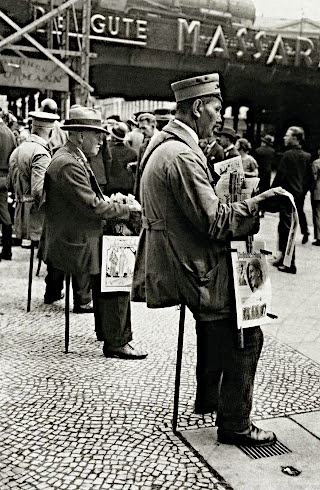
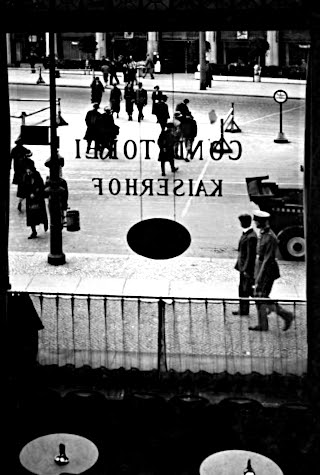
"Unhappy people are better off living in the city. A person can live in the city for a hundred years and not even realize that they are already dead and rotting. They don't have time to realize this on their own; they are too busy."
Leo Tolstoy, The Kreutzer Sonata, 1889
Every day when I think I am going to get a day off from this story, some revelation seems to come out, each as compelling, shocking, and suspicious as the others, but all fitting together in what looks like a nasty picture of reckless behaviour gone wrong developing.
Do these banks not have auditors? Are the regulators sweeping this under the rug? Are the insiders and their spokespeople correct in just dismissing this as a problem, as was done with the subprime market even by Ben Bernanke himself before it collapsed into a bank run that shocked the financial system?
Now, we have to carefully distinguish between allocated metal, in which one holds a certificate and are assured of a firm ownership of actual metal, and an unallocated holding in which you hold basically a paper claim on metal, for which you may be an unsecured creditor, even if you are paying regular storage fees. But in the cases I am hearing about it is a firmly stated ownership of something that does not exist, and cannot be obtained at current prices.
This is important because although there is always shorting, and some fractional reserve aspect to all banking , even in the case of bullion banking, in this case the proportion or leverage of the selling of the assets starts to look more like a Ponzi scheme than a rational and efficient market. There is a point at which 'speculation' becomes fraud, and the fraud becomes large enough to start risking the health of the bank.
And in our under-regulated and excessively leveraged financial system, that becomes a problem because it all looks to be a pyramid scheme of sorts. JPM alone is holding derivatives with notional values approaching a very large portion of World GDP.
The banks seem to be pointing to bullion supplies elsewhere, such as the LBMA in London, or in this case Hong Kong, and saying, "See if certificate holders demand their bullion, we can easily fulfill their requests." The problem with this is that it appears that they are ALL doing this, overleveraging their supplies, becoming counterparties and potential sources of supply to each other, with few having a full supply of what they say they have.
Make what you will of this. It is important to understand what is stated by the bank or institution on the certificate for bullion that you hold. As outlined above, you might just be an unsecured creditor to an unallocated account. There is no fraud in that, only a risk of actual delivery should you ever ask for it.
I am sure more will be coming out, eventually. But for now this information is barely penetrating the radar of the mainstream media. These fellows may be wrong, but so far no one is denying specifically what they are saying with any persuasive proof. They just seem to be hiding behind secrecy and opaque transactions, saying 'Prove it, prove it.'
As I have stated before, the problem I have with this is the lack of transparency and auditing in these markets, which makes them absolutely ripe for fraud and excessive leverage by the usual suspects in the TBTF banks.
This seems to be exactly what caused the subprime crisis and the bank run in 2008: a lack of liquidity and the mispricing of risk. How can one not be suspicious? We have just seen it happening, even though the herd behaviour is to simply ignore it because it is too alarming, too inconvenient.
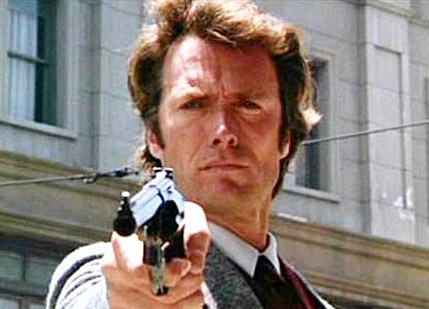
This morning when I tuned to Bloomberg's coverage of the Financial Crisis Inquiry Commission hearings, I thought Richard Belzer was questioning Alan Greenspan.
Mr. Belzer is an American actor, famous for his portrayal of a rather tough policeman, Detective John Munch, in the Law and Order series.
Alas, it was only Phil Angelides, the chairman of the FCIC.
It would take a Richard Belzer to pry the truth out of Greenspan, that fox.
Cox: Don't you even wonder why?
Munch: Why what?
Cox: Why he lied.
Munch: I'm a Homicide Detective. The only time I wonder why is when they tell me the truth.
Well, here comes a little emotional satisfaction. Jim Grant is reacting to the testimony now, and is just excoriating Greenspan's testimony as 'exculpating nonsense.'
If they are going to stage these shows for the public, that purport to actually achieve something, some progress towards the truth, perhaps they should hire famous actors to do the questioning.
The politicians and bankers are good enough actors to portray themselves.
This might be a commercially viable idea. If it becomes a hit reality show all I ask is a small creative fee, not nearly the amount that Sarah Palin is asking.
Entertainment is always good for filling the gaps that reality leaves.
Warren Mosler is "an economist specializing in monetary policy and running for Senator Dodd's Senate seat in the November elections." He has written the following piece for the Huffington Post. He is so incredibly off the mark that I thought a bit of correction to that spin might help his thinking before he hits the campaign trail.
Mr. Mosler. I have been following this case closely. No one atGATA, or anyone else looking at the state of the regulatory climate in Washington and the quality and tarnished reputation of US markets, is complaining about the normal sort of trading that has been going on 'for thousands of years.' Most of the people with whom I have spoken and questioned are seasoned traders with a profound understanding of the commodity markets, and equity markets, and derivatives.
What many people are complaining about is fraud. In this case fraud can loosely be defined as doing something and then lying about it. Saying you did not do something, or disguising the nature of what you have been doing, can turn even a prima facie benign action into a fraud, depending on the intention and degree.
Many people around the world are not complaining that the US has lent out its gold, and the 'depositories are filled with paper,' which may some day be replaced by gold again. Although they do point out that it will be replaced at MUCH higher prices if their suspicions are correct. They are pointing out that government officials have said repeatedly that they have never lent it out in the first place but refuse to submit to audits and transparent accounting. And if it did occur, such lending may be of questionable legal status, which is why so many have denied it has occurred. Only the Congress can allow for the attachment of binding claims to sovereign assets. Have they? And if, in exercising some new presidential prerogative, the executive has done so, where is the public disclosure? Where is the law?
And further, in the case of commercial entities like the TBTF bullion banks JPM and HSBC, they are not complaining about short selling that is backed by physical metal, duly paid and accounted for. They are asking questions about what appear to be enormous naked short positions against silver, questionable ownership and claims to collateral, and naked shorting by banks using public funds and powerful influence over the regulators, with selling patterns indicating the intention of manipulating the price in order to gain from it. Sound familiar? It seems as though this has been the very basis of the US financial system since the repeal of Glass-Steagall.
Although your essay contains a number of factual errors, this does stand out as a particularly misleading statement:
"If you hold gold, lending it is a way to make extra money with very little risk."
Tell that to the miners like Barrick that took a multi-billion dollar bath on their hedge book. Derivatives and transactions involving naked shorting and selling the same thing multiple times are never, ever relatively riskless or easy. There is always the real risk of the mispricing of risk and miscalculation of probability, and counterparty failure, which at times can reach the point of becoming systemically risky, as we most recently have seen in the case of AIG et al. This is the story of all bubbles and bank runs. Reckless leverage and mispricing of risk.
Janet Tavakoli sounded the alarm that a short squeeze in gold could bring JPM and the banks to their knees, and risk the global markets again. JPM is dealing in trillions of derivatives exposure, with a leverage that is breath-taking. To dismiss the complaints and concerns about this is as reckless as some of the more outlandish assurances made by Greenspan,and then Bernanke, just prior to the credit crunch about the housing bubble.
In the end the Fed had Paulson come running to Congress pleading for $780 billion in taxpayer money with no strings attached, or face a complete and utter meltdown, riots and martial law. Oh well, and tra la, today is a new day, and back to gorging on risk again, eh? Not to worry.
At the end of the day its about honesty. And playing by the rules, the same rules for everyone. Its about justice, for all, and not just the powerful few. Not privatizing outlandish profits, and then socializing the mispricing of risk that is at the heart of the imbalances creating those outsized profits for a few in the first place. That is the very basis of fraud, and it requires secrecy and regulatory annulment to flourish.
"The very word 'secrecy' is repugnant in a free and open society; and we are as a people inherently and historically opposed to secret societies, to secret oaths, and to secret proceedings." John F. Kennedy
So thank you for the primer on gold lending. I see you have also read the primer about answering the question you wish you had been asked, rather than the one which you have been asked, in order to divert the conversation away from something you do not wish to discuss at all.
"Recently there have been a lot of what I believe to be gross misconceptions regarding the lending of gold and the absence of actual gold in various gold depositories. I'm writing this to clarify the lending process itself and the further ramifications of gold lending...
GATA (Gold Anti-Trust Action Committee) is complaining that the US govt. has lent gold and is therefore artificially keeping the price of gold lower than it would otherwise be. There is some truth to the idea that lending keeps spot gold prices lower than otherwise, as it keeps the spreads between spot an forward prices 'in line' but you can just as easily say that lenders selling spot and buying forward keep the forward prices higher than otherwise, giving gold producers a better price than otherwise.
So all that gold 'missing' from depositories is in the form of cash in the depositories and contracts to buy gold in the forward markets. And with gold being produced in large quantities for untold years into the future it's hard to say for sure that there isn't enough gold coming to market over that time to satisfy the demand. In fact, market theory would say the continuously changing clearing price means there is always exactly the right amount."
P.S. OMG, I cannot believe you resorted to the 'efficient market hypothesis' to attempt to prove that market fraud cannot exist, given all that has happened over the past ten years. That is truly embarrassing. Even Chris Dodd knows better than that. That prompted me to take a look at your CV. Word of advice. Peter Schiff is going to hammer you in the unlikely event you agree to debate him, unless you tighten up your thinking a bit.
"So all that gold 'missing' from depositories is in the form of cash in the depositories and contracts to buy gold in the forward markets. And with gold being produced in large quantities for untold years into the future it's hard to say for sure that there isn't enough gold coming to market over that time to satisfy the demand. In fact, market theory would say the continuously changing clearing price means there is always exactly the right amount."
Like Daniel Drew said, "He who sells what isn't his'n, Must buy it back or go to prison." And it seems that lately the price the financiers have had to pay to buy it back, and make good on their promises, is punishingly higher than they have reserved, arranged or accounted for, especially when calculating their salaries and bonuses. This is the undercurrent of the frauds that have been perpetrated in this brave New World of innovative financing and dodgy derivatives and bonuses paid on the if-come. And the public is being forced to make up the difference and pay the price, for the good of the system, don'tcha know. And they are not even allowed to ask 'why?'
Do you think the paper shredders and 'delete keys' were working overtime?
Do you think the Justice Department was highly motivated to nail the guy who could probably implicate the biggest of the TBTF banks and their enablers in the government?
Do you think the American President was just playing you when he said, "I did not run for office to be helping out a bunch of fat cat bankers on Wall Street."
Do you think Joe knows where a lot of the bodies are buried - on Wall Street and in London and Washington?
Do you think it pays to be a 'Friend of Lloyd' and a feeder source of campaign contributions to most of the Congress?
Do you think the people are just itching to vote out every incumbent in November?
Do you think the spineless lack of serious investigation and reform is setting the US up again for another, even bigger, fianncial scandal and crisis?
You might be right.
CBS News No Criminal Charges Likely in AIG Collapse By Armen Keteyian April 2, 2010 6:43 PM
CBS NEWS has learned that former AIG executive Joseph Cassano - the prime focus of the investigation into its collapse - will meet with Department of Justice attorneys next week in what will likely be an end to the two year criminal investigation into the company.
Sources tell CBS News that the criminal case against Cassano - once called "the Man who Crashed the World" - has "hit a brick wall" - meaning that it is likely no one will be held criminally liable for the downfall of the company that triggered a $182 billion dollar federal bailout.
Sources tell CBS News federal investigators have been unable to uncover any evidence that Cassano lied to his bosses or shareholders about financial problems at AIG.
In recent months, Cassano's lawyers - citing internal documents - argued that he never broke the law. Instead, he simply got caught up in a financial tsunami that engulfed Wall Street.
Still reaching for that high note. Looks like 1200 may just be out of reach, and a big inhale is coming soon, maybe short of resistance at 1190.
The Fed still seems to be following the policy of blowing an asset bubble, and then using monetary policy to clean up afterwards. I had hoped they would have learned their lesson after the housing bubble, but that is apparently not the case.
The Fed is doing the same thing over and over, and each time they run through a cycle of bubble and collapse, more wealth is transferred from the real economy to a few oligarchs, and the result of the collapse is more debilitating on real production and jobs.
I don't think the Fed can stop, because they are fearful of the results. And their owners like the status quo. Obviously I cannot know how far the bubble can go this time, and it may just be an 'echo bubble' since the real economy seems incapable of responding to it. The next leg down will shake things up.
I am thinking they will do a 'wash and rinse' with short term reversals in stocks and bonds to churn up the specs and generate some fees and some food for the trading desks. But it will probably not break key support unless 'something happens.'
The Wall Street demimonde in the financial media is drooling all over themselves for Dow 11,000 which is an essentially meaningless number, but important as a lure to bring mom and pop back in for another shearing. Wall Street is the very definition of 'useless eaters,' but what they consume is the vitality of the nation.
Addendum at 3 PM EDT
The NDX is failing to surmount resistance.
I just put some shorts back on the US stock indices to balance my metals longs.
That title is a bit of a rhetorical question, because I think the stock market bubble has already arrived, and the Fed is pumping the bellows. But let us not allow that detail to impede the progress of our discussion. Let's assume that only the next leg up in this monetary experiment will be breaching the limits of the bubblesphere.
Mark Thoma has 'reblogged' a review of Dean Baker's book False Profits from Brad DeLong Site at his own, The Economist's View.
Brad, the blogging professor from Berkley, takes issue with Dean Baker's book, concluding:
"But let me start by saying how I disagree with the book. I think that its story of the linkages between our current crisis and Federal Reserve policy is significantly overstated. Its argument about how excessively-low interest rates caused the housing bubble is exaggerated. I think that its belief that the Federal Reserve could have taken much more action to curb the housing bubble while is underway is also exaggerated..."
Well, at least he is consistent. In censuring my criticisms of Mr. Greenspan's monetary policy back in 2004 which I made as comments on his blog, Mr. DeLong said that Greenspan "never made a policy decision with which I disagreed." Although I was incredulous, I took him at his word.
Not even Greenspan apparently is willing to say that anymore. Although he is very willing to forget the activist role he took in promoting banking deregulation and the expansion of leverage and derivatives, and the rough treatment measured out to those who dared to disagree with the powerful bureaucrats at the Treasury and the Fed. Reich Levels Broadside at Greenspan, Rubin, Summers and Phony Financial Reform
But the comments to this blog were quite interesting and led me to another review of Dean Baker's book by 'Daniel' over a Crooked Timber.
I found the first comment after Daniel's review to be particularly interesting.
kevincure: 04.03.10 at 6:21 PM
"I was at the Fed in 2006. Everybody at the Fed was aware that there was a housing bubble. The fact that rents and house prices had diverged was known to all of the policymakers I interacted with.
The question was not, is there a bubble, but rather, can monetary policy improve welfare by popping that bubble. The general opinion was no. First, monetary policy is an economy-wide hammer, and housing in only one sector. Second, housing bubbles were prevalent worldwide, and in fact were stronger in many other countries than the US, so it was difficult to imagine that non-extreme changes in policy would affect the bubble. Third, “use policy to clean up the mess after the bubble pops” was, I think, absolutely the right policy in 1987 and 2000, so a model of housing bubbles would have needed to explain what was different this time – even now, lost wealth from housing price declines are not, as far as I know, greater than the wealth decline of the dot-com bubble. That is, the housing bubble in and of itself required no different monetary policy, even with perfect hindsight.
The difference was in the financial markets, where for a variety of reasons (high leverage ratios, principal-agent problems, etc.), the decline in house prices led to what was functionally a bank run. The Fed was not the primary regulator of investment banks in the US, and is one of at least five regulators of local banks (OCC, FDIC, OTS, and state regulators among the others). This isn’t to excuse the Fed – they should have had an office looking at systemic risk! – but merely to point out that very few people saw systemic risk as a major problem in 2006, primarily because of a belief that shareholders and managers were capable of taking better care of their own firms and jobs. This was wrong, but the common criticisms of Baker and Shiller and others about Fed policy and housing bubbles completely abstract away from the real cause of the crisis, which was financial.
In any case, a housing bubble – by itself – would have been straightforward to deal with ex post with policy. That was not the problem."
This is not some outlier comment, but an expression of what is a very mainstream thought among a certain class of American economists, especially those who covet positions of power with the US government.
The 'collateral damage' caused by the dot.com and housing bubbles, all those ruined lives and families, is really not a problem and can be addressed by monetary policy (inflation) after the bubble runs its course. The problem in this last financial crisis is that the housing collapse caused a bank run, and the banks themselves were injured, instead of profiting, in the bubble collapse. Talk about an unintended consequence. Good God, not the Banks! This is a fast being remedied by the enormous subsidies granted by the Fed, and their man Timmy at the Treasury, to set the Banks back up again at the roulette tables, bringing home those eight figure paydays.
If you think the Fed has learned anything, that they are somehow more prudent, more aware of the greater economy and the impact of their behaviour on the American people after this latest financial crisis, you are sadly mistaken. Their hubris is boundless, and they are able to rationalize almost any damage to the republic as a minor glitch in their experiments.
The answer to our initial question about a new stock market bubble is of course is "no." The Fed will allow a stock market bubble to develop, run its course, collapse, empty even more of the savings and retirement funds of mom and pop, and go happily along on its way as long as the banking sector is maintained in the manner to which it has become accustomed.
And if you think this latest financial crisis has stilled the animal spirits of the merry pranksters on Wall Street you are sadly mistaken. The sociopaths will continue to gamble the nation's future, and the propeller heads at the Fed will stand idly by waiting to clean up the mess, only afterwards. But the clean up will be carefully targeted to the FIRE sector, and the public will likely have to fend for itself.
And the Congress would like to make the Fed the overarching regulator and the primary owner of an expanded Consumer Protection Agency? Only afer huge amounts of lobbying contributions to assuage their consciences it must be said. To the Fed, the consumer is only grist for the mill from which the bankers obtain their bones to bake their bread.
Asset bubbles are a form of fraud, in that and mispresentation and deception are employed to circumvent genuine price discovery. And like most Ponzi schemes and financial frauds, they are an effective wealth transfer mechanism from the many to the few. And the few will do quite a bit to create them, and then keep them in place.
Some are critical of people like Robert Reich who 'tell it like it is' although in softer terms than they might desire to have them speak. Let me tell you, the establishment in the US is closing ranks, and is going to try to ostracize and silence anyone who speaks out against the status quo. And the intimidation of critics and witnesses continues.
Here is some knowledge, tempered by actual experience, from William K. Black, an economist and regulator involved in the Savings and Loan Scandal.
The banks must be restrained, and the financial system reformed, and the economy brought back into balance before there can be any sustained recovery.
"It is impossible to calculate the moral mischief, if I may so express it, that mental lying has produced in society. When a man has so far corrupted and prostituted the chastity of his mind as to subscribe his professional belief to things he does not believe, he has prepared himself for the commission of every other crime." … Thomas Paine
In 1999 I started wondering what Robert Rubin might have said to Alan Greenspan in a private meeting in 1997 to cause him to reverse his policy bias shortly after his famous "irrational exuberance" speech. Greenspan embraced the monetary easing that led to the tech bubble, and joined the fight against regulation of derivatives, and the repeal of Glass-Steagall, in which the Fed was absolutely instrumental.
This was no accident, in my opinion. This was no misplaced belief in 'the efficient market hypothesis.' This was not the culmination of the neo-liberal fascination with a mythology of human nature that would make Rousseau blush in its unthinking naiveté. And for Greenspan to say now, I am sorry, I guess I was mistaken, is more prevarication from the master dissembler.
There were plenty of enablers to this financial fraud. There always are many more people who do not act out of principle, or inside involvement and knowledge, but out of their own selfish bias and greed or craven fear that compels them to 'go with the flow.'
And there is little better example of this than the many people who are even now turning a willful eye away from the blatant government manipulation of the stock and commodity markets, in particular the silver market. They do not wish to believe it, so they ignore it, and even ridicule it depending on how deeply it affects their personal interests. But the overall body of evidence is compelling enough to provoke further investigation, and the refusal to allow audits and independent investigation starts to become an overwhelming sign of a coverup. I am not saying that it is correct, or that I know something, but I am saying to not investigate it thoroughly and to air all the details, is highly suspicious and not in the interests of the truth. I did not know, for example, that Madoff was conducting a Ponzi scheme, but the indications were all there and a simple investigation and disclosure would have revealed the truth, one way or the other.
"Fiat justitia ruat caelum." Let justice be done though the heaven's fall. This is the principle of English law that says that expediency, that appeals to a false 'national security,' that executive privilege and the secrecy of the powerful interests, are not to deter the light of exposure and the consequences of justice for all. This is the difference between a republic and a dictatorship of the oligarchy.
The military industrial complex came to power in the US on the back of the Red Scare and the smears and fear-mongering perpetrated by the Senator from Wisconsin who 'loved to hear the sound of his own voice, more than the truth,' and his minions in Roy Cohn, and the enablers in the press who were cowed into silence.
There will be smears and distractions, ridicule and old prejudices dug deep will be brought newly forward. False flags and scapegoats. Threats and warnings of collapse will be like bluffs run to encourage the people to hand over their liberty for safety. If you do not think this can happen you have not been paying attention.
The perpetrators of this latest fraud, this unleashing of darkness upon the world, will count on the fear and apathy of the many, and the cynical contempt of the fortunate for the disadvantaged, to make them all the unwitting accomplices in their own inevitable destruction. It has worked for them in the past.
One cannot fight this sort of evil with hatred and violence, or hysteria and intemperate accusations, for these are its creatures and it uses them always to further its ends. The only worthy adversary of the darkness is transparency, openness, justice, and truth based on facts, in the light of reason, with the guidance of the light of the world. We are not sufficient of ourselves to stand against it, and if we knock down the law, the Constitution, to chase it with expediency and private justice, what will protect us when it turns around to devour us?
But we should never be a willing victim, and even worse, a silent bystander or mocking accomplice. This is why were you born here and now, to stand witness to the truth, as you can find it and value it above all else.
It is not easy to find the truth, as it is a journey, a way that never ends. And without a proper guide and companionship, it may be all too easy to grow weary or panic, and lose one's bearings and one's heart. But sometimes it is easier to discover what is not the truth by its acts, its results, the fruit that it produces, and the darkness and secrecy in which it dwells.
And the truth is not with the financial system, and the web of deception and fraud, that has served it. "What is Truth?" he asked. And Pilate turned and washed his hands of it, and condemned himself, forever.
Robert Reich Greenspan, Summers, and Why the Economy Is So Out of Whack Sunday, April 4, 2010
"I’m in the “green room” at ABC News, waiting to join a roundtable panel discussion on ABC’s weekly Sunday news program, This Week.
Alan Greenspan is now being interviewed. He says he bore no responsibility for the housing bubble that catapulted the nation into a financial crisis in 2008 because no one could have known about the bubble when he chaired the Fed in the years before it burst. Larry Summers was interviewed just before Greenspan. He said the economy is expanding, that the Administration is doing everything it can to bring jobs back, and that the regulatory reform bills moving on the Hill will prevent another financial crisis.
What?
If any single person is most responsible for the financial crisis, it’s Alan Greenspan. He presided over a Fed that lowered interest rates to zero (adjusted for inflation) but failed to prevent banks from using essentially free money to speculate wildly. You do not have to be a brain surgeon to understand that if money is free, banks will take it and lend it out. And if oversight is inadequate, the banks will lend the money to anyone who can stand up straight and to many who cannot. The result will be a giant subprime lending bubble that will burst.
If any three people are most responsible for the failure of financial regulation, they are Greenspan, Larry Summers, and my former colleague, Bob Rubin. In 1999 they advised Congress to repeal the Glass-Steagall Act, which since 1933 had separated commercial from investment banking. By 1999, Wall Street was salivating over such a repeal because it wanted to create financial supermarkets that could use commercial deposits to place bets in the financial casino. That would yield the Street trillions.
At the same time, Greenspan, Summers, and Rubin also quashed the efforts of the Commodity Futures Trading Corporation to regulate derivatives, when its director began to worry that derivative trading already was getting out of control.
Yet Greenspan continues to take no responsibility for what occurred. In the interview he just completed he avoiding saying anything about the failure of the Fed under his watch to adequately oversee the banks, and the absence of sufficient financial regulation to begin with.
I dislike singling out individuals for blame or praise in a political system as complex as that of the United States but I worry the nation is not on the right economic road, and that these individuals — one of whom advises the President directly and the others who continue to exert substantial influence among policy makers — still don’t get it.
The direction financial reform is taking is not encouraging. Both the bill that emerged from the House and the one emerging from the Senate are filled with loopholes that continue to allow reckless trading of derivatives. Neither bill adequately prevents banks from becoming insolvent because of their reckless trades. Neither limits the size of banks or busts up the big ones. Neither resurrects the Glass-Steagall Act. Neither adequately regulates hedge funds.
More fundamentally, neither bill begins to rectify the basic distortion in the national economy whose rewards and incentives are grotesquely tipped toward Wall Street and financial entrepreneurialism, and away from Main Street and real entrepreneurialism. It was just reported, for example, that America’s top 25 hedge fund managers last year earned an average of $3 billion each. They continue to pay a federal income tax of 15 percent on most of that, by the way, because their lobbying efforts have been so successful.
Meanwhile, the so-called jobs bills emerging from Congress and the White House are puny relative to the challenge of restoring jobs in America. Last Friday’s jobs report, read most positively, showed 112,000 jobs added to the economy in March. But that’s below the number needed simply to keep up with an expanding population. In other words, we’re actually worse off now than we were a month ago. At the same time, the median wage of Americans with jobs keep dropping.
The American economy is seriously out of whack. The two people interviewed this morning don’t seem to understand how far."
Gold's bull trend is intact, but it is facing formidable resistance at $1150.
Silver is in a bull trend, but the $19 level could be difficult to surmount.
The US dollar index is still in rally mode, but has backed off the key 82 resistance level. The Dollar index is a composite of other currency crosses and the recent strength has been largely due to euro weakness. If stocks retreat the dollar rally will likely continue.
The Long Bond looks range bound, and is hanging on to support.
The SP 500 is a good representation of the US equity markets. It has reached the logical conclusion of what might be termed a bear market bounce based on monetary expansion, similar to other recoveries after significant declines. If the SP 500 breaks down from here, the risk is that it might fall to retest the lows. The market rally is thin and not backed by widespread buying, and certainly not the traditional buy-and-hold investor.
To put it simply, the SP 500 and US equities in general are now 'hitting a high note' and it is a good question to wonder how long they can hold it without some backup from the chorus. The 'chorus' of course is evidence of a structural recovery that is not depending on Fed monetization, official sleight of hand, and accounting gimmickry.
Even with the 'good' employment number, the stark contrast is that the median hourly wage continued to decline. This is not deflation, as the CPI and PPI continue to advance, so much as a reflection that the jobs available are largely temporary and of an inferior quality from which to build a sustainable recovery.
As alway, keep an eye on the VIX which is one of the fear indexes along with some of the key spreads.
One of the first things that 'put me off' of Obama was the choice he made of key appointments to his Administration, selecting the two Robert Rubin acolytes Tim Geithner and Larry Summers to his team, marginalizing Paul Volcker, and then making no place for Robert Reich. Although I am sure that, like the rest of us, he puts his pants on one leg at a time, he has shown himself to be a remarkably intelligent and competent member of the Washington political world. I admire him.
Make no mistake, the Fed looks to have been abusing its secrecy and its position, and Bernanke and Geithner are culpable. Reich makes the points as well or better than I could so here is his recent piece on the subject. All the blog's are picking it up.
As I recall, the Fed said they were only acquiring 'investment grade' instruments, which would be taken on its balance sheet in support of the US Dollar, in addition to the usual Treasury Debt. The recent exposures of the holdings of Maiden Lane show these to be more like junk bonds, and certainly not as represented.
The Fed must be audited, and it role as the 'master regulator' and as the place where the Office of Consumer Financial Protection would be located is a farce, a cruel joke. Chris Dodd must either be senile, entirely cynical, or believe the American people to be complete idiots. The only reason I could even imagine for considering it is that the Fed is a 'cost plus' agency, meaning that they are self funding out of the mechanism of creating money, taking all their costs out before they turn over the interest income from the public debt back to Treasury. This is also a source of their growth and power. The problem that public agencies often have is that the industries that are regulated by them use their donations and lobbyists to curb appropriations for the agencies that regulate them in order to hamper and stifle them.
How can you even think of putting an office of reform and consumer protection in the very institution that was at the epicenter of a historic fraud? And shows itself completely willing to mislead the public, and some even believe perjure itself to the Congress to protect its true owners, the big Banks?
There are more things to come. But the frauds yet to be revealed may very well shake this government to its foundations, and very few blogs and almost none of the mainstream media are yet pursuing those stories of market manipulation, secret dealings, insider trading and official protection of corruption.
"First, only Congress is supposed to risk taxpayer dollars. The Fed is not part of the legislative branch. Its secret deals, announced almost two years after they were done, violate the democratic process, if not the Constitution itself. Thomas Jefferson put a stop to Alexander Hamilton’s idea of a powerful central bank out of fear it would be unaccountable to the public. The Fed has just proven Jefferson’s point.
Second, if the Fed can secretly bail out big banks, the problem of “moral hazard” – bankers taking irresponsible risks because they know they’ll be rescued – is far greater than anyone assumed after Congress and the Bush and Obama administrations bailed out the banks. Big banks will always be too big to fail because they know the Fed will secretly back them up if they get into trouble, even if Congress won’t do it openly.
Third, the announcement throws a monkey wrench into the financial reform bill now on Capitol Hill, which gives the Fed additional authority by, for example, creating a consumer protection bureau inside it. Only yesterday, Sen. Jim DeMint (R-S.C.) blasted the Dodd bill for expanding the Fed’s authority “even as it remains shrouded in secrecy.” (When Jim DeMint and I agree on something you know it has to be close to a universal truth. - Jesse lol)
The Fed has a big problem. It acts in secret. That makes it an odd duck in a democracy. As long as it’s merely setting interest rates, its secrecy and political independence can be justified. But once it departs from that role and begins putting billions of dollars of taxpayer money at risk — choosing winners and losers in the capitalist system — its legitimacy is questionable.
That it chose to reveal the truth about its activities during a week when Congress is out of town, when much of official Washington and the Washington media have gone on vacation, and only after several federal courts have held that the Fed must release documents related to its bailout of Bear Stearns, suggests it would rather remain secret than become transparent.
Much of what Ben Bernanke and Tim Geithner did (when Geithner was at the New York Fed) in 2008 was presumably necessary. But the public has no way of knowing. The public doesn’t even know who else the Fed has bailed out, or what entities it will bail out in the future. All we know is the Fed secretly bailed out Bear Stearns and AIG and thereby subjected taxpayers to risks that remain even today, without informing the public. That’s not a record on which to build public trust."
Neither snow, nor rain, nor weaker than expected ADP reports shall keep these bubbles from their appointed highs and the end of month paint job.
It will be interesting to see how the trade goes tomorrow with traders squaring up for a three day weekend, especially with the Non-Farm Payrolls data coming out on Friday while the markets are closed in the US.
I suspect that number will come in rather close to my projection of +75,000 despite the weak ADP jobs number. This is a little light of the consensus view which is +190,000. So a number a little north of 100,000 would be a nice compromise for the propeller heads at the BLS to achieve, by revising some prior months. These are miniscule percentage changes in the bigger picture, but this is how irrational the US markets have become.
ADP only tracks real private payroll data, and does not include government employment and imaginary jobs. The Federal government has a large number of workers that have been hired to concduct the Census which is done every ten years. I would think the number will include them with some other government employment. And this month is a little more favorable in its seasonal adjustment, with the next month even moreso.
The market is also edgy because today is the last day of the Fed monetization of mortgage debt. I do not think this is a practical matter so much as psychological in the short term. The Fed will most likely shift its monetization to another area and allow proxies to continue its work.
Let us pray for those whose hearts are hardened against His grace and loving kindness by greed, fear, and pride, and the seductive illusion and crushing isolation of evil.
We pray that we all may experience the three great gifts of our Lord's suffering and triumph: repentance, forgiveness, and thankfulness. And in so doing, may we obtain abundant life, and with it the peace that surpasses all understanding.
It is available for your use at no cost, but with attribution and a link to the original posting.
I make every attempt to respect the rights of others. If you feel that something here has infringed your work please let me know and I will correct it immediately. It is not always easy to determine the status of material posted to the Internet with regard to fair use and public domain.