05 November 2009

Gasparino on "The Sellout"


RealClearMarkets has an interesting interview with Charlie Gasparino regarding his new book "The Sellout." There seems to be a consensus forming that something has gone seriously wrong with the US republic, and that the Obama administration is failing to address it, failing badly.

One has to wonder what it will take to give Washington a wakeup call. It seems that, when confronted by white collar crime, people lose all the perspective which they have when it comes to fighting crime and injustice. "It won't work, it can't be done, they will just come back and do it again."

Well, duh. If you make it worth their while, administer wristslap justice at worst, and let all the top dogs openly flout the law, of course they will be back. What the US needs is the reincarnation of Melvin Purvis with a minor in finance. I would put Eliot Spitzer in charge of the SEC with the right resources and let him rip through Wall Street like the wrath of God, and make the bankers howl.

But that probably won't happen, because there is too much dirt, too many scandals on both sides of the aisle for this crew to administer its oath to uphold the Constitution.

Here is an excerpt from the interview:

"I don't know when it's going to happen, but if history is any guide, it has to happen again--the "it" being another financial crash. Of course, it won't happen tomorrow or next week, or maybe not even two years from now. But when the memory of 2008 wears off, and mark my words it will wear off, excessive risk taking will be back in a form that evades all these alleged regulatory controls that have been established. Regulation can never cure the disease of excessive risk.

The only thing that can cure it is tough love--allowing firms to fail. That doesn't mean I wanted the Fed and the Treasury to walk away last year. That would have meant Armageddon. But they should have walked away before that, when the systemic risk was smaller and the damage would have been limited. 1998 would have been a great place to start. Let Long Term Capital Management fail; let Lehman, and as I show in my book, possibly Merrill to fail, because the trades were the most vulnerable to LTCM's bad bond market bets.

Instead, by arranging a bailout, and by using free money to juice up the markets, policy makers emboldened Wall Street to take even more risk. That's what they did then, and that's what I fear is happening all over again...

Now I'm not in the Goldman is the center of all evil camp. But I know a lot of really smart people who believe that Goldman's bankers and traders virtually control the federal government in order to advance their own notorious agenda.

In fact, as I show in The Sellout, there were far worse players whose risk taking led to last year's meltdown, starting with Merrill Lynch and Citigroup. They were equally powerful from a policy making standpoint.

Remember, after Robert Rubin fought to end Glass-Steagall's separation of investment and commercial banking, he didn't go back to his old firm, Goldman Sachs, he went to work for the firm that benefited the most from the law's demise, Citigroup.

But Goldman in many ways crystallizes all that is wrong with the financial bailout, started by the Bush Administration, but carried on and expanded by Obama's. Goldman has been declared a bank, not much different than the old Bailey Building and Loan, and yet they don't take deposits or offer checking accounts. So what do they do? They trade, and they are trading as a federally protected bank, meaning they get to borrow at cheaper rates and they are Too Big To Fail."

Read the full interview here.

Tomorrow's Non-Farm Payrolls Consensus of -175,000 Looks "Do-able"


Tomorrow the Bureau of Labor Statistics will be reporting its October non-farm payrolls number. The consensus of economists is for a job loss of only 175,000 which is an improvement over the prior month loss, but more importantly maintains a steady uptrend as shown in the chart below.


The BLS almost always revises the prior two months, in this case August and September. They tend to 'borrow' from good results and smooth out the trend, or at least they did under the Bush Administration. We will have to wait and see what happens.

The BLS will also have their Birth-Death Model at their backs helping to lift the number with a projected 100k imaginary jobs.


The BLS number will further have the wind at its back because this is a month which the actual number traditionally comes in high, and is seasonally adjusted lower for the 'headline number.'


The good news is that the 12 month moving average of jobs is starting to show a bottoming process IF this number comes in as expected.


We can be sure that the government is looking over these results, keenly. Lyndon Johnson famously pre-approved the number before its release, often sending it back for revision when he did not care for the implied headlines.

We cannot say if that practice still exists, or is handled by lower level functionaries on the Council of Economic Advisors. Who knows, it might even be a relatively honest number by Washington standards.

Watch the Birth Death model and the revisions to September and August in particular. If they 'borrow forward' from August this will be a sign of statistical manipulation in our minds at least.

We do have an open mind, and assume that an improvement in job losses is possible, even likely perhaps. If one throws several trillion dollars at a problem in a short timeframe some result is likely to be produced for it, although in this case it will not most likely last without some fundamental reforms and restructuring.

And it goes without saying that if the number misses by noticeable degree, with all this going for it, then any talk of even a short term recovery is placed on hold.

Governments lie, and people of privilege lie and cheat readily when their results do not match their expectations, on their taxes, in their relationships, in school, at work, all most of all to themselves.

Some of them 'bend the rules' so well that they can go through months without more than one or two losing days of trading in volatile markets, in defiance of all probability and the principle of a symmetrical dissemination of information.

NAV Premiums of Certain Precious Metal Funds and ETFs


Note: the way I use this information is not so much to compare the premiums with each other, although there are some relationships there and significant deviations are of interest. Each of them is different from the others. CEF and GTU are funds holding physical gold and/or silver, and the amounts of metal they hold varies infrequently in well advertised step-wise changes.

GLD and SLV are ETFs, somewhat artificial constructs, in which the amount of metal they hold varies considerably, and intends to track the relationship with spot prices on a somewhat fixed basis.

Rather it serves to compare with data on the premiums of the same fund or ETF over time. One would do this by using the subject category at the bottom of this post, or perhaps doing it for yourself. The premiums expand and contract, excepting GLD and SLV which are control stable, being largely a discount for a management fee. A significant deviation there would be possible evidence of shorting or a paired trade.


04 November 2009

How Can You Tell When Gold Is In a Bubble?


When the junior miners start showing these kinds of returns, you might be in a bubble.

We're nowhere near that point yet.


Foreign Holdings of US Dollar Assets


Roughly analagous to Eurodollars, although it is not clear how much if any of the central bank reserves are actually captured here in these reports by BIS reporting commercial banks, especially in China and the non-European countries. Certainly the NY Fed Custodial Accounts for Foreign Central Banks show no decline whatsoever from the long term trend of accumulation to support their mercantilism and currency pegs.


But the takeway from this chart is that a long term trend of dollar accumulation was broken, and rather painfully, in the deflating of the Wall Street financial assets fraud.

One might not expect the Europeans and Asians to accept new financial instruments in dollars quite so readily. The US seems intent on maintaining a few mega-banks to serve as "competitive" instruments of national policy on the world financial stage.

They may find that maintaining the banks and their particular weapons of financial mass destruction may be just as costly as 700 military bases in diverse locations. Such are the burdens of empire.


Long Term Weekly Gold Chart Targets 1275


Now that gold seems to have successfully broken out from its continuation pattern (ascending triangle or inverse H&S) we should be able to chart its targets more precisely than the chart from 24 September that at least successfully projected the breakout.

If there is a major liquidation event, such as an equity market dislocation, gold will likely be hit as well, but will provide an exceptional buying opportunity and would historically rebound more sharply than equities and most other investments.

As always, this is a forecast with some probablities of success, rather than a prediction.

Basically, the ascending triangle calls out 1275 and an inverse H&S targets 1300ish. A confirmed breakdown below 1000 deactivates the formations. We will know more about the first pullback when we see how far this current leg goes. It has moved much more quickly so far than most have imagined, but the short term trend is quite apparent on the chart.


03 November 2009

US Dollar Very Long Term Chart


Here is an update of the US Dollar (DX) Very Long Term chart last shown on 3 April 2009 when the Eurodollar Squeeze was still abating.

We do not see any reason to change the longer term targets based on what appears to be a confirmation of the continuing decline.


The reasons for this decline are obvious, but so many miss this that we have to wonder what people are thinking. Despite the credit writedowns and even a potential unwinding of the dollar carry trade which we think is a bit overblown, as the demand for dollars in bank lending is slack, most analysts are missing the bigger picture of a huge overhang of eurodollars that are becoming increasingly less useful to foreign holders, especially if the power of the petrodollar declines.

There is a potential double bottom to be made at 71, with a possible target in the higher 80's based on the charts. The fundamental scenario we would see is a significant equity market dislocation and/or an exogenous geopolitical event that caused another artificial short term demand for dollars and the T bills. Currency dollars are, after all, sovereign debt of zero duration and in any panic there is a rush to the short end of the curve, to the point of accepting some negative rates of return for the safety of capital.

But after that event, the decline of the dollar will gain again in momentum lower unless there is a profound systemic reform and restructuring of the federal budget deficits. Even clever frauds can work only so many times, and there is nothing particularly clever or sophisticated about Wall Street's latest antics, excepting of course their size and their audacity which the average mind cannot well grasp.

India Puts Its Weight Behind US Dollar Alternatives

Here is an alternative index of the US dollar from the Federal Reserve that is much broader than the DX in its constituent components. It is a weighted average of the foreign exchange value of the U.S. dollar against the currencies of a broad group of major U.S. trading partners.

Broad currency index includes the Euro Area, Canada, Japan, Mexico, China, United Kingdom, Taiwan, Korea, Singapore, Hong Kong, Malaysia, Brazil, Switzerland, Thailand, Philippines, Australia, Indonesia, India, Israel, Saudi Arabia, Russia, Sweden, Argentina, Venezuela, Chile and Colombia.

It shows the same Eurodollar squeeze and subsequent decline. As a point of order, the term eurodollar is a bit misleading from its historical roots. It basically refers to any US dollars being held in other than domestic banks, and not just in Europe. The TWEXB is not the same timeframe as the DX because it is a more recent construct.


02 November 2009

Ladies and Gentlemen, the United States of America Is Insolvent


"In case you failed to catch it in our previous articles this year, we thought we’d state it outright for our readers this month: the United States Government is on a trajectory to default on their obligations. In its current financial condition, it will not be able to fund its forecasted budget deficits and unfunded Social Security and Medicare promises on top of its current debt obligations. This isn’t official yet, and we don’t know when the market will react to it, but there is no longer any doubt about the extent of their trajectory. There simply isn’t enough taxing power, value creation or outside capital willing to support its egregious spending...

The projected US deficit from 2009 to 2019 is now slated to be almost $9 trillion dollars. How on earth does anyone expect them to raise this capital? As we stated in a previous article, in order to satisfy US capital requirements, all existing investors would have had to increase their US bond purchases by 200% in fiscal 2009. Foreigners, however, only increased their purchases by a mere 28% from September 2008 to July 2009 - far short of what the US government required. The US taxpayer can’t cover the difference either. According to recent estimates, tax revenue from all sources would have to increase by 61% in order to balance the 2010 fiscal budget. Given that State government income tax revenues were down 27.5% in the second quarter, the US government will be lucky just to maintain its current level of tax revenue, let alone increase it.

The bottom line is that there is serious cause for concern here – and don’t be fooled into thinking this crisis will fix itself when (and if) the economy recovers. Just how bad is it?..." Sprott Asset Management

Just a reminder, in case you had forgotten in all the excitement of a bull market rally in US equities and a reasonably good baseball World Series.

Ladies and Gentlemen, the United States Is Insolvent, 29 May 2009

The States racked up some serious debt in keeping the world safe for democracy in the Second World War. On a percentage basis, it has recently spent a significant amount keeping its financial sector safe from productive effort and honest labour. They will raid the Treasury, take their fill, and then compel the government to confiscate the savings of a generation by defaulting on its obligations, its sovereign debt.


Reserve Bank of India Buys 200 Tonnes of the IMF's Gold


An apertif for the Indian central bank, and barely a nibble for dollar heavy China.

"You have a choice between the natural stability of gold and the honesty and intelligence of the members of government. And with all due respect for those gentlemen, I advise you, as long as the capitalist system lasts, vote for gold." George Bernard Shaw

LiveMint WSJ
RBI to buy 200 tonnes of IMF gold
By Tamal Bandyopadhyay and Anup Roy
Mon, Nov 2 2009. 11:15 PM IST

Decision to strengthen its gold reserves follows similar moves by central banks of some other countries.

Mumbai: The Reserve Bank of India, or RBI, is buying 200 tonnes of gold from the International Monetary Fund (IMF), nearly half of what the fund plans to sell.

In 1991, when India faced its worst ever balance of payment crisis, the country had to pledge 67 tonnes of gold to Union Bank of Switzerland and Bank of England to raise $605 million (Rs2,843.5 crore today) to shore up its dwindling foreign exchange reserves, which were then barely enough to buy two weeks of imports. India’s foreign exchange reserves were at $1.2 billion in January 1991 and by June, they were depleted by half. Currently, the Indian central bank’s foreign exchange reserves stand at $285.5 billion.

RBI’s decision to shore up its gold reserves needs to be seen in the context of other central banks across the globe increasing their gold reserves. Among them are the central banks of China, Russia and a few countries in the European Union. (also known as 'the barbarians' - Jesse)

In the last one year, China has increased its gold holdings, by weight, by 75.69%, Russia by 18.78%, the Philippines by 18.50% and Mexico by 108.91%.

Compared with this, India’s central bank did not add anything to its gold reserves in the last one year, according to Bloomberg data.

In fact, the share of gold in India’s total reserves has dwindled over the decade.

In March 1994, the share of gold in the total reserves of the country was 20.86%; by the end of June 2009, gold constituted only 3.7% of the total reserves.

An IMF spokesperson in India declined to comment on this development.

RBI’s foreign currency assets consist mainly of sovereign bonds, mainly US treasurys. So, buying more gold will help the Indian central bank diversify its assets.

“Gold as a proportion of our reserves is relatively small,” said R.H. Patil, chairman of National Securities Depository Ltd and Clearing Corp. of India Ltd.

Gold is the ultimate currency. In fact, only gold came to our rescue during (the) 1991 crisis, so it makes sense that RBI should try to increase its gold holdings,” Patil said.

RBI’s foreign exchange reserves consist of foreign currency assets, gold, special drawing rights (SDR)—an international reserve currency floated by IMF—and RBI funds kept with IMF.

Out of RBI’s $285.5 billion foreign exchange reserves, foreign currency assets account for the most—$268.3 billion—followed by gold ($10.3 billion), SDR ($5,267 million) and reserve position in the IMF ($1,589 million).

According to RBI’s latest annual report, the foreign currency assets consisting of foreign securities declined by Rs81,010.25 crore from Rs12.98 trillion on 30 June 2008 to Rs12.17 trillion on 30 June 2009 mainly due to net sales of dollars in the domestic foreign exchange market.

At the current market value of $1,054 an ounce, or per 28.5g, RBI would need to spend about $7.4 billion to buy 200 tonnes of gold. With this, its gold reserve will rise to $17.716 billion, or roughly 6.20% of the total reserves.

IMF in September had announced that it wanted to sell 403 tonnes of its gold reserves, or one-eighth of its total holdings, to boost its finances on a long-term basis and to generate money to raise lending to needy nations. Under the concessional lending facility, IMF will lend at zero interest through end-2011 for all low-income members to help them tackle the impact of the financial crisis that rocked the world in the wake of the collapse of US investment bank Lehman Brothers Holdings Inc.

A committee set up by a group of central banks overseeing the gold sales by the IMF has allowed the fund to sell 400 tonnes of its gold annually and 2,000 tonnes in total during the five years starting 27 September.

According to a report by the Associated Press dated 20 September, India, along with China and Russia, had evinced interest in buying IMF-held gold.

At a total holding of 103.4 million ounces, or 3,217 tonnes, IMF is the third largest official holder of gold after the US and Germany.

IMF’s total holding at historical price is valued at about $9.2 billion on its balance sheet. At market prices, as of 28 August, the fund’s total gold holdings were worth $98.8 billion.


Ten Things Not to Like About the US Government Policy Actions Known as "The Bailouts"


Thanks to Cafe patron Malcolm McMichael

1. The Treasury and the Fed rewarded some aggressive risk takers and failing business models at the expense of those who followed sound business practices. Those who followed conservative practices have been penalized twice; first on the way up and again on the way down. Those companies that did fail appear to have been 'targeted' by insiders.

2. Much of the process was done in secret with minimal transparency, debate, or disclosure by people who have obvious conflicts of interest.

3. The stated objectives of freeing up credit for the real economy and stemming foreclosures have not been achieved.

4. Trillions in taxpayer money were provided with few strings attached and at minimal stipulated rates of return. Furthermore, several of these institutions are using their taxpayer money to lobby against reform and award themselves pre-crisis salaries and record bonuses.

5. Bailout actions were arbitrary, inconsistent, ad hoc, and without an apparent guiding principles of justice.

6. The banking, rating, “insurance”, and regulatory systems have not been reformed and the perpetrators of the collapse and their enablers are remain in charge, now overseeing the “recovery.”

7. Criminal investigations are minimal; few people are facing indictments or even serious regulatory scrutiny for actions that are highly questionable. Official finds are whitewashes.

8. Regulations, regulatory structures, and other safeguards were implemented, revised or swept aside in chaotic and reckless fashion. [discount window participation and collateral, short selling rules, bank holding companies, mark-to-market]

9. The insider advantages, speculative excess, and extreme leveraging of the perpetrators has been allowed to continue; in fact, allowed to expand. There is a taint of insider trading and corruption that permeates the process.

10. Wall Street is bailed out; Main Street is not. Efforts to subsidize the incomes and balance sheets of failing firms have been massive and were implemented with minimal debate, requirements, or oversight; efforts to shore up taxpayer incomes and balance sheets have been comparatively minimal, subject to extensive debate and tinkering, highly selective, and incomplete.

Market Perspective from the Daily Charts


Even if one does not use technical analysis, it is a good idea to take a look at a chart now and then to maintain one's bearings in a market. It is a natural tendency to get caught up in the short term movements, to be affected by the hype and hysteria from the bulls and the bears, and to lose the bigger picture and the general intermediate trends.

It appears to us that we are seeing a lifting of US equities in response to a government sponsored program of reflation using monetary stimulus and creation.

The dollar is showing a commensurate decline as we might expect, since the increase in equities (and the long end of the curve) is being accomplished through dollar dilution.


Déjà vu?

They can try.


01 November 2009

Obama's Economic Policy Has Doomed the US to Stagnation - Or Worse


This was the very moment of Obama's failure, when he allowed Summers, Geithner and Bernanke to establish the principle of "Too Big To Fail" and set up a financial oligarchy at the expense of taxpayers. We would have expected this out of the Treasury under Hank Paulson, but to see this kind of policy error favoring Wall Street over the US taxpayers from a government elected on the promise of reform is inexcusable, a disgrace.

Be Prepared For the Worst - Ron Paul

Bloomberg
Stiglitz Says U.S. Is Paying for Failure to Nationalize Banks


Nov. 2 (Bloomberg) -- Nobel Prize-winning economist Joseph Stiglitz said the world’s biggest economy is suffering because of the U.S. government’s failure to nationalize banks during the financial crisis.

“If we had done the right thing, we would be able to have more influence over the banks,” Stiglitz told reporters at an economic conference in Shanghai Oct 31. “They would be lending and the economy would be stronger.”

Stiglitz has stuck with his view even after the U.S. economy returned to growth in the third quarter and as banks’ share prices climbed this year.

U.S. Treasury Secretary Timothy Geithner, appearing yesterday on NBC’s “Meet the Press” program, said the country’s economic recovery hinges in part on banks taking more risk and restoring the flow of credit to businesses.

“The big risk we face now is that banks are going to overcorrect and not take enough risk,” Geithner said. “We need them to take a chance again on the American economy. That’s going to be important to recovery.”

President Barack Obama said on Oct. 24 that the nation’s lenders, supported by taxpayers in the crisis, need to “fulfill their responsibility” by lending to small businesses still struggling to get credit.

Companies such as Citigroup Inc. and Bank of America Corp. benefited from a $700 billion taxpayer-funded bailout package last year. In contrast, Obama said that too many small businesses are still short of money, adding that his administration will “take every appropriate step” to encourage banks to lend.

Bank Lending

“We have this very strange situation today in America where we have given banks hundreds of billions of dollars and the president has to beg the banks to lend and they refuse,” Stiglitz said. “What we did was the wrong thing. It has weakened the economy and has increased our deficit, making it more difficult for the future.”

While the U.S. economy grew at a 3.5 percent annual rate in the third quarter, the first expansion in more than a year, the Columbia University economist said the recession is “nowhere near” its end, citing rising unemployment and weak demand.

The U.S. government plans to alter the way that a similar rescue would be handled in the future. Draft legislation proposes that banks, hedge funds and other financial firms holding more than $10 billion in assets would pay to rescue companies whose collapse would shake the financial system. (And it is an inherently unfair plan that creates even additional moral hazard by penalizing sound banking by forcing it to pay for reckless bank management. - Jesse)

Citigroup and Bank of America shares have quadrupled from this year’s lows in March.

30 October 2009

Nine More Banks Fail with CIT a Packaged Bankruptcy While Gold Shines in a Jobless Recovery


There was tension-driven selling in the markets today despite the 'good news' in the headline economic numbers. The markets are on edge ahead of the ADP and BLS jobs numbers next week. The much touted theory of a 'jobless recovery' is started to show some big holes in credibility, as well it should.

Jobless Recovery

A jobless recovery is nothing more than a euphemism for a monetary asset bubble presenting an ongoing systemic moral hazard.

Yes, jobs growth lags GDP in the early stages, everyone knows this. A second year econ student might cite Okun's Law, although it is better called Okun's observation, to show that lag, but it is not relevant to this topic. Beyond early stage lags in the typical postwar recession, a business cycle contraction, what is meant by the jobless recovery is the post tech bubble recovery of 2001-5 wherein jobs growth lagged economic growth in a way we have not seen after any postwar recession, with the median wage never recovering. "Jobless recovery" is a relatively recent phenomenon in the economic lexicon, much younger than 'stagflation' which was thought highly unlikely if not impossible by economists based on their theories, until it happened.

It was the housing bubble and an explosion in unproductive financial activity crafted by the Fed and the Wall Street banks that provided the appearance of economic vitality in 2001-7. It was no genuine recovery despite the nominal GDP growth. It indicates a need to deflate the growth numbers more intelligently, if not more honestly, and future economists are likely to 'discover' this, although John Williams of Shadowstats has done a good job of demonstrating the distortions that have crept into US economic statistics. The tech bubble was perhaps an unfortunate response to the Asian currency crisis and fears of Y2K. What was done to promote recovery from the tech collapse and create the housing and derivatives credit bubble was pre-meditated and criminal.

The current state of economics is most remarkable for its arrogant complacency in the face of two failed bubbles, a near systemic failure, a pseudo-scientific perversion of mathematics exposed, and an incredible capacity for spin and self-delusion. The people wish to believe, and Wall Street and the government economists are all too willing to tell them whatever they wish to hear, for a variety of motives. And there is an army of salesmen and lobbyists and econo-whores touting this fraud around the clock.


The Failure of Financial Engineering

The next bubble should provide the coup de grâce when it fails, although the fraudsters might try and spin ten years of a stagflationary economy as 'the new normal.'

There are good reasons for this failure of American "monetary capitalism," and it has to do with an oversized financial sector and a surplus of white collar crime that both distort and drain the productive economy. The current approach is to pump money into a failed system without attempting to reform it, to fix its fundamental flaws, to make an honest accounting of the results. The result are serial bubbles and the foundation for long duration zombie economy with a grinding stagflation that may morph into a currency crisis and the fall and reissuance of the dollar, as we saw with the Russian rouble. It will stretch the political fabric of the US to the breaking point. This is how oligarchies and their empires fall.

CIT Staggers Into Bankruptcy

Trader confidence was shaken by more indications that business lender CIT will declare a preplanned bankruptcy next week.

Approaching Crash in Commercial Real Estate

Also roiling the markets was a shocking warning by billionaire Wilbur Ross of an approaching meltdown in the Commercial Real Estate market which has been anticipated and warned about by non-shill market analysts.

Gold Holds Steady

Gold showed a remarkable resilience today against determined short selling in the paper Comex markets. Here is a decent summary of the case that the gold bulls have been making, in addition to the standard observations about dollar weakness. Gold Bullion Market Reaching the Breaking Point

Bank Failures Hit 115

Meanwhile, nine more commercial banks rolled over this week. Calculated Risk reports that the unofficial FDIC list of problem US banks now numbers 500.

Here is the list from FDIC of all Official US Bank Failures since 2000.

All of the nine banks were taken over by the US Bank National Association (US Bancorp), and were part of the FBOP company in Oak Park, Illinois, one of the largest privately held bank holding companies in the US. It is reported that all nine were heavily invested in real estate lending.

California National is the fourth largest bank failure this year. It lost about $500 million on heavy investments in Fannie Mae and Freddie Mac preferred shares, in addition to overwhelming losses in California real estate.

North Houston Bank, Houston, TX, with approximately $326.2 million in assets and approximately $308.0 million in deposits was closed. U.S. Bank National Association, Minneapolis, MN has agreed to assume all deposits. (PR-195-2009)

Madisonville State Bank, Madisonville, TX, with approximately $256.7 million in assets and approximately $225.2 million in deposits was closed. U.S. Bank National Association, Minneapolis, MN has agreed to assume all deposits. (PR-195-2009)

Citizens National Bank, Teague, TX, with approximately $118.2 million in assets and approximately $97.7 million in deposits was closed. U.S. Bank National Association, Minneapolis, MN has agreed to assume all deposits. (PR-195-2009)

Park National Bank, Chicago, IL, with approximately $4.7 billion in assets and approximately $3.7 billion in deposits was closed. U.S. Bank National Association, Minneapolis, MN has agreed to assume all deposits. (PR-195-2009)

Pacific National Bank, San Francisco, CA, with approximately $2.3 billion in assets and approximately $1.8 billion in deposits was closed. U.S. Bank National Association, Minneapolis, MN has agreed to assume all deposits. (PR-195-2009)

California National Bank, Los Angeles, CA, with approximately $7.8 billion in assets and approximately $6.2 billion in deposits was closed. U.S. Bank National Association, Minneapolis, MN has agreed to assume all deposits. (PR-195-2009)

San Diego National Bank, San Diego, CA, with approximately $3.6 billion in assets and approximately $2.9 billion in deposits was closed. U.S. Bank National Association, Minneapolis, MN has agreed to assume all deposits. (PR-195-2009)

Community Bank of Lemont, Lemont, IL, with approximately $81.8 million in assets and approximately $81.2 million in deposits was closed. U.S. Bank National Association, Minneapolis, MN has agreed to assume all deposits. (PR-195-2009)

Bank USA, National Association, Phoenix, AZ, with approximately $212.8 million in assets and approximately $117.1 million in deposits was closed. U.S. Bank National Association, Minneapolis, MN has agreed to assume all deposits. (PR-195-2009)


29 October 2009

Healthcare and Financial Reform: Don't Have a Cow, Man


Change we need. But who is we?

We the people, or we the campaign contributors and corporate power brokers?

"I never thought it was humanly possible, but this both sucks and blows.”

He straddles all, so pleases none,
And spread too thin, gets nothing done.
Aye, carumba.

Congress Ignores and Then Censors Only Witness Critical of Derivatives Banking Reform

A Brilliant Warning On Robert Rubin's Proposal to Deregulate Banks, circa 1995


There is little doubt in this mind that the GDP number will be revised lower, and the chain deflator lowball will prove to be transitory, and the recovery will be ephemeral, at least based on real numbers. The Clunkers programs pulled sales forward, which is a useful thing only if there is the follow up of systemic reform. The consumer is flat on their back, and median wages and employment are going nowhere. One can stoke monetary inflation with enough Fed expansion, but without the vitality that bestows permanence and self-sufficiency.
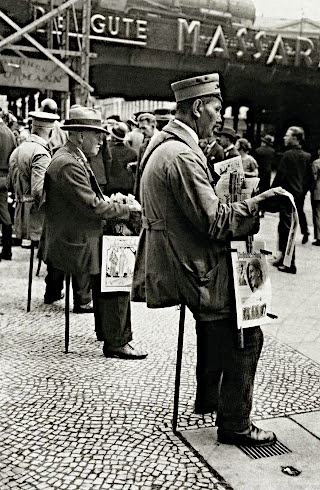
A reader sent in this prescient warning from 1995, when then Treasury Secretary Robert Rubin, late of Goldman Sachs, mentor to Larry and Timmy of the current US ship of state, wanted to unleash the power of the big money center banks to ensure their "efficiency and international competitiveness."

If only the US had rejected the Rubin - Greenspan doctrine then, and firmly said no to freewheeling finance, and not succumbed to the hundreds of millions of dollars in lobbying and donations spread about Washington in that 1990's campaign by Wall Street that culminated in Fed preemptive action, followed by a massive lobbying campaign led by Sandy Weill.


In December 1996, with the support of Chairman Alan Greenspan, the Federal Reserve Board issues a precedent-shattering decision permitting bank holding companies to own investment bank affiliates with up to 25 percent of their business in securities underwriting (up from 10 percent).

This expansion of the loophole created by the Fed's 1987 reinterpretation of Section 20 of Glass-Steagall effectively renders Glass-Steagall obsolete. Virtually any bank holding company wanting to engage in securities business would be able to stay under the 25 percent limit on revenue. However, the law remains on the books, and along with the Bank Holding Company Act, does impose other restrictions on banks, such as prohibiting them from owning insurance-underwriting companies.

In August 1997, the Fed eliminates many restrictions imposed on "Section 20 subsidiaries" by the 1987 and 1989 orders. The Board states that the risks of underwriting had proven to be "manageable," and says banks would have the right to acquire securities firms outright...

As the push for new legislation heats up, lobbyists quip that raising the issue of financial modernization really signals the start of a fresh round of political fund-raising. Indeed, in the 1997-98 election cycle, the finance, insurance, and real estate industries (known as the FIRE sector), spends more than $200 million on lobbying and makes more than $150 million in political donations. Campaign contributions are targeted to members of Congressional banking committees and other committees with direct jurisdiction over financial services legislation.

PBS Frontline: The Long Demise of Glass-Steagall

One might be tempted to conclude from this that they bought the attention of the Congress for their agenda then, and based on additional substantial contributions, have held it ever since.

As you may recall, it was in December, 1996 when Alan Greenspan made his famous 'irrational exuberance' speech. And then shortly thereafter laid the groundwork for the tech bubble of 1999, and the series of bubbles that are the basis of the American economy even today, and the long twilight of the US dollar.

Based on our read, the financial reform plans crafted by Tim Geithner, Larry Summers, and their friends on Wall Street is merely a continuation of the Rubinomics. Is there any wonder, as we have Rubinomics Recalculated by Obama.

Thanks to Mark for sharing this on a day in which I had not intended to post anything. There seem to be about 12,000 regular visitors to Le Cafe each day. Although this is not a lot by internet standards, I have to say that based on their valuable comments and exceptionally well-informed messages sent in by email, that when it comes to astute readers, we have an embarrassment of riches. And for this we give thanks and are grateful.
NY Times
End Bank Law and Robber Barons Ride Again

Published: Sunday, March 5, 1995

To the Editor:

Re "For Rogue Traders, Yet Another Victim" (Business Day, Feb. 28) and your same-day article on Treasury Secretary Robert E. Rubin's proposal to eliminate the legal barriers that have separated the nation's commercial banks, securities firms and insurance companies for decades: The American Bankers Association, Senator Alfonse M. D'Amato, Representative Jim Leach and Treasury Secretary Rubin are gravely misguided in their quest to repeal the Glass-Steagall Act.

Their contention that insurance companies, commercial banks and securities firms should be freed from legislative obstructions is predicated on fallacious, historically inaccurate statements. If the Baring Brothers failure does not give them pause, a history lesson is our only hope before the Administration and bank lobby iron out their differences and set the economy back 90 years.

The argument that American financial intermediaries will become "more efficient and more internationally competitive" is false. The American financial system is the most stable, most profitable and most dynamic in the world.

The notion that Glass-Steagall prevents American financial intermediaries from fulfilling their utmost potential in a global marketplace reflects inadequate understanding of the events that precipitated the act and the similarities between today's financial marketplace and the market nearly a century ago.

Although Glass-Steagall was enacted during the Great Depression, it was put in place because the Aldrich-Vreeland Act of 1908, the blue-sky laws following 1910 and the Federal Reserve System of 1913 failed to keep the concentration of financial power in check. The investment climate that ultimately led to Glass-Steagall was one filled with emerging markets, interlocking control of productive resources and widespread bank ownership of securities.

Ever since railroad securities began driving secondary capital markets in the late 1860's, "emerging markets" have existed for investors looking for high-yield opportunities, and banks have been primary agents in industrial development. In the 19th century, emerging markets were scattered throughout the United States, and capital flowed into them from New York, Boston, Philadelphia and London. In the same way, capital flows from the United States, Japan and England to Latin America and the Pacific rim -- today we just have more terms to define the market mechanisms.

The economy and financial markets were even more interconnected in the 19th century than now. Commercial and investment banks could accept deposits, issue currency, underwrite securities and own industrial enterprises. With Glass-Steagall lifted, we will chart a course returning us to that environment.

J. P. Morgan and Andrew Mellon made their billions through inter locking directorates and outright ownership of hundreds of nationally prominent enterprises. Glass-Steagall is one crucial piece of a litany of legislation designed to place checks and balances on the concentration of financial resources. To repeal it would be tantamount to bringing back the days of the robber barons.

The unbridled activities of those gifted financiers crumbled under the dynamic forces of the capital marketplace. If you take away the checks, the market forces will eventually knock the system off balance.

MARK D. SAMBER
Stamford, Conn.
Feb. 28, 1995

The writer is a management consultant specializing in business history.

28 October 2009

About The Jobless Recovery ....


For the first time we had a 'jobless recovery' after the tech bubble bust thanks to the wonders of Greenspan's monetary expansion and the willingness (gullibility?) of the average American to assume enormous amounts of debt, largely based on home mortgages, the house as ATM phenomenon. Not to mention the large, unfunded expenditures of the government thanks to tax cuts and multiple wars.


Now the pundits are talking about the hopes for another jobless recovery.

Who is going to go deeply into debt this time? It looks like its the government's turn. And the expectation is that foreigners will continue to suck up the debt.


If you think this explosion of Federal debt will facilitate a stronger US dollar you might be suffering from ideological myopia or some other delusion.

Some years ago we forecast that the financiers and their elites would take the world down this road of leveraged debt and malinvestment, and then make you an offer that they think you cannot refuse. They will seek to frighten you with a collapse of the existing financial order, because that is what they fear the most themselves, for their own unique positions of power.

The offer will be a one world currency, which is a giant step towards a one world government, managed by them of course. Once you control the money, local fiscal and social preferences start to matter less and less.

This theory seems more plausible today than it did then.


Restoring Glass-Steagall


"Successful crime is dignified with the name of virtue; the good become the slaves of the wicked; might makes right; fear silences the power of the law." Lucius Annaeus Seneca

Restoring Glass-Steagall is such an obvious move that one has to wonder why it is not being more seriously considered.

Granted, it took a multi-year lobbying effort and the expenditure of many millions of dollar to subvert a national regulatory and political process to overturn it, largely led by Sandy Weill of Citigroup. Frontline: The Long Demise of Glass-Steagall.

And with the return of the Clinton crowd as Obama's key financial advisers, led by Larry Summers and young Tim, supplemented by more mercenaries from the-investment-bank-that-must-not-be-named, perhaps it is unreasonable to expect the Reformer to enact such a simple, time-tested reform.

Perhaps Barney Frank and Chris Dodd can bring the Princes of Wall Street down to Washington again, profusely thank them for taking time from their busy day to speak to the people's representatives, privately thank them for their generous campaign contributions, and simply ask them what they will accept as regulation again.

It is important to bear this in mind, because it tends to knock down the assertion that the current financial crisis is somehow an act of God, something that just happened. There was an intent to subvert the regulatory process, to increase leverage beyond what has long been known to be prudent, and to engage in systemic fraud with a group of enables and agencies, such as the ratings firms, in order to reap fabulous personal profits for a small group at the expense of the many. There was planning, premeditation, malice aforethought. They may not have intended to harm; they just did not care. They really truly did not care, if they got theirs.

Until the banks are restrained, and the financial system reform, and balance restored to the economy, there will be no sustained recovery.

And there can be no better start than to stop the gambling with the public money that is the core of the existing US banking system. The parallels with organized crime and the subversion of the public interest through graft and corruption are compelling. And one thing we must accept is that the financiers will never be able to reform themselves, to regulate themselves, to even tell the truth overmuch about regulation while they are still 'in the game.' It goes against their very nature, their creed, the rules of their profession. They keep what they kill, and everything that is not theirs is fair game.

How bad does it have to get in the US before the people finally speak out? Wait and see, because it will be getting worse, a lot worse than you might imagine. And each day of delay adds a pound of misery for your children and grandchildren to carry. Do you really think so little of them?
Volcker’s Advice

NY Times
October 22, 2009

To the Editor:

Re “Volcker’s Voice, Often Heeded, Fails to Sell a Bank Strategy” (front page, Oct. 21):

As another older banker and one who has experienced both the pre- and
post-Glass-Steagall world, I would agree with Paul A. Volcker (and also Mervyn
King, governor of the Bank of England) that some kind of separation between
institutions that deal primarily in the capital markets and those involved in
more traditional deposit-taking and working-capital finance makes sense
.

This, in conjunction with more demanding capital requirements,
would go a long way toward building a more robust financial sector.

John S. Reed
New York, Oct. 21, 2009

The writer is retired chairman of Citigroup.
Above all, reforming the cesspool that is the US electoral process of campaign financing, which is an advert for graft and soft bribery, would help as well. There is no foolproof regulatory process when those who control it are 'on the take' or even more openly working for those who seek to subvert it.


Tavakoli on Goldman's Lies of Omission


Lies of omission and forgetfulness are difficult to prove and even harder to prosecute. "Not that I recall" and "not to my knowledge" are favorite defense statements, adornments to a plea of inanity much favored by the corporate upper crust, made famous by Skilling and Lay. Among politicians it is known by the weighty phrase, plausible deniability.

Janet Tavakoli asks, Did Goldman Lie? One is tempted to ask, 'were their lips moving?'

But why the bluff? Why did Goldman have to pretend it was not concerned at all about AIG, even as the phone records show they were involved in intense and continuing discussions at the highest levels in the bailouts, with a unique and privileged presence in discussions with the government and the Fed in which their own place in the bailout queue must have been surely discussed? And at the time their own man was the Chairman of the NY Fed.

And as someone asked, Why pick on Goldman? Well, they seem to be at the center of everything.

No answers yet, and there may never be a way to penetrate the financial Star Chamber that is the Obama Treasury and the NY Fed. But here is some additional information worth reading.


Goldman's Lies of Omission
By Janet Tavakoli
October 28, 2009

In my opinion, David Viniar’s (CFO of Goldman Sachs) comments in the fall of 2008 were a lie, and for that matter, Lloyd Blankfein’s (CEO of Goldman Sachs) later comments to the Wall Street Journal were disingenuous.

In the context of what was happening near the time of AIG’s implosion, the key question was “What is going on between Goldman and AIG?” Their rhetoric surrounding this issue is a deft dodge. They may claim they didn’t “technically” lie, but Goldman’s business exposure to AIG posed both credit risk and reputation risk. They seem to overlook elements of the former and put insufficient value on the latter.

Goldman should have plainly stated that it was owed billions in additional collateral from AIG — after already having collected billions — due to credit default swap contracts and other trading positions. Whether or not Goldman thought its credit risk was totally hedged is a separate, albeit important issue, and I’ll get to that later.

Among the proximate causes of AIG’s failure were previous calls for collateral made by its credit default swap trading counterparties, including Goldman Sachs. They were entitled to pressure AIG on its prices and demand more collateral; I had publicly challenged AIG’s prices myself more than a year earlier. These actions gave a major push to AIG’s subsequent credit downgrade, which tripped contract triggers that AIG had unwisely permitted its more clever counterparties to insert. (The credit default swap market is not standardized.) This meant AIG had to come up with collateral equal to the entire remaining amount of the credit default swap contract.

Unfortunately, AIG was essentially bankrupt at this point and it couldn’t meet its obligations. The government could have stepped in and renegotiated its contracts. [Goldman’s “hedges” might have disputed whether a reduced payment triggered a restructuring event, if applicable, in their contracts.] But that isn’t what happened...

Click here for the rest of the story: Goldman's Lies of Omission - (pdf) Tavakoli Finance


27 October 2009

GMAC Becomes First 'Bank' To Come Back for a Third Bailout


This just goes to show how much good planning in the form of strong lobbying efforts, massive campaign contributions, and big tips to the staff can give you a better position at the table. It makes all the difference in the US free-wheeling market for taxpayer funds.

There will be more players rolling over, and the poorly connected, broken banks will come staggering back from the land of green shoots with leaking balance sheets and bleeding income statements. The big Banks will keep taking chips and tips from Ben and Tim, a little peek at the hole cards, a friendly dealer on the flop, until the time comes to turn over that last river card, and move on to a differet town and a new game.

Where's GMAC at this table? Are you kidding me? They are outside parking cars.


Wall Street Journal
GMAC Asks for Fresh Lifeline

By DAN FITZPATRICK and DAMIAN PALETTA

Lender in Advanced Talks for Third Slug of Taxpayer Cash -- at Least $2.8 Billion

In a stark reminder of how some battered financial firms remain dependent on government lifelines, GMAC Financial Services Inc. and the Treasury Department are in advanced talks to prop up the lender with its third helping of taxpayer money, people familiar with the matter said.

The U.S. government is likely to inject $2.8 billion to $5.6 billion of capital into the Detroit company, on top of the $12.5 billion that GMAC has received since December 2008, these people said. The latest infusion would come in the form of preferred stock. The government's 35.4% stake in the company could increase if existing shares eventually are converted into common equity.

The willingness by Treasury officials to deepen taxpayer exposure to GMAC reflects the troubled company's importance to the revival of the auto industry. Founded in 1919, GMAC has $181 billion in assets and is a major financier for 15 million borrowers and thousands of General Motors and Chrysler car dealerships.

The new capital would help firm up GMAC's balance sheet and solidify its auto-loan business. GMAC provides the vast majority of wholesale financing for GM dealerships across the country, meaning thousands would be unable to bring new vehicles onto their lots if GMAC were to collapse.

Federal officials also are moving to shore up GMAC's ability to fund its daily operations, with the Federal Deposit Insurance Corp. telling the company Tuesday the agency will guarantee an additional $2.9 billion in debt, according to people familiar with the discussions. The FDIC guarantee will make it easier for the company to sell debt to investors. The FDIC backed $4.5 billion in GMAC-issued debt earlier this year.

The FDIC approval came just four days before the expiration of the regulator's program that guarantees debt issued by certain banks. It ended months of tense negotiations between GMAC and regulators. Without a deal, the company would have been forced to further reduce its lending volume. New-car loans by the company tumbled 55% to $5.6 billion in the second quarter from a year earlier.

As part of the agreement, GMAC agreed to keep interest rates on deposit accounts offered through its banking unit at certain levels, according to people familiar with the situation.

While GMAC would be the only U.S. company to get three capital injections from the government since the financial crisis erupted two years ago, thousands of banks and other financial firms remain weakened by exposure to fallen real-estate values and clobbered financial markets.

Among U.S. banks that got a total of $204.64 billion in aid through the Troubled Asset Relief Program, just one-third of the capital has been repaid so far. Government officials are skeptical that some banks now wanting to escape the government's grip are strong enough to do so, with Bank of America Corp.'s attempt to repay bailout funds snagged by a disagreement over how much additional capital the bank must raise to satisfy regulators, people familiar with the situation said...


The US Dollar Rally of 2008: The Consequence of a Bull Market in Fraud


The theory of a short squeeze in Eurodollars which we had first put forward last year "The Dollar Rally and Deflationary Imbalances in the US Dollar Holdings of Overseas Banks" seems to be confirmed by this paper from the NY Federal Reserve bank, and the latest figures on cross border currency transactions from the BIS.

"Highlighting the international dimensions of the financial crisis that began in the fall of 2007, authors Niall Coffey, Warren B. Hrung, Hoai-Luu Nguyen and Asani Sarkar examine the difficulties international firms encountered obtaining U.S. dollars and the ensuing effects on the foreign exchange (FX) swap market. Analysis shows that as firms increasingly turned to the FX swap market to obtain funding, the dollar “basis”—the premium paid for dollar funding—became persistently large and positive, primarily as a result of higher funding costs paid by smaller firms and non-U.S. banks." The Global Financial Crisis and Offshore Dollar Markets


Further, the latest data from BIS shows that the dollar rally tracked the acquisition of eurodollars with a significant correlation. This is shown on the chart at the right.

After the Federal Reserve alleviated the short squeeze through dollar forex swaps "The Fed's Currency Swaps" with the central banks in the affected regions, the dollar squeeze dissipated and the dollar fairly quickly resumed its downward trend. There is a case to be made that some of the big US money center banks were using the dollar shortage to reap windfall profits, but this could have also been a side effect of the seizing in the short term credit markets.

But much of the European outrage, as least, was in feeling that they had been 'set up' by the very banks that had sold them the foully rated instruments in the first place. A classic face ripping, as they say at Wall and Broad. And this similar to the reason is why the Chinese government declared that its own institutions could walk away from derivatives arrangements that had been sold to them by the Wall Street wiseguys under false pretenses. US towns and states are not so fortunate it appears.

What does this mean? It implies rather strongly that those looking for a repeat of the sharp dollar rally from last year are very likely to be sadly disappointed.

This was no flight to safety; this was the consequence of a massive fraud in dollar denominated financial assets having been sold to gullible foreign investors and their banks. Note too that the eurodollar positions do NOT account for the dollar rally in 2006. This is what was expected, because there was no corresponding spike in LIBOR to indicate a squeeze. Rather, that earlier dollar rally was due to foreign investment in US equities and financial assets at the height of the post tech crash Dollar Assets Bubble.

Here is a brief piece on The Backwardation in LIBOR and Its Divergence from Effective Fed Funds which shows the signs of the 'eurodollar squeeze' as opposed to net foreign investment in financial assets.

The foreign banks have now unwound a significant amount of the dodgy US dollar financial assets that caused the short squeeze through their fraudulent valuations.

Yes, there will be more rallies in the ongoing decline in the US dollar. There always are countertrends in every long term trend. This is how traders make and lose their gains, as the market makers skin them slowly but surely. We can only wonder for now how much money has come into the US equity and bond bubble in the past six months, and how much is leveraged via the dollar carry trade.

But we ought not to see such a large rally in the dollar again unless there is a precipitous decline in stocks that forces a painful unwinding of the dollar carry trade. Foreign banks ought to be on the lookout for this development, because it is in their regions that the short squeezes have most of their effect. The Fed is awash in dollars and does own a printing press, and is not afraid to use it.

And for those desperately waiting for a free ride and easy money from a synthetic dollar short on debt, they should be reminded that the chief monetarist himself, Milton Friedman, also reminded that "There Ain't No Such Thing As a Free Lunch."

Or more civilly perhaps, "even fraud has its limits in conferring more value upon that which has less."